Heather Cox Richardson delivers a chilling chronicle of a nation unraveling in real time, where economic promises have curdled into inflationary chaos and diplomatic blunders have ignited a regional war. This piece is notable not for predicting the future, but for documenting how quickly the machinery of governance can be dismantled when institutional norms are traded for personal grievance and performative aggression. The evidence presented suggests a catastrophic feedback loop: the administration's aggressive tariff regime and military posturing are not just policy choices, but the direct drivers of a soaring cost of living and a deepening humanitarian crisis.
The Economics of Disruption
Richardson begins by dismantling the administration's core economic promise. By the end of 2024, inflation had nearly stabilized at the Federal Reserve's target of 2%, yet the executive branch promised a "Day One" reversal through tariffs and deregulation. Richardson writes, "Trump's 'Liberation Day' tore up the free trade principles on which leaders after World War II based the international order that promoted stability and prosperity." This framing is crucial; it situates current turmoil not as an anomaly, but as a deliberate dismantling of the post-war consensus that kept global markets stable for decades.
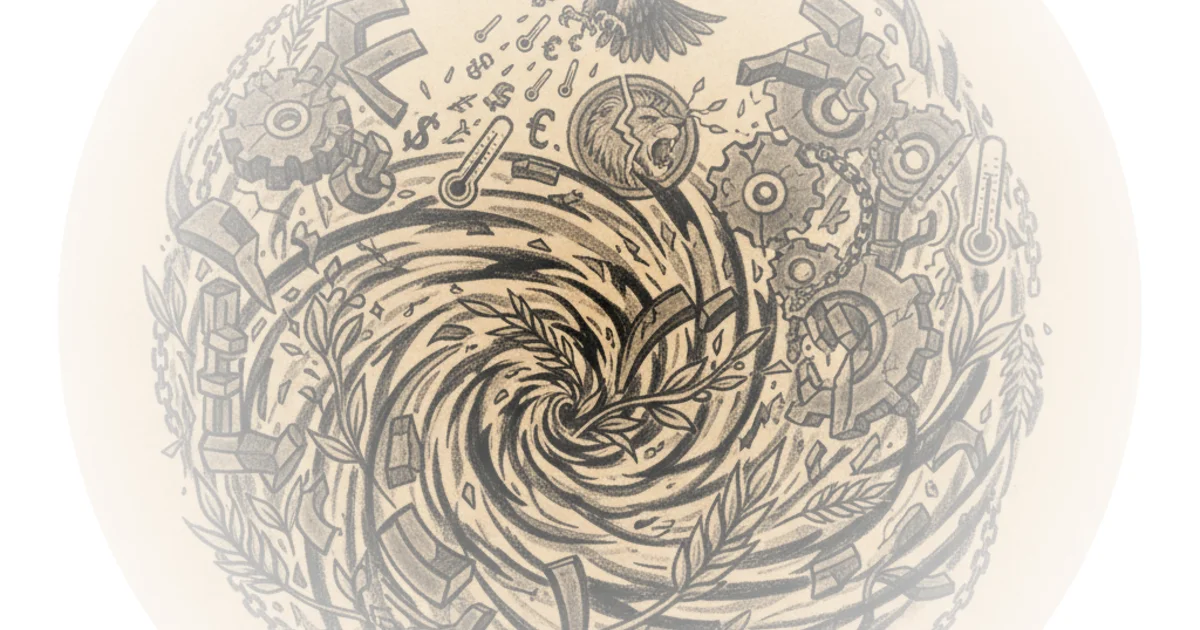
The author details how the administration bypassed Congress, declaring an emergency to seize tariff powers, only to have the Supreme Court declare those actions unconstitutional. Yet, the fallout continues. Richardson notes that the administration has not refunded the approximately $175 billion owed to importers for illegal tariffs, even as the money accumulates "about $23 million a day in interest, to be paid for by taxpayers." This is a stark illustration of how institutional gridlock and legal defiance translate directly into a tax burden on the public.
The human cost of these policies is quantified with brutal precision. Federal Reserve Chair Jerome Powell is cited noting that "some big chunk of that, between a half and three-quarters is actually tariffs." As the administration pivots to Section 122 of the Trade Act of 1974—a law historically reserved for severe balance-of-payments crises—the economic pain accelerates. Richardson points out that inflation has surged to 3.3%, with gasoline prices jumping 21.2%.
"It's going to get a lot worse before there's any relief. Even if the war on Iran ends in two weeks, and there's magically an agreement, inflation will continue to rise for months to come."
Economist Heather Long's warning, quoted by Richardson, underscores the lag time inherent in these economic shocks. The argument here is that the damage is structural; even a sudden cessation of hostilities cannot instantly reverse the price spikes already baked into the supply chain. Critics might argue that the administration views short-term pain as a necessary price for long-term sovereignty, but Richardson's data suggests the pain is being inflicted without the promised strategic gain.
The Diplomatic Gamble
The commentary shifts to the administration's handling of the conflict with Iran, revealing a stark disconnect between diplomatic necessity and political theater. Richardson describes a scenario where the U.S. delegation, led by figures with no diplomatic experience, abandoned negotiations in Islamabad after merely 21 hours. Simultaneously, the President and the Secretary of State were watching a mixed martial arts match in Miami.
Richardson writes, "The fact that the president had the U.S. secretary of state with him at a UFC event while talks were breaking down in Islamabad showed Trump's disdain for the State Department." This juxtaposition is not merely a personality quirk; it signals a fundamental rejection of the diplomatic process in favor of a "might makes right" approach. The administration's demand for terms weaker than the 2015 Joint Comprehensive Plan of Action (JCPOA) further erodes the possibility of a peaceful resolution.
The consequences of this diplomatic failure are immediate and lethal. Richardson notes that strikes from both the U.S. and Israel have cost the lives of "13 U.S. service members and countless Iranian and Lebanese civilians." The human toll is the central metric here, stripped of any patriotic gloss. In response to the crisis, the administration has announced a blockade of the Strait of Hormuz, a waterway through which 20% of the world's oil passes.
"We win, regardless. We've defeated them militarily."
This quote from the President, delivered while the blockade was being ordered, encapsulates the administration's delusion. Richardson argues that the policy of "all in and all out" is not a strategy but a gamble that ignores the reality of global interdependence. The blockade is described as a move that will send oil prices surging, directly contradicting the administration's earlier promises to lower energy costs. The historical parallel to the 1987 Operation Praying Mantis is implied, but the scale and the lack of a clear exit strategy make this a far more dangerous escalation.
The Illiberal Blueprint
Richardson draws a sharp line between the administration's domestic agenda and the "illiberal democracy" of Viktor Orbán in Hungary. The piece argues that the MAGA movement has not just admired Orbán but has actively sought to replicate his authoritarian playbook, including Project 2025. However, the narrative takes a surprising turn with the recent Hungarian election results.
Richardson writes, "Hungarians turned out today in record numbers—77% of registered voters—and gave Orbán's opposition party more than two thirds of the seats in the parliament." This outcome serves as a powerful counterpoint to the administration's belief in the inevitability of their movement. The defeat of Orbán, a key ally, is described as a "major blow to the MAGA belief that the right-wing forces opposing liberal democracy are the vanguard of an unstoppable movement."
The administration's reaction to this defeat is revealing. Instead of reflecting on the failure of the illiberal model, the President lashed out at Pope Leo XIV for criticizing the religious justification of the war in Iran. Richardson notes the President's claim that the Pope was elevated only because he was American and a threat to the administration. This defensive posture highlights the fragility of the administration's narrative when faced with external rejection.
"God does not bless any conflict. Anyone who is a disciple of Christ, the Prince of Peace, is never on the side of those who once wielded the sword and today drop bombs."
The Pope's words, contrasted with the President's subsequent social media post depicting himself as Jesus healing the sick, create a jarring dissonance. Richardson describes the image as "heresy and blasphemy," noting that even allies like Marjorie Taylor Greene called it an "Antichrist spirit." This section of the commentary effectively argues that the administration's attempt to merge religious authority with military aggression has reached a point of self-parody, alienating even its most fervent supporters.
Bottom Line
Heather Cox Richardson's piece is a masterful dissection of how the erosion of democratic norms and the rejection of expert consensus can lead to rapid national decline. The strongest part of the argument is the seamless connection between the administration's domestic economic blunders and its foreign policy disasters, showing how they feed into a single cycle of instability. The biggest vulnerability, however, lies in the assumption that the electorate will recognize the danger in time; the piece suggests that the administration's cult of personality may insulate it from the consequences of its actions until it is too late. Readers should watch for the immediate impact of the Hormuz blockade on global energy markets, as the administration's "all or nothing" stance threatens to turn a regional conflict into a global economic crisis.