Mick Ryan delivers a sobering assessment of the halfway point of a multi-front war, arguing that the most dangerous threats to Ukraine are not just Russian tanks, but the internal fractures in its own command structure and the strategic limits of Western air power. While the world watches the front lines, Ryan exposes a critical disconnect: a nation capable of striking deep into enemy territory is simultaneously unraveling at its highest levels of leadership, sending mixed signals to allies just as the stakes reach their zenith.
The Fracture at the Top
The most striking element of Ryan's analysis is his refusal to treat the recent shake-up in Kyiv as a routine personnel change. He frames the removal of former Defense Minister Fedorov and the appointment of General Mykhailo Drapatyi as a clash between two distinct military philosophies. "The larger dispute is the tension between the new guard and the old guard in the Ukrainian military," Ryan writes, highlighting a struggle between a technology-led reform agenda and a traditional, centralized culture. This is not merely bureaucratic infighting; it is a battle for the soul of an institution fighting for its existence.
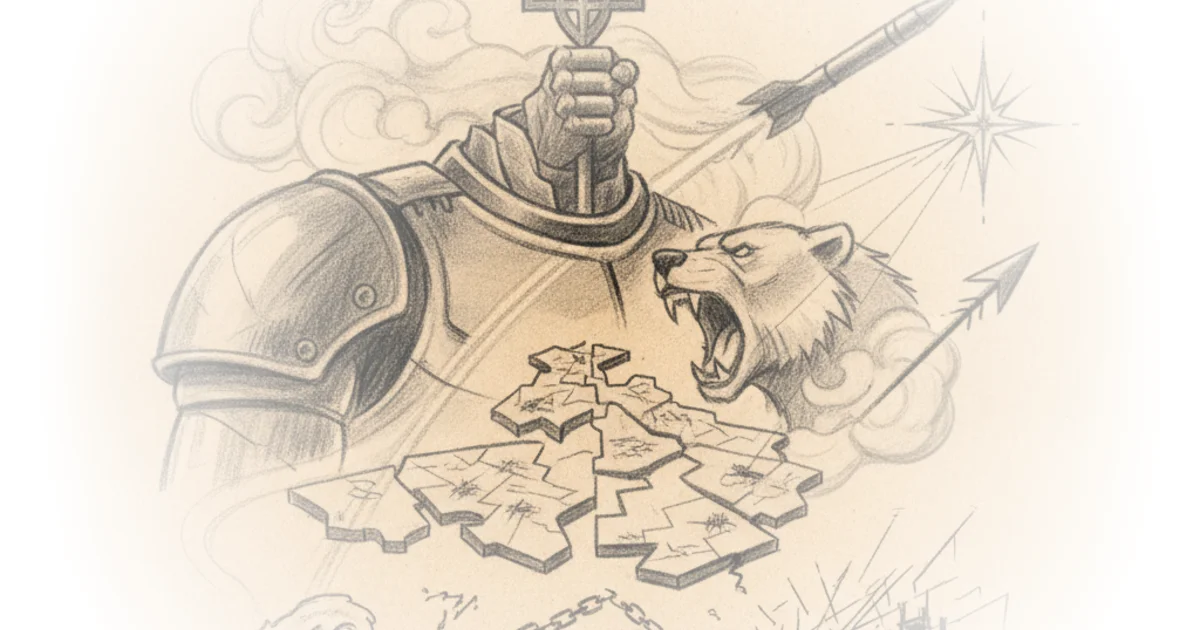
Ryan captures the gravity of the situation by quoting Fedorov's defiant rejection of alternative posts: "There are only three positions in Ukraine that, alongside the troops on the line, actually shape the course of the war, the presidency, the defence ministry and the commander-in-chief." This statement underscores the high stakes of the political maneuvering. When a key architect of Ukraine's drone strategy publicly refuses a demotion, it signals that the consensus needed to win is eroding. Ryan argues that this public discord is dangerous because it undermines the unified voice Ukraine needs from its partners. A country that can reorganize its assault forces in a fortnight but cannot resolve a public argument between its president and its generals is sending a perilous message about its stability.
A country that can reorganise its assault forces and stand up a new strike command in a fortnight, but cannot resolve a public argument between its president, its generals and its former defence minister, is sending its allies a mixed signal about how settled its wartime governance is.
Critics might argue that such leadership turnover is a sign of a healthy, adaptive democracy rather than a failing one, especially in a high-pressure war zone. However, Ryan's point about the timing is devastating: this internal chaos coincides with a push for a new peace initiative in Washington, creating a vulnerability that adversaries can exploit.
The Limits of Air Power and the Iran Parallel
Ryan broadens his lens to the Middle East, drawing a stark parallel between the situation in Ukraine and the unfolding crisis in the Strait of Hormuz. He uses the recent collapse of ceasefire hopes with Iran to illustrate a brutal lesson in modern warfare: air superiority does not guarantee victory. "For not the first time in history, air power has degraded the capability of an adversary without compelling their capitulation," Ryan observes. This is a crucial insight for Western strategists who often overestimate the coercive power of bombing campaigns.
He cites Andrew Exum to drive home the point that the United States has failed to secure its political objectives in the region, noting that the situation in July is "markedly worse than the one antebellum." This diagnosis is not just about the Middle East; it is a warning for the Pacific and European theaters. The reliance on air power to degrade enemy capabilities while avoiding a ground invasion has created a stalemate where the adversary, though damaged, remains defiant and dangerous. This mirrors the dilemma in Ukraine, where long-range strikes are vital but insufficient to end the war on their own. The historical context of the 2026 Strait of Hormuz crisis serves as a grim reminder that technological degradation of an enemy's industrial base rarely translates to a political surrender.
Structural Adaptation and the Human Cost
Amidst the political turmoil, Ryan details significant structural reforms in the Ukrainian military, including the creation of a dedicated Long-Range Strike Command and the Joint Rapid Reaction Forces. These moves aim to end "turf wars between services" and accelerate deep strikes. Ryan notes that the new command pulls together existing drone and missile units to "concentrate all available resources to reduce Russia's war potential." This is a logical evolution, formalizing the improvised task forces that have been so effective so far. The creation of a separate branch for rapid reaction forces, tasked with stabilizing critical areas rather than holding ground, reflects a shift toward a more agile, technology-driven doctrine.
However, Ryan does not shy away from the human cost of these operations. He details the heavy toll of Russian missile barrages on Ukrainian cities, noting that Kyiv absorbed one of the largest single-night ballistic missile attacks of the war. The strike on a defense-industry exhibition near the capital killed at least ten people and injured over a hundred. "Away from the strike campaigns, the week saw a heavy run of missile and drone attacks on Ukrainian cities," Ryan writes, grounding the strategic analysis in the reality of civilian suffering. The focus on strikes against Russian logistics, including the targeting of Wildberries warehouses and oil refineries, is presented not as a triumph, but as a necessary escalation in a war where the enemy's supply chain has become deeply intertwined with civilian commerce.
The systematic work of the Armed Forces of Ukraine in striking the enemy throughout the full depth of its operational and strategic disposition is constantly expanding and improving.
The data on Russian casualties presents a disturbing anomaly. Ryan points out that the ratio of killed to wounded in 2026 is 1.4 to 1, a figure that is "out of whack with historical norms." In previous conflicts, the ratio was typically 1:3 or higher, meaning for every soldier killed, three were wounded. The fact that Russia is suffering such a high number of fatalities suggests either a catastrophic failure in their medical evacuation capabilities or a shift in tactics that prioritizes attrition over survival. This statistic, if accurate, paints a picture of a Russian military that is bleeding men at an unsustainable rate, yet continues to push forward.
Bottom Line
Ryan's most compelling argument is that Ukraine's greatest vulnerability is no longer just on the battlefield, but in the coherence of its own command structure and the strategic patience of its allies. The piece succeeds in reframing the war not as a simple contest of firepower, but as a complex struggle where internal political friction and the limits of air power could prove as decisive as any tank division. The biggest risk is that the world focuses on the tactical successes of deep strikes while ignoring the strategic fragility caused by leadership discord. Readers should watch closely to see if the new command structure can deliver the promised agility before the window for a negotiated settlement closes.