The Problem With Superficial Faith
Steven West argues that most people misunderstand religion entirely. The problem isn't that they're religious or atheist — it's how they understand what religion actually does.
In his book Religion and Nothingness, Nishitani contends that Westerners typically frame religion in one of two ways: either as a security blanket for those who can't handle complexity, or as a personal path to salvation. Both perspectives miss something crucial.
The philosopher suggests these popular definitions are incomplete. They're descriptions of what religion does rather than what it is. Think about how the Western mind approaches everything — we ask what utility something serves, what practical value it provides. This framing works beautifully in science and technology but becomes a severe limitation when applied to questions of meaning and existence.
Nishitani draws on Martin Heidegger's observation that this utilitarian lens blocks deeper perception. When we define religion purely by its function — what benefit it offers the individual or society — we see only its surface.
The Utilitarian Framing Problem
Westerners constantly frame things in terms of utility. Art expresses emotions. Education prepares people for work. A friend is someone who helps you during difficult times.
This approach has proven invaluable in scientific contexts, but when it becomes the only way to understand something, we lose access to deeper dimensions of reality. Religion specifically suffers from this limitation.
The same problem applies to nihilism, which Nishitani explored in a previous episode — viewing these concepts only from the outside prevents full understanding. To truly grasp what religion means requires experiencing it from inside a genuine religious quest.
What Actually Qualifies as Religious Quest
A truly religious quest involves something distinct: moving away from dualistic, utilitarian thinking toward an emptied self. This isn't simply believing in God or following religious practices. It's a fundamental reformulation of how the self relates to reality itself.
The shift happens when someone stops asking "what use is this to me?" and begins asking "for what purpose do I exist?"
This sounds deceptively simple. Many religious people believe they're already doing this — asking about purpose, seeking larger meaning. But Nishitani suggests most are performing a shallow version of this transformation.
The philosopher argues that appearing religious doesn't equal actually experiencing religious transformation. People can attend weekly services, feel humble in church, and still remain fundamentally unchanged. The external behaviors matter little compared to whether genuine internal transformation is occurring.
Why Most Religious Experience Falls Short
Consider how most people experience Christianity in the United States. They go to church, eat cookies after service, discuss football with friends — but nothing about this suggests actual emptying of the self or serious engagement with interconnected networks of meaning.
This isn't a critique of belief itself. It's pointing toward something more fundamental: the difference between performing religious behaviors and undergoing genuine spiritual transformation. The capacity for deep change exists within religious traditions — just as mystics through centuries have demonstrated — but most practitioners never access it.
Nishitani isn't saying religion is wrong or that believers are foolish. He's observing that Western understanding of religion remains surface-level because we're always looking at what religion does rather than what it is.
The Uncomfortable Truth About Religion
Here's what's uncomfortable: if we approach religion only as something useful, we'll never access its deepest dimension. We need to stop framing faith in terms of personal benefit and start asking different questions about existence itself.
This applies equally to atheism — both positions can be held superficially without genuine engagement with what either position actually demands.
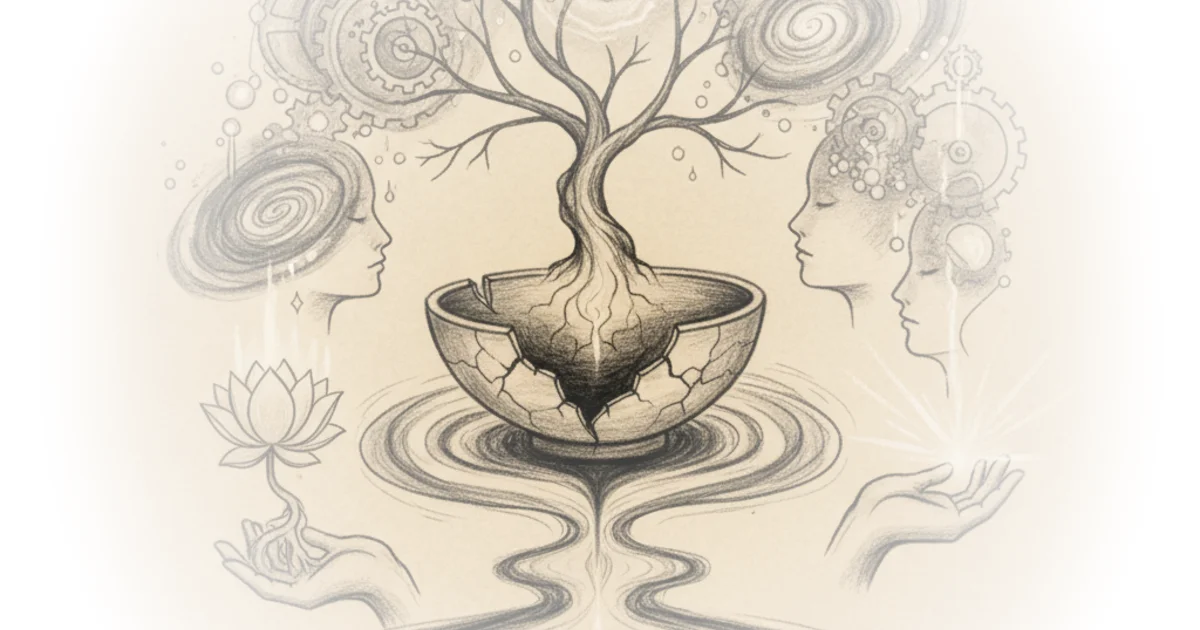
The philosopher suggests that when we truly empty ourselves — releasing the illusion of separation that keeps us trapped in dualistic thinking — we discover we're already part of an interdependent network of being. This isn't metaphorical. It's a fundamental shift in how we understand reality.
Nishitani believes Westerners have become so locked into viewing religion through utility that we've lost access to this deeper transformation entirely.
Counterargument
Some religious practitioners genuinely do experience profound spiritual development — dedicated meditation, years of focused practice, daily devotion. They might push back against the suggestion that most faith is shallow. The philosopher acknowledges this possibility but maintains most Western engagement with religion remains superficial precisely because we approach it from outside rather than inside.
The real issue isn't whether religion works for people but how deeply they're transformed by it — and Nishitani argues most aren't transformed at all.
"Religion can only be known in the subjective experience of the person that is immersed in a religious quest."
Bottom Line
Steven West presents Nishitani's core argument: Western utilitarianism blinds us to what religion actually is. We see faith as something useful rather than something transformative, and this framing prevents genuine spiritual development. The philosopher doesn't dismiss religion — he criticates how shallow most people's relationship with it has become.
The strongest insight here identifies exactly why we struggle with concepts like emptiness and interconnection: we've framed everything through utility until we've lost access to deeper experience entirely. What remains vulnerable is whether Nishitani's own framework escapes the same problem — viewing religion strictly in contrast to Western thought could itself become another utilitarian abstraction.