Dave Amos cuts through the noise of housing debates by revealing a stark political reality: the crisis isn't just about economics, it's about a system rigged to protect the wealth of existing homeowners at the expense of everyone else. He doesn't just list symptoms; he traces the direct line from federal tax loopholes to local zoning laws that strangle supply, arguing that our obsession with single-family living is the primary engine of inequality.
The Political Economy of Homeownership
Amos begins by dismantling the romanticized view of the American Dream, exposing how policy actively favors owners over renters. "The United States is currently a nation of homeowners. About 65% of households own the home they currently live in," he notes, but quickly pivots to the power dynamics this creates. He argues that because homeownership is the "primary form of wealth accumulation in the United States," owners wield disproportionate political power to block change. This is a crucial distinction often missed in generic housing discussions; it's not just that people want to own homes, it's that the system is designed to make ownership the only viable path to middle-class stability.
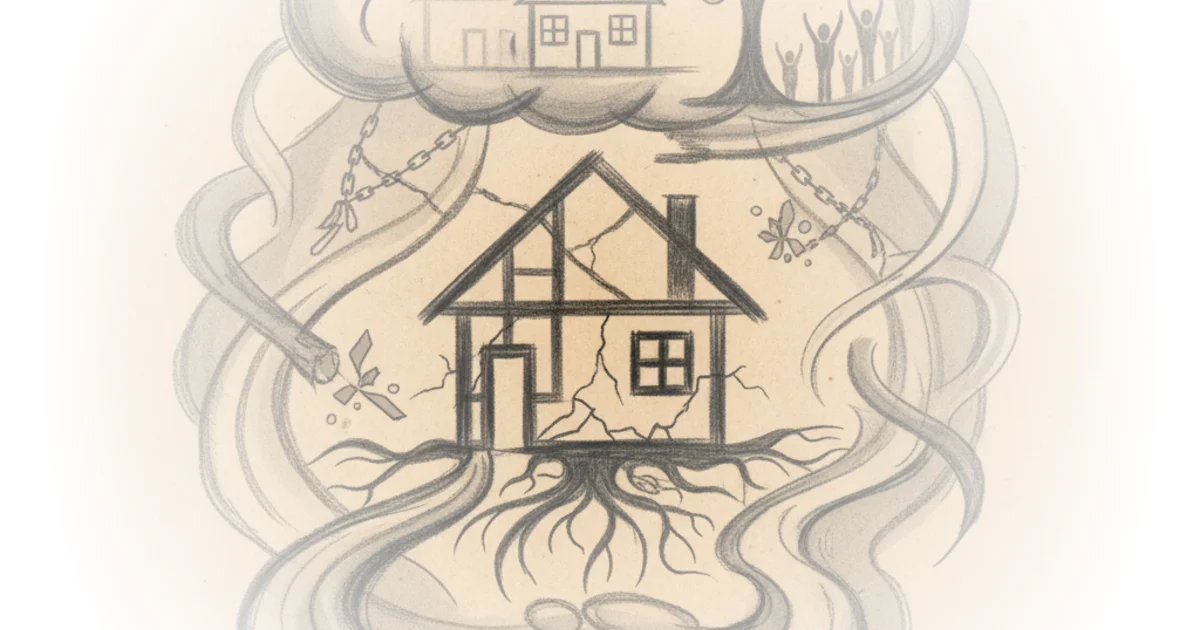
The author highlights a glaring inequity in federal support. "The federal government offers the mortgage interest deduction... essentially a giveaway to homeowners," Amos writes, pointing out that there is "no such thing as a rent deduction for renters." This framing is effective because it shifts the blame from individual financial mismanagement to structural design. Critics might argue that the deduction stimulates the economy, but Amos correctly identifies it as a massive wealth transfer that exacerbates the affordability gap.
Renters and owners tend to have different needs, interests, and demographics. Homeowners are disproportionately wealthy and white. And because there are more homeowners in the US, they tend to have a lot more political power locally.
This political power manifests as "NIMBYism" (Not In My Backyard), which Amos describes as an "extremely powerful movement in local government." He explains that residents fear any change to their neighborhood that could lower their property values, leading to a paralysis in development. The logic is sound: if your net worth is tied to your house, you will fight to keep the neighborhood exactly as it is.
The Zoning Trap and the Supply Shortage
The commentary then shifts to the physical constraints of our cities. Amos argues that the root of the crisis is a simple supply-and-demand failure driven by restrictive land use. "Right now, there's simply not enough new housing being constructed in the United States to keep up with population growth and urbanization," he states. He points out a shocking statistic: "In many cities, upwards of 90% of the land area is zoned for single family homes."
This is where the argument gains its most traction. Amos explains that zoning is the "practice of assigning land uses and intensities to parcels," and currently, it is used to exclude density. He suggests that this is an inefficient use of land as cities become more crowded. The author's diagnosis is sharp: we are trying to fit a growing, diverse population into a housing stock designed for a different era and a different demographic.
To solve this, Amos champions "missing middle housing"—a term for structures like duplexes, triplexes, and townhomes that sit between single-family homes and large apartment complexes. "Families today come in all different sizes, and having a wide variety of housing types ensures the right fit for everyone," he argues. He notes that a single person might buy a massive house just for the equity, even if they hate the maintenance, simply because better options don't exist.
If you're a single person living alone, a 2,000 foot single family house may not be appealing, but you might buy it anyway because you want to build equity and take advantage of those wealth accumulation benefits.
He also advocates for Accessory Dwelling Units (ADUs), or small homes built on the same lot as a primary residence. These can be "affordable housing, particularly because they're small," and they "really don't change the character of the neighborhoods." This is a pragmatic solution that bypasses the fear of high-density towers, offering a middle ground that respects neighborhood aesthetics while increasing supply.
Beyond Shelters: The Reality of Homelessness
Finally, Amos tackles the human cost of these policy failures, specifically the rise in homelessness. He challenges the pervasive stigma that homelessness is solely a result of personal failure. "It's a myth that all homeless people are addicted to a substance or mentally ill," he asserts, noting that increasingly, it is "people who can't find housing they can afford."
He broadens the definition of the crisis to include "invisible" homelessness, such as those "sleeping in their car or couch surfing between friends and relatives." This reframing is vital; it moves the conversation from a niche social issue to a mainstream economic failure. The solution, he argues, isn't just more shelters, which are a "short-term solution," but rather expanding the "housing choice voucher program."
One of the most cost-effective ways addressing homelessness is helping those people who are housing insecure.
Amos points out that the voucher program is "underfunded for the need," with only 26% of eligible households receiving assistance in 2013. He suggests that building more market-rate housing will eventually lower rents, but immediate relief requires direct rental assistance. He also touches on mixed-use zoning, where commercial and residential spaces coexist, to create walkable neighborhoods that reduce traffic and emissions.
Bottom Line
Dave Amos delivers a compelling, data-driven indictment of a housing system that prioritizes the asset protection of the few over the shelter needs of the many. His strongest argument lies in connecting the dots between federal tax policy, local zoning laws, and the political power of homeowners, proving that the housing crisis is a manufactured scarcity. The piece's only vulnerability is its reliance on the assumption that local governments will have the political will to override entrenched NIMBY interests, but as a diagnostic tool, it is indispensable.