Chris Chappell cuts through the noise of Middle East geopolitics to expose a paradox: the very conflict that threatens global stability is inflicting a severe, self-inflicted economic wound on Beijing. While the administration ramps up pressure on Tehran, Chappell argues that the resulting oil price shock is forcing the Chinese leadership into a corner where their "strategic partnership" with Iran is collapsing under the weight of domestic economic reality.
The Myth of the Unleashed Sword
Chappell begins by dissecting a peculiar piece of political folklore that has resurfaced in Washington. He notes that when Secretary of State Marco Rubio spoke of "unleashing Chang," he was invoking a decades-old conservative metaphor. "Back in 2012, Rubio told the New York Times, 'Chang is a mythical conservative warrior,'" Chappell writes, tracing the phrase's origin to a sword once associated with anti-communist leader Chiang Kai-shek. This historical footnote is more than just trivia; it serves as a linguistic bridge to a specific foreign policy posture. The shorthand "unleash Chang" has evolved into a call for overwhelming force, a sentiment now being acted upon by the executive branch in coordination with Israel.
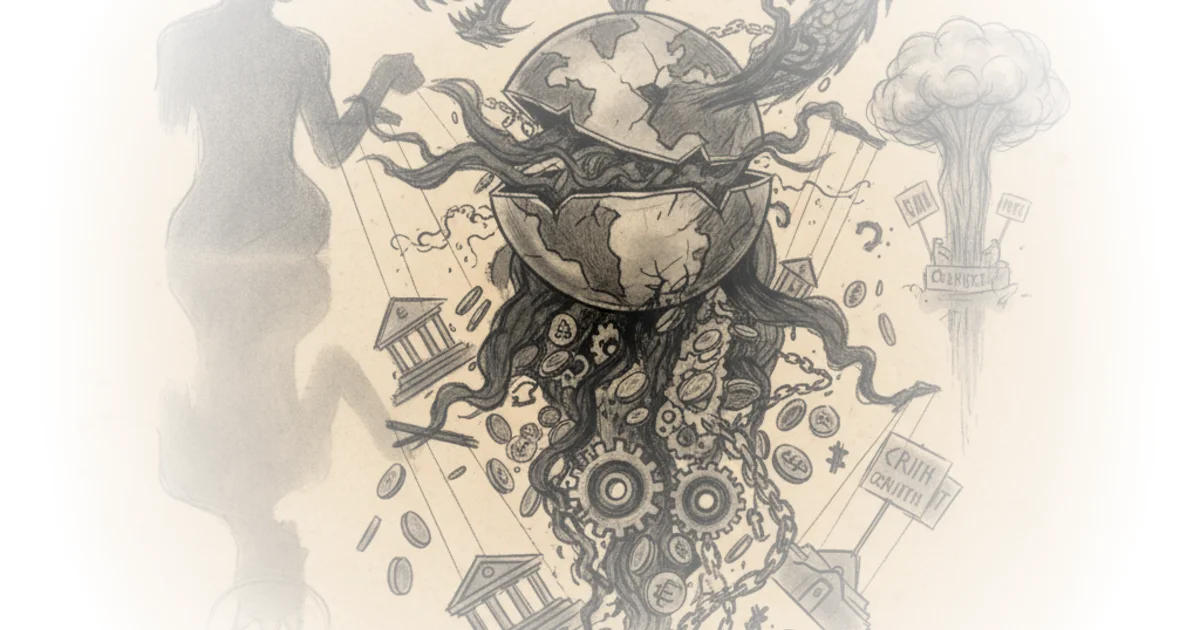
The author uses this anecdote to pivot to the core of the current crisis: the military pressure on Iran is not just a diplomatic spat but a catalyst for economic chaos in China. "The early 2000s are back, baby," Chappell observes, describing a return to high-intensity conflict that is disrupting the flow of energy. The argument here is that the administration's strategy is succeeding in its primary goal of containment, but the collateral damage is being absorbed by Beijing. The CCP's public stance—condemning the US and Israel while insisting Iran has a right to enrich uranium "just for scientific curiosity and funsies"—rings hollow against the backdrop of skyrocketing oil prices.
Critics might argue that attributing China's economic slowdown solely to the Iran conflict oversimplifies a complex domestic situation, yet the correlation between the Strait of Hormuz disruptions and China's energy security is undeniable.
"The CCP, folks, the world's most infamous fair weather friend."
This characterization lands with force because it highlights the transactional nature of Beijing's foreign policy. Chappell points out that while China claims solidarity with Iran, their actions reveal a priority on cheap oil over regime survival. With Chinese oil prices nearing $100 a barrel, the state has been forced to order its largest refineries to suspend exports of diesel and gasoline. The author notes that China has set its lowest economic growth target since 1991, a stark indicator of the strain. "China set its lowest economic growth target since 1991 and military spending is slowing down just a bit," Chappell writes, suggesting that the economic bite is severe enough to alter Beijing's global posture.
The Limits of Strategic Friendship
The commentary then turns to the tangible failures of China's support for Tehran. Chappell highlights reports that the CCP sent attack drones to Iran, only to have them fail to protect the country's leadership. "Could you imagine how embarrassed China would be if they all died anyway?" he asks, underscoring the reputational risk for Xi Jinping. The narrative suggests that China's "friendship" is a liability rather than an asset. "Basically, we're not providing military support to Iran. We only offer moral backing," Chappell paraphrases the official stance, noting that even this moral support is limited to condemning US actions.
The author draws a sharp contrast between China's inaction and the humanitarian gesture by Taiwan, which donated $200,000 to victims of Iranian missile attacks. "The lesson here is that it pays to be friends with Taiwan and not China," Chappell asserts. This comparison serves to isolate the Chinese government diplomatically, framing them as a pariah state that offers nothing but empty rhetoric while its allies suffer.
Furthermore, Chappell suggests that the lethality of the US-Israel military alliance is forcing a recalibration in Beijing. "China might be having some second thoughts about starting a Pacific war that could bring similar results on a much larger scale," he argues. This is a crucial point: the administration's successful application of force in the Middle East may be acting as a deterrent against aggression in the Indo-Pacific. The author implies that the fear of a similar outcome for Chinese military assets is a more powerful motivator than ideological solidarity.
Domestic Purges and Foreign Interference
The piece shifts to the domestic repercussions within China, where the leadership is reacting to the external pressure. Chappell reports that three retired generals have been removed from a national advisory body, a move he interprets as a shake-up necessitated by the failure of their foreign partners. "When America attacks one of your close partners, it's just the time to shake up the military," he writes, linking internal political purges directly to the geopolitical fallout in the Middle East.
Additionally, the author touches on the issue of foreign influence in US institutions, citing the case of three University of Michigan graduate students charged with smuggling biological materials. "One defense lawyer said the Chinese consulate getting involved moved the needle, which is deeply concerning," Chappell notes, suggesting that the CCP's reach extends into the American judicial process. This section reinforces the theme of a Chinese state that is both internally fragile and aggressively expansive in its interference.
The narrative also addresses the role of Neville Roy Singham, a Marxist billionaire with ties to the CCP, whose network of protest groups is targeting Palantir, a company aiding US military operations. "The Party for Socialism and Liberation was scheduled to protest outside Palantir's new Miami headquarters," Chappell writes, framing these protests as coordinated efforts to sabotage US intelligence capabilities. He connects this to the broader strategy of undermining the US military-industrial complex, noting that Singham's network includes groups like Code Pink.
"It's China that wants a multipolar world and not the US. And it's also China that wants to be in some form of aggressive wartime posture."
This quote directly counters the narrative of a defensive China, reframing Beijing as the primary aggressor seeking to destabilize the global order. Chappell uses this to critique political figures who advocate for cooperation with Beijing, arguing that such a stance ignores the reality of Chinese expansionism.
Bottom Line
Chappell's most compelling argument is the inversion of the expected geopolitical outcome: the administration's pressure on Iran is not strengthening China's position but rather exposing the fragility of its economic model and the hollowness of its alliances. The piece's greatest strength lies in connecting the dots between Middle East conflict, global oil markets, and Beijing's internal political instability. However, the argument occasionally leans on anecdotal evidence regarding the "sword of Chang" and the specific mechanics of the Singham network, which, while colorful, may distract from the more substantive economic data. The reader should watch for whether China's economic slowdown forces a genuine shift in its foreign policy or if it doubles down on rhetoric despite the costs.