Zichen Wang exposes a brutal paradox at the heart of modern Chinese media: the desperate attempt to manufacture human connection through rigid, bureaucratic control. While traditional newsrooms face a collapse in trust and traffic, they are not adapting their structures but rather forcing reporters to become one-man production studios under the guise of "personal branding." This isn't a story about innovation; it is a case study in institutional exhaustion, where the very mechanisms designed to ensure safety are strangling the personality required to succeed.
The Illusion of Autonomy
The core of Wang's argument is that you cannot fake authenticity when every word is vetted by a committee. Institutions want the viral reach of an individual creator but refuse to grant the editorial freedom that makes creators valuable in the first place. Wang writes, "Reporters are expected to display personality without becoming unpredictable, build audiences without acquiring secure claims over the value they create, and assume an entire production workload without the resources needed to sustain it." This creates a scenario where journalists are essentially performing a role that contradicts their actual constraints.
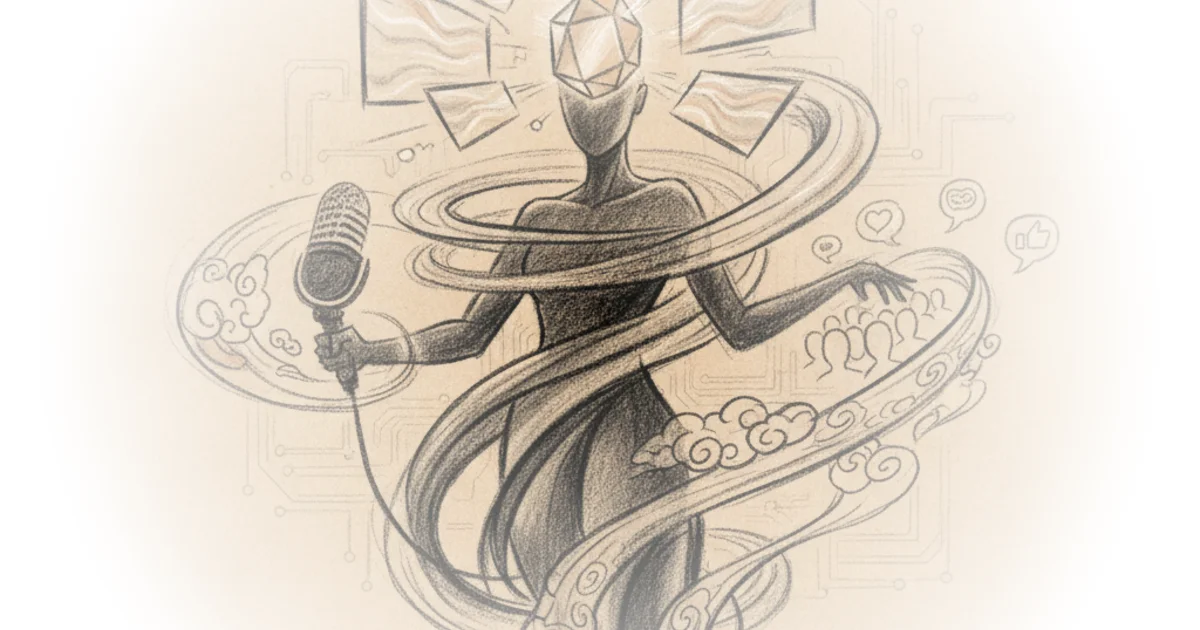
The author points out that the famous "three reviews and three proofreads" system, a relic of traditional state media control, is now applied to these supposed personal accounts. "If every sentence must still pass through the equivalent of 'three reviews and three proofreads,' the account is scarcely personal in any meaningful editorial sense," Wang argues. The result is not a vibrant new media landscape, but a stream of "exhausted 'on-camera NPCs'" who are trudging forward under the weight of impossible KPIs. This framing is devastatingly effective because it strips away the corporate buzzwords of "transformation" to reveal the grind beneath.
"A truly distinctive media persona inevitably comes with strong opinions, emotional force, and at least a trace of irreverence. But what do institutional media organisations want? They want editorial safety, balance, authority, and a measured tone."
Wang illustrates this with the story of a friend forced to reinvent himself as a "one-man short-video studio." After filing daily articles, he must film, edit, subtitle, and design thumbnails alone, often spending his own money to promote content that may only garner a few hundred views. The tragedy here is the misalignment of incentives: the organization treats the journalist as a disposable asset, while the journalist is told this extra labor is the only path to job security. "These days, if you don't do this kind of work, it's not that easy to find another job elsewhere either," the friend admits, highlighting the coercive nature of the mandate.
The Inevitable Breakup
Even if a media organization succeeds in building a massive following, Wang argues that the relationship is fundamentally unsustainable. The moment a personal brand becomes valuable, the conflict between the institution's desire for control and the individual's ownership of their reputation explodes. Wang notes that the logic of the platform has shifted: "In the age of algorithms, the traditional logic of trust has been completely reversed. More than a decade ago, becoming a star journalist was closely connected to advancement within the institutional system... Today, the opportunities outside institutional media have multiplied exponentially."
History offers a grim precedent for this friction. Wang references the early 2000s, when figures like Huang Jianxiang and Liu Jianhong left China Central Television (CCTV) to pursue better opportunities, and the case of Da Peng, whose web series became a phenomenon but whose ambitions clashed with the rigid structure of Sohu. "The organisation believes it has invested time and resources only to train talent for the wider market," Wang writes. "The individual believes that years of overtime and extra work have brought no meaningful long-term reward."
Critics might argue that media organizations have no choice but to try this model given the collapse of traditional revenue streams, but Wang suggests this is a trap, not a solution. The industry is pouring effort into a strategy that the organization structurally cannot retain. "Both sides inevitably feel wronged," Wang concludes, noting that the eventual separation leaves behind "little more than a mess." This analysis holds up because it recognizes that a personal brand is inherently portable, while institutional employment is inherently restrictive.
The Trap of Transformation
Why do executives keep pushing this failing model? Wang suggests it is born of desperation. With print circulation falling "off a cliff" and proprietary apps attracting few users, personal brands appear to be the "cheapest available tool" for survival. The logic is seductive: use a human face to bypass the algorithm's indifference to faceless institutions. "The institutional logo behind the speaker matters less and less," Wang observes, noting that audiences now trust the person who explains the issue, not the stamp of the outlet.
However, this strategy ignores the human cost of such a transformation. It demands that journalists become their own editors, camera operators, and marketing teams, all while navigating a risk-averse approval process that stifles the very creativity the audience craves. The author's comparison to the "star-making" drive of 2016, which succeeded because the environment was different, underscores how the current climate of public opinion risk control has made genuine star journalists nearly impossible to cultivate. "The conditions that once allowed star journalists to flourish have largely disappeared," Wang states, framing the current push as a form of "path dependence" rather than genuine innovation.
Bottom Line
Zichen Wang's most compelling insight is that institutional media cannot simply "add" personality to their existing structures; they must fundamentally dismantle their control mechanisms to succeed, a step they are unwilling to take. The biggest vulnerability in the current strategy is its assumption that an employee can be both a loyal institutional asset and an independent, risk-taking creator simultaneously—a contradiction that is mathematically and culturally impossible to resolve. As these campaigns continue, the reader should watch not for the next viral star, but for the inevitable wave of departures as the gap between labor and reward becomes too wide to ignore.