Jeannine Ouellette dismantles the sentimental veneer of Mother's Day to reveal a stark contradiction: a holiday born from a demand for maternal autonomy has been hijacked by an industry that profits from forced birth and ignores maternal death. This is not a nostalgic reflection on family; it is a searing indictment of a culture that worships mothers in the abstract while systematically stripping them of agency, safety, and support in the specific.
The Betrayal of the Founder
Ouellette begins by excavating the forgotten history of Anna Jarvis, the woman who founded the holiday in 1908 only to spend her life fighting its commercialization. She writes, "Jarvis spent the rest of her life trying to kill the holiday she'd made." The author highlights the tragic irony that Jarvis, who envisioned a day honoring the "private and often unrecognized labor that mothers provide," died penniless in a sanitarium, her final bills paid by the very floral and greeting card industries she despised.
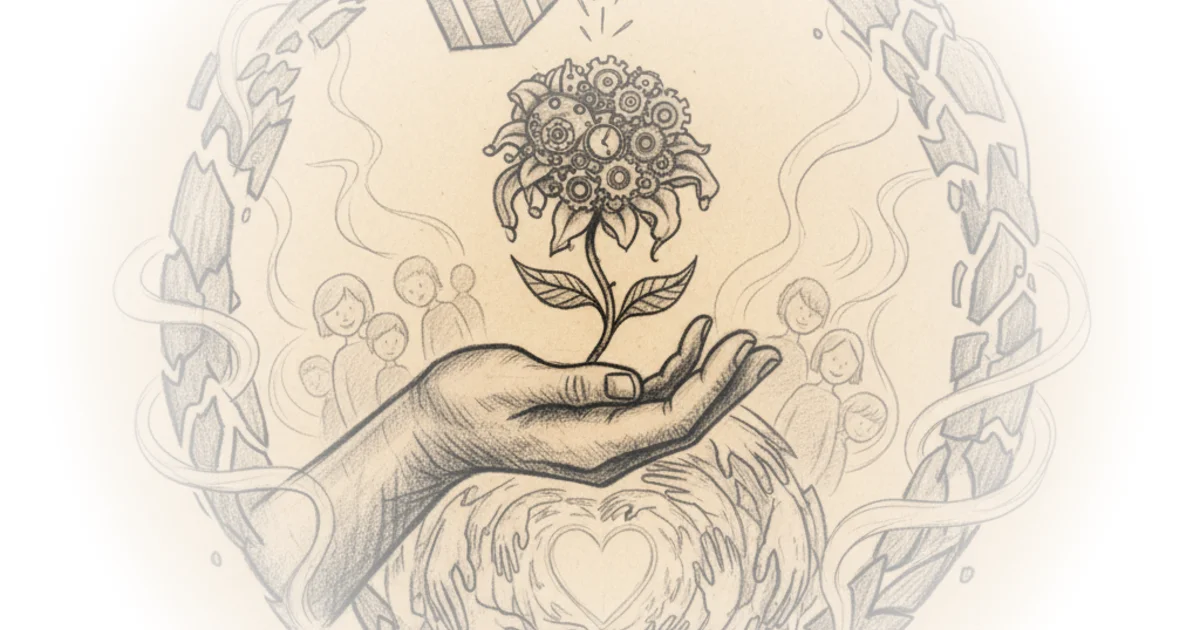
This historical framing is crucial because it reframes the modern holiday not as a tradition, but as a theft. Ouellette notes that the original service in Grafton, West Virginia, distributed 500 white carnations to honor a mother who organized women to save children's lives during the Civil War—a reference to the work of Ann Reeves Jarvis and the American War Mothers. The founder's intent was to recognize the "matchless service" of keeping babies alive in communities wrecked by disease and poverty, not to sell candy. As Ouellette puts it, "That's what was supposed to be honored, but got replaced with a box of candy you eat yourself."
Every politician who talks about the sanctity of motherhood while stripping away reproductive rights is engaged in an act so cynical and contradictory it's physically nauseating.
The Hypocrisy of Forced Sanctity
The commentary pivots from history to the brutal reality of current policy, arguing that the veneration of motherhood is a sham when the state refuses to support the choice to become a mother. Ouellette draws a direct line between the commercialization of the holiday and the criminalization of abortion, stating, "Every state that criminalizes abortion is a state that has decided it knows more about my own life than I do." She argues that the current political climate creates a paradox where women are told to revere motherhood while being denied the bodily autonomy required to enter it safely.
This argument is bolstered by the grim statistic that the United States has the highest maternal mortality rate among wealthy nations. Ouellette points out that this fact is "quietly ignored by the people who call themselves pro-life," suggesting that the true cost of this ideology is paid in blood. Critics might argue that the sanctity of life argument transcends policy outcomes, but Ouellette's evidence suggests that a system that forces birth while failing to provide care is fundamentally inconsistent with its stated values. She writes, "The truth is also that I love my mom, and have come to understand that she probably loves me, too, in the only ways she knows how," grounding the political in the deeply personal.
The Weight of the Mother-Blame Apparatus
Ouellette then dissects the psychological toll of the "mother-blame apparatus," tracing how society has shifted from blaming mothers for everything to pathologizing normal human imperfection. She references the mid-twentieth-century pseudoscience of Bruno Bettelheim, who falsely claimed that "refrigerator mothers caused autism," to illustrate how long women have been held to impossible standards. Today, this manifests as the "mother wound," a concept Ouellette suggests is often used to define adult unhappiness rather than addressing the systemic lack of support.
She shares her own story of a moment of violence with her child, a "stupid slap" that left her with a grief she still carries, to illustrate the gap between the idealized mother and the reality of exhaustion. "It is not the thing that Anna Jarvis envisioned," Ouellette writes, contrasting the cultural fantasy with the "bone-tired, unwitnessed, ongoing service" that defines actual motherhood. This section effectively humanizes the abstract policy debate, reminding the reader that behind every statistic is a person struggling to survive.
The inevitable maternal shortcomings that were once just part of the package of growing up are too often now defined in therapy as the primary source of adult unhappiness.
The Radical Act of Choice
Ultimately, Ouellette reframes the most sacred aspect of motherhood not as sacrifice, but as choice. She reflects on her own teenage decision to access abortion, noting, "That decision didn't end a life: it gave me one." She argues that the true honor due to mothers is the freedom to decide "when and whether and how to become one." This is a radical reclamation of the holiday's original spirit, which was rooted in the agency of women like Ann Reeves Jarvis who organized communities to protect life on their own terms.
The piece concludes with a powerful assertion of identity: "I am incorrigible." Ouellette transforms a word once used to condemn her mother into a badge of honor for a woman who has survived abuse, poverty, and societal judgment to build a life on her own terms. She suggests that the "trying" is the only thing that matters, a sentiment that resonates deeply in a culture obsessed with perfection.
Bottom Line
Ouellette's argument is most powerful in its ability to connect the historical betrayal of Anna Jarvis with the contemporary crisis of reproductive rights and maternal health. The piece's greatest vulnerability is its reliance on a specific, highly charged political moment, which may alienate readers who view the abortion debate through a different moral lens. However, the core thesis—that a society cannot claim to honor mothers while denying them safety and autonomy—is a compelling and necessary intervention in the current cultural conversation.