Matthew Yglesias delivers a stinging critique of the current administration's economic playbook, arguing that a wave of populist gestures—dubbed "affordability slop"—is designed to manufacture the appearance of action while ignoring the macroeconomic realities that actually drive prices. The piece is notable not for predicting failure, but for dissecting the specific mechanics of why these policies, from meatpacking crackdowns to credit-card caps, are destined to disappoint the very voters they claim to help. In an era where political theater often masquerades as policy, Yglesias offers a sobering reminder that inflation is a macroeconomic phenomenon that cannot be solved by executive orders or targeted bans.
The Illusion of Action
Yglesias opens by drawing a sharp parallel between two distinct administrations, noting that despite their ideological differences, both have resorted to the same performative tactics to quell public anger over the cost of living. He writes, "If you want to address public concern about inflation, you need to both alter people's lived experience of inflation and also alter the news coverage of inflation." This observation cuts to the heart of the political dilemma: leaders are desperate to be seen doing something, even if that "something" is economically inert. The author points out that the current administration's recent moves, such as purporting to make it harder for large investors to buy single-family homes or demanding banks reduce credit-card interest rates, are classic examples of this flailing.
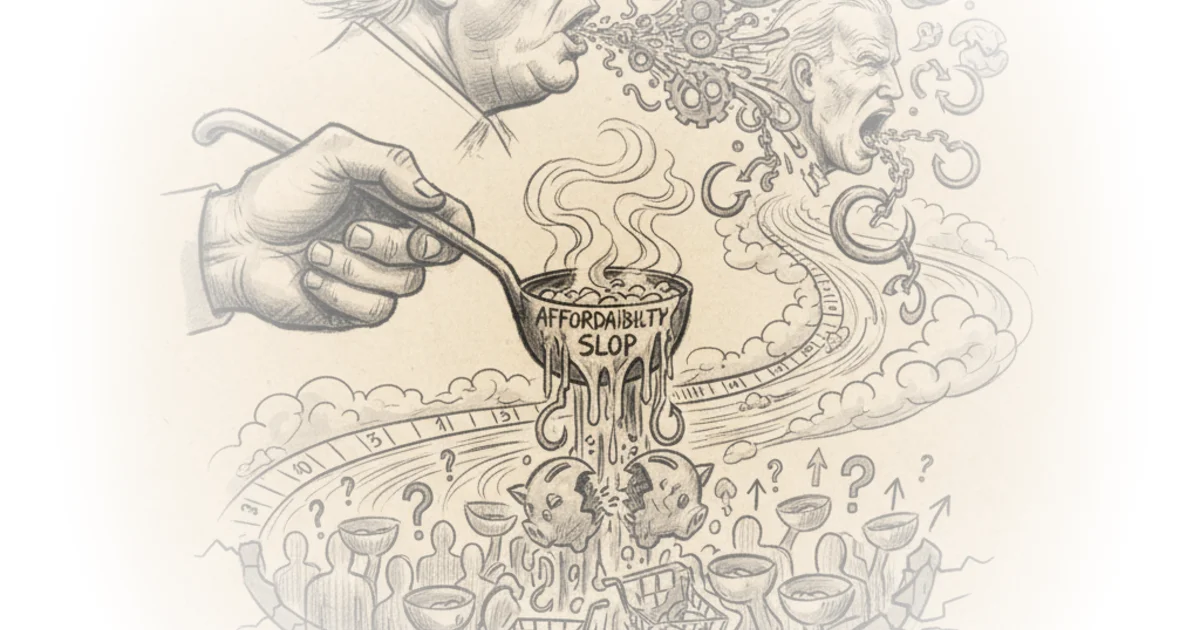
The commentary highlights a recurring pattern of reversals and contradictions, such as the administration initially supporting 401(k) taps for down payments before the president publicly retreated from the idea. Yglesias argues this is not just confusion, but a strategic miscalculation. "I think this kind of flailing slopulism probably works a bit better for a Republican than a Democrat, because it plays against type," he notes, suggesting that the political cover for such policies is thinner than it appears. However, the core argument remains that these measures fail to address the root causes of high prices. As Yglesias puts it, "If you claim that antitrust enforcement against meatpackers will make beef cheaper, that probably sounds like a great idea to most people. But is beef actually going to be cheaper? I don't think it will."
Inflation is a macroeconomic phenomenon. He campaigned on an explicit and wildly unrealistic promise to deliver negative inflation. He has not fulfilled that promise, and, in fact, inflation has been consistently above the Fed's target rate.
The Egg Problem and Macro Realities
To illustrate the disconnect between political promises and economic outcomes, Yglesias invokes the "egg problem," a reference to the 2020–2026 H5N1 outbreak that drove egg prices to historic highs. He recalls how supermarkets allowed shortages to pile up to avoid setting market-clearing prices, creating a media frenzy that only subsided once prices naturally fell. "The lesson that Trump doesn't want to learn here is that inflation is a macroeconomic phenomenon," Yglesias writes, emphasizing that political will cannot override supply and demand dynamics. The author argues that the current administration is ignoring the fundamental truth that inflation is driven by broad monetary conditions, not just specific industry practices.
Critics might note that focusing solely on macroeconomics can feel dismissive of legitimate grievances regarding market concentration. However, Yglesias counters this by pointing to the data. He references a chart from Fred Ashton at the American Action Forum showing that meatpacker profits have "fully normalized" since their 2022 surge. The settlements reached by Tyson and others, totaling about $140 million, are described as "tiny relative to the beef market." The author suggests that while ranchers have valid complaints about pricing power, the current antitrust push is largely symbolic. "It's a two-sided market... in which the downstream side is inherently more competitive because beef competes with other proteins," Yglesias explains, implying that the benefits of this structure often flow to consumers in the form of lower retail prices.
The Housing and Credit Card Fallacies
The piece then turns its scrutiny to the housing market, where the administration's ban on institutional investors buying single-family homes is framed as "protectionism for small-time landlords." Yglesias argues that this policy misunderstands the barrier to entry for first-time buyers. "If you're renting because you can't get a mortgage, then banning investors from buying single-family homes is not going to get you a mortgage," he writes. The real solution, he contends, involves "reduced mortgage standards and more construction of starter homes," not blocking capital flows. He points out the irony of an administration that winks at NIMBYism while imposing tariffs on Korean lumber, a move that only raises construction costs.
Similarly, the proposal to cap credit-card interest rates at 10 percent is dismissed as a policy that "polls incredibly well" but would have disastrous downstream effects. Yglesias warns that once implemented, "suddenly a bunch of people are going to be unable to get a credit card and they'll be mad." He notes that the market is not as concentrated as proponents claim, observing that "the top 10 automakers have 94 percent of the American car market," yet we do not see similar calls for caps on auto loans. The author suggests that even if the cap worked, it would likely fuel further inflation by increasing demand without increasing supply. "At the end of the day, inflation is still a macroeconomic issue, and it needs a macroeconomic solution," Yglesias concludes.
The Path to Boring Solutions
In the final analysis, Yglesias advocates for a return to "boring, earnest, somewhat politically difficult reforms" as the only viable path to genuine affordability. He contrasts the current "populist slop" with the kind of deficit reduction that characterized the 1993 Clinton agenda, which he argues is the only way to bring interest rates and inflation down simultaneously. "Deficit reduction means that gimmicky, popular Trump tax proposals like 'no tax on tips' are probably a bad idea," he writes, acknowledging that such fiscal restraint is politically unpalatable but economically necessary. The author lists a series of unglamorous reforms—from eliminating ethanol subsidies to reforming pilot training times—that could unlock productivity growth.
The commentary suggests that the current administration's focus on the stock market and big technology companies misses the broader picture of economic growth. "Trump conceptualizes economic growth almost exclusively through the stock market... What he doesn't have is an appreciation of markets or economic logic more broadly," Yglesias observes. The piece ends with a challenge to the administration: "If Trump thinks that's important, he should try to make those choices. If he doesn't think affordability is important, then best of luck to him." The author warns that this halfway house of "slop economics" will ultimately help no one, leaving the public with high prices and a government that failed to deliver on its promises.
Bottom Line
Yglesias's strongest argument lies in his relentless focus on the distinction between political theater and economic reality, effectively dismantling the logic behind the administration's most popular affordability proposals. The piece's biggest vulnerability is its reliance on a technocratic consensus that may struggle to resonate with voters who feel the pain of high prices regardless of the macroeconomic data. Readers should watch for whether the administration pivots from these performative measures to the "boring" structural reforms Yglesias advocates, or if they continue to double down on policies that offer political wins but economic failures.