The piece is notable because it corrects one of the most persistent misunderstandings in literary interpretation: that Raskolnikov embodies Nietzsche's philosophy. Stephen West spends significant time dismantling this reading, and he does so by establishing something that's easy to miss when casually discussing classic literature — the chronology matters.
The Misunderstanding Problem
West writes with characteristic directness about what many people say and repeat about this book. "A lot of people will say what it is I'm about to say and then a lot of people will repeat it as it turns out they'll say that raskolnikov as a character is an embodiment of the philosophy of Frederick n" — meaning Nietzsche. This is the popular misreading he's correcting, and he does so by pointing out that Crime and Punishment was written in 1866, while Nietzsche's explicit mention of "God is dead" comes in The Gay Science in 1882. The timeline simply doesn't support the interpretation.
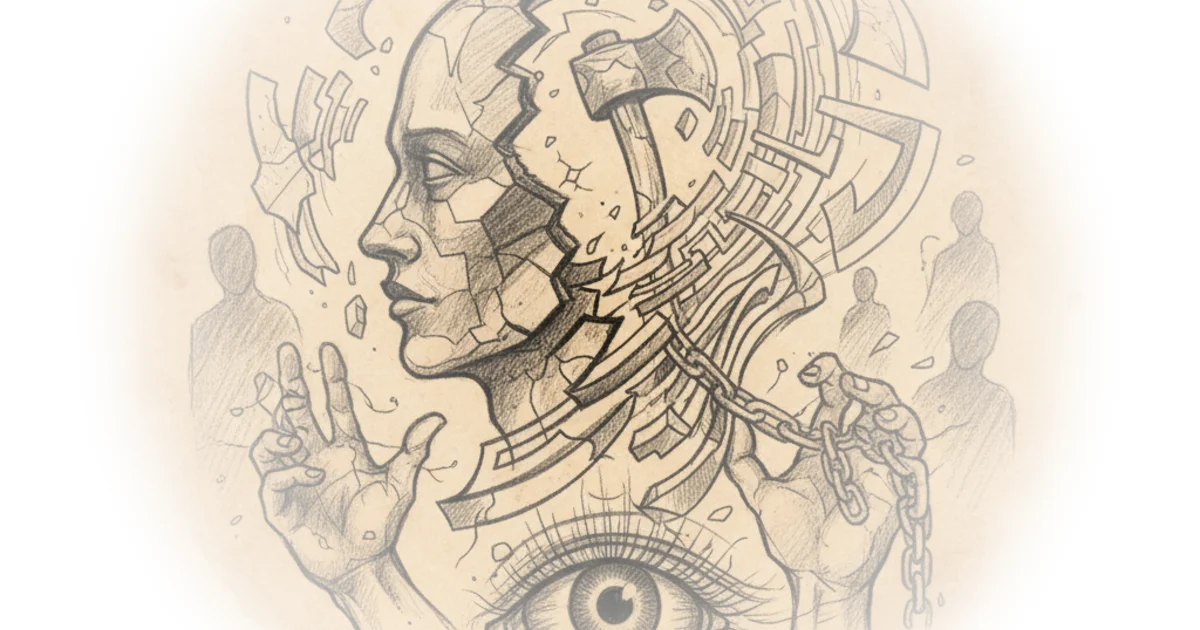
West makes a second point that's even more interesting: even if you stretch the timeline to say Dostoevsky was referencing ideas that Nietzsche later crystallized, this would be an "even worse misunderstanding." Why? Because Raskolnikov represents exactly the kind of person Nietzsche spent most of his career critiquing — an inauthentic vessel carrying ideas without self-awareness. This is the heart of West's correction: Raskolnikov isn't trying to affirm life through creative values; he's doing something far more reactive.
The Underground Man Connection
West draws on the previous episode about Notes from Underground, comparing that character to Raskolnikov. "Think of the underground man as the sort of prototype version of the character of raskolnikov because they have several key similarities." Both are smart, both think they see through systems others believe in, both feel superior to their peers. But unlike the Underground man who is trapped in his house, Raskolnikov can take action — which means he's capable of making big mistakes.
This comparison works well as a literary bridge for listeners who heard the earlier episode. West doesn't assume everyone has read both books, but he makes the character analysis richer by showing how Dostoevsky builds on themes.
The Murder's Purpose
Here is where West's argument gains real force: "the murder is actually a secondary thing to the main point of the book." This reframes what Crime and Punishment is about. It's not really about the axe murder at all — it's about Raskolnikov coming to terms with why he did it, and specifically that he's been lying to himself about his motivations.
The true drama of crime and punishment is actually the complexity of the internal experience of raskolnikov and him coming to terms slowly and painfully with the true reasons why he committed these murders in the first place that he's been lying to himself for a very long time
This is the philosophical payoff West wants listeners to grasp. The murder is a vehicle for existential reckoning, not the story's center.
Utilitarianism and Its Failures
West identifies two "big problems" philosophically that stem from Russian nihilism. First, utilitarianism — the belief that through rational calculation you can arrive at moral truth and organize people into a perfectible system. Raskolnikov's plan perfectly illustrates how difficult this is: his calculation transformed into killing an innocent person. The second problem stems directly from the first: rational egoism that places Raskolnikov "at the center of this decision-making process."
The critique here is sharp: it's not just that utilitarianism fails as a moral framework, but that it becomes particularly dangerous when combined with egocentricity — the assumption that an individual can calculate what the objectively right thing to do is and should be the arbiter of that choice.
The "Special Person" Problem
West's analysis of Raskolnikov's self-belief is perhaps the most psychologically nuanced part of his commentary. "Raskolnikov believes that he is special in the book actually to be more accurate he thinks he might be special." This matters because it explains why he commits the murders — not just for money, but as a test: "he says repeatedly in the book he wants to run a test to see if this is the kind of person he is."
This connects directly to Nietzsche's concept, though West argues it's not the concept people think it is. Raskolnikov wants to create his own morality and "essentially become a God himself." But West clarifies: the Uberman in Nietzsche's actual philosophy isn't someone who recreates morality — they're someone who's "transcended the very idea of morality altogether."
The only criteria that would matter to them about whether something was worth doing or not is just whether it really is something that corresponds to their own will
This distinction matters. Raskolnikov is still playing moral scorekeeping, just with different rules. Nietzsche's figure would have transcended the game entirely.
Bottom Line
West's strongest move is reframing what Crime and Punishment is actually about — not a crime story but an internal reckoning with self-deception. His correction of the Nietzsche misunderstanding is well-argued and historically grounded. The piece's vulnerability lies in how much it assumes listeners already know Russian nihilism; some context on what that movement was specifically could have strengthened the argument for those unfamiliar with the period.
The philosophical themes West identifies — utilitarianism, rational egoism, the "special person" test — are all real tensions Dostoevsky dramatizes brilliantly. But West leaves room for disagreement: one could argue that Raskolnikov's very attempt to find out if he's special is itself a form of affirmation that Nietzsche would recognize, even if Raskolnikov fails at it.