Cory Doctorow delivers a startling geopolitical thesis: the very figure dismantling American hegemony is inadvertently forging a global coalition powerful enough to replace it. He argues that the administration's belligerence has united three disparate factions—digital rights activists, global investors, and national security hawks—into a single force for a "post-American internet." This is not a standard political critique; it is a structural analysis of how policy failures create unexpected alliances, suggesting that the world's response to Washington's volatility will be a deliberate, coordinated decoupling.
The Mechanics of the Anti-Trump Coalition
Doctorow begins by dismantling the idea that political unity requires ideological purity. He observes that the current administration's power rests on a fragile alliance of groups who "absolutely hate each other and want each other to die." He notes the absurdity of this dynamic: "Nick Fuentes wants to turn Ben Shapiro into a lampshade, but they both sent their followers to the ballot box for Trump." This contradiction, Doctorow argues, is not a bug but a feature of a coalition held together only by a single, dominant personality.
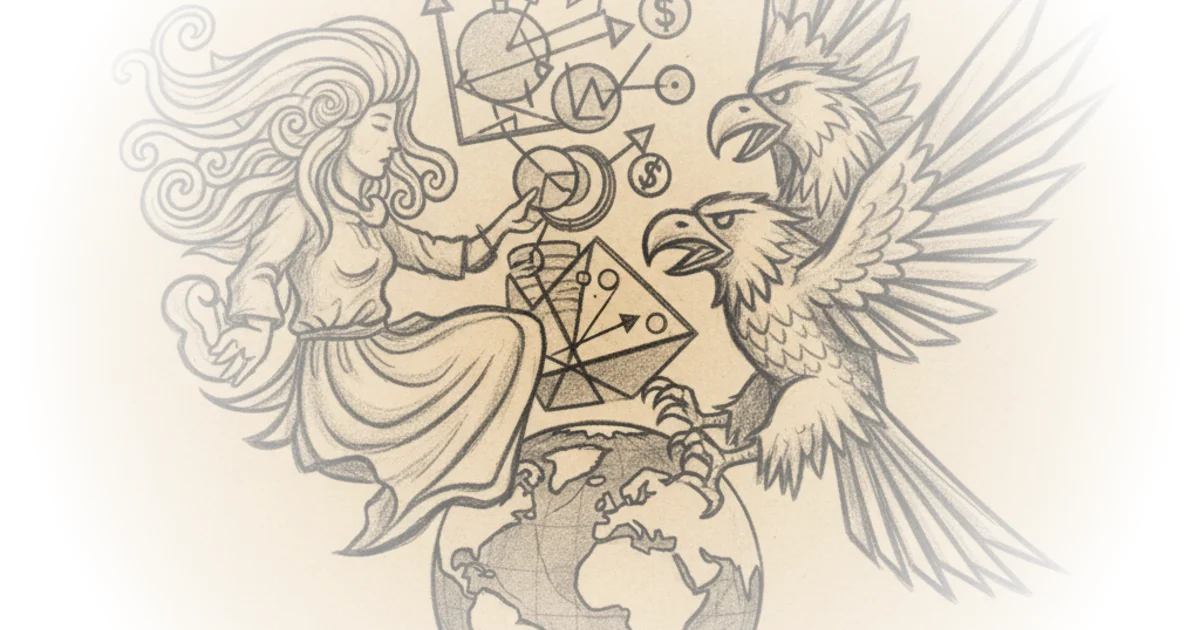
The author's framing here is sharp. He suggests that the administration's "incontinent belligerence" and "cognitive decline" have done the heavy lifting for the opposition, conjuring a new, equally diverse coalition united solely by the desire to resist "Trumpismo." This reframes the opposition not as a moral crusade, but as a pragmatic necessity. The "Never-Trumper" conservatives and Democratic Socialists are not friends; they are temporary allies in a narrow struggle. This is a crucial distinction for busy readers to grasp: the coming global shift is not about shared values, but shared enemies.
"Political change is downstream of coalition building, and coalitions are fragile things, because by definition they are not fully aligned; they share some goals but often violently disagree about others."
The Economic Incentive for Disenshittification
The piece pivots to the economic engine of this new alliance, introducing Doctorow's concept of "enshittification"—the process by which platforms degrade user experience to extract maximum value. He argues that for decades, the U.S. Trade Representative bullied allies into enacting "anticircumvention" laws that prevented them from fixing or modifying American tech. The result was a global monopoly for U.S. giants.
However, the administration's decision to tariff these same partners while maintaining the restrictive laws has flipped the script. Doctorow writes, "The trillions that US tech companies extract could be someone else's billions — all they'd have to do is offer the interoperable goods and services that disenshittify America's tech products." Suddenly, the "digital rights hippies" who have fought for privacy for twenty years have a new, unlikely ally: the entrepreneur who just wants to make money.
This is the article's most provocative insight. The motivation for building a "post-American internet" is no longer just about human rights; it is about profit. "They see Big Tech's margin as their opportunity," Doctorow notes. He connects this to the broader history of sovereign wealth funds, noting how entities like Norway's have long used their capital to challenge excessive executive compensation, suggesting a similar financial leverage is now available against U.S. tech monopolies. The argument is that the administration's isolationism has turned every other nation into a potential competitor, eager to build the tools that allow users to own their data and devices.
Critics might argue that this economic optimism overlooks the immense network effects and capital advantages U.S. firms still possess. A country trying to build an alternative app store faces a steep uphill battle against the entrenched ecosystems of Apple and Google, regardless of tariff policies. Yet, Doctorow's point stands that the political will to break those monopolies has finally aligned with the economic incentive.
National Security Hawks Join the Fray
The third pillar of Doctorow's coalition is the most alarming: national security hawks. He details how the administration has weaponized U.S. technology against international institutions and allies. When the International Criminal Court issued an arrest warrant for a foreign leader, the administration allegedly directed Microsoft to shut down the court's IT systems, cutting off access to email and archives for the Chief Justice.
Doctorow writes, "Trump doesn't need to roll tanks to take over their countries: he can just brick their key ministries, major firms, and households." This threat has radicalized traditional U.S. allies. The administration's attempt to "steal Greenland" or interfere in foreign elections to protect dictators has convinced security establishments that reliance on American infrastructure is an existential risk. The logic is chillingly simple: if the U.S. executive branch can remotely disable a foreign court, it can disable a foreign power grid.
"Combine the natsec hawks; the economic development wonks, entrepreneurs and investors; and the privacy and digital and human rights activists, and you've got a hell of an anti-Trump coalition around the world."
This section draws a parallel to the administration's dismantling of the fossil fuel consensus, where climate activists, electrification manufacturers, and security experts found common ground in the need to reduce dependence on volatile oil markets. Doctorow suggests the same triad is now forming around digital sovereignty. The "post-American internet" he envisions is built on international digital public goods, running on servers outside U.S. jurisdiction, immune to the whims of a single executive.
The Human Cost of Sovereignty
While Doctorow focuses on the structural and economic shifts, the human cost of this transition is implicit but profound. The administration's actions—cutting off food and health aid, dismantling public health systems, and enforcing restrictive patents on pharmaceuticals—have left the Global South vulnerable. Doctorow imagines a scenario where reproductive rights advocates in these regions join forces with investors to produce generic pharmaceuticals, driven by the realization that their "food and health sovereignty" is at risk.
This is not just about technology; it is about survival. The administration's dogmatic approach to aid and patents has forced nations to choose between compliance with U.S. demands and the basic health of their populations. The resulting coalition is a desperate, pragmatic response to a system that no longer serves its global partners. As Doctorow puts it, "It's easy to imagine that reproductive rights and health justice advocates in those countries are now on the same side as investors who'd like to get into business selling generic pharmaceuticals."
"We disagree about so much, but we all agree on this: it's past time for a post-American world, and Comrade Trump is delivering it."
Bottom Line
Doctorow's strongest argument is his identification of the "profit motive" as the glue holding this unlikely global coalition together, transforming a moral struggle into an economic inevitability. However, the piece's greatest vulnerability lies in its assumption that these disparate groups can maintain unity once the immediate threat of the administration recedes; history suggests such coalitions often fracture once the common enemy is gone. Readers should watch for the first major international investment in non-U.S. digital infrastructure, which will signal whether this theoretical coalition is ready to become a reality.