Chris Smaje transforms a fifteen-mile walk into a profound meditation on the fragility of modern civilization, using the stark contrast between the desolate English countryside and the chaotic density of the Glastonbury Festival to question our future survival. This is not a standard festival review; it is a field report on the unraveling of the nation-state and the desperate search for authentic connection in a world increasingly defined by crisis. Smaje argues that while we build massive, temporary "pop-up cities" to simulate community, we have lost the material and spiritual foundations necessary to sustain life when the systems fail.
The Ghost Town and the Pop-Up City
Smaje begins by framing his journey as a narrative device for his forthcoming book, walking from his home to the festival site through a landscape that feels eerily empty. He describes the silence of the countryside with a haunting clarity: "The handful of villages I walked through were deserted. The only people I otherwise saw were motorists on the country lanes I occasionally crossed." This observation of rural underpopulation sets the stage for his critique of modern land use, where he notes that "you could carve a lot of vegetable allotments out of these fields" currently dedicated to low-yield dairy or maize silage. The author's point is that the current agrarian model is inefficient and disconnected from local needs, a vulnerability that becomes critical as global supply chains face disruption.
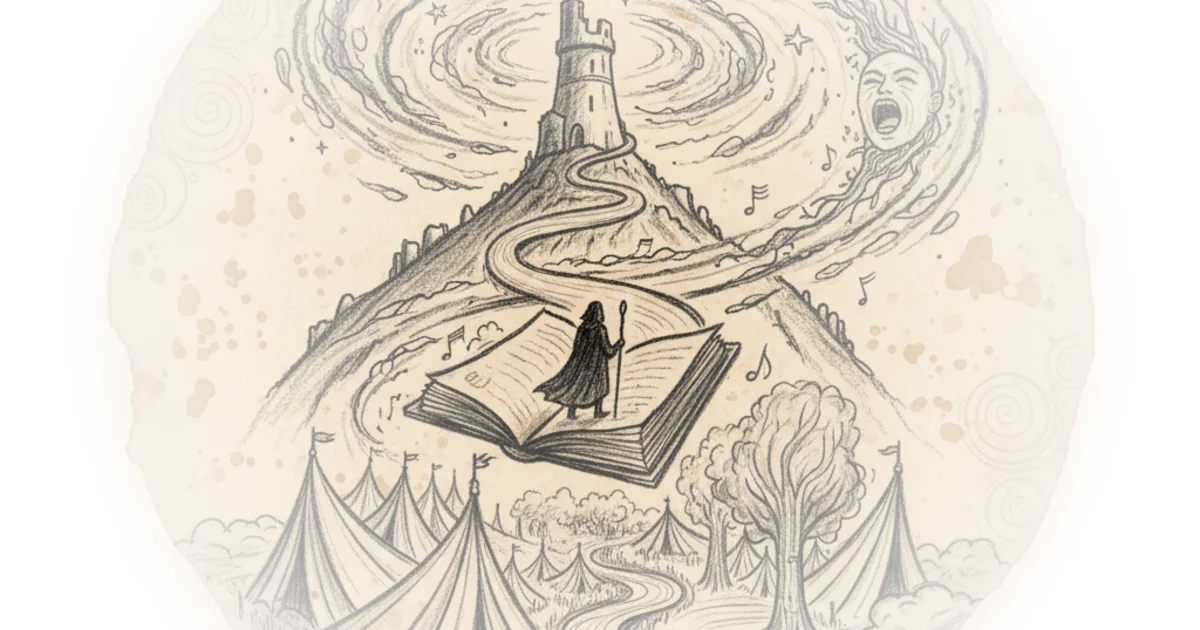
Upon arriving at the festival, the contrast is jarring. Smaje describes the event as a "pop-up city" with 200,000 people, noting that "Having walked for most of the day in near solitude, I found it hard to handle." He captures the psychological whiplash of the modern urban experience, moving from isolation to overwhelming density. The festival, he argues, mimics the migration to cities but lacks the permanence or the deep social cohesion of true communities. "This is hell, I want to go home. Okay, now I'm getting to know my way around – hey, there's some cool stuff happening here. Yeah, but ultimately what does it all mean?" Smaje writes, capturing the cyclical anxiety of the modern dweller who seeks purpose in consumption and spectacle but finds it elusive.
A problem for the agrarian localist is how to reconcile with an unreconcilable modernity.
The Illusion of Cultural Reconciliation
The piece takes a sharp turn into cultural critique when Smaje reflects on the music, specifically a performance by reggae legend Burning Spear. He recalls how the music once shattered his "suburban firmament," offering a spiritual connection he felt was missing from his life. However, he now questions the authenticity of his own engagement with this culture. Citing an argument by journalist Gary Younge, Smaje suggests that white audiences often discover black history and culture in a way that "ultimately speaks more to their own self-centred journeyings than to anything that gives its due to black people's lives and struggles today." This is a crucial moment of self-reflection; Smaje admits that his youthful enthusiasm may have been a form of appropriation rather than genuine solidarity.
He extends this critique to the broader festival atmosphere, observing that while there was great music, he "didn't really get that sense of connection, purpose and reconciliation." The author posits that contemporary culture has failed to answer the deep human questions of belonging. "I think this is because contemporary modern culture hasn't found great answers to them," he asserts. Instead, the festival becomes a place where people "vicariously imputing the answers to oppressed people and their struggles," a dynamic he links to the themes in Musa al-Gharbi's book We Have Never Been Woke. Critics might argue that Smaje is being overly harsh on the festival's capacity for genuine community, as many attendees do find real connection there. However, his focus remains on the structural inability of modern institutions to provide lasting meaning.
The Fragility of Infrastructure and the Rise of Localism
As the narrative shifts to the mechanics of the festival, Smaje highlights the precarious nature of modern life. He observes the "Big John Deeres toting tanks of human effluent" and the reliance on trucks for food, noting that while permanent cities manage these systems more invisibly, they may not be sustainable in the long term. "My hunch is that the tractors, the tanks, the trucks, the traffic jams and the water pipes have a different story to tell," he writes, suggesting that the energy required to maintain these pop-up cities is a ticking clock. The festival serves as a microcosm of the wider crisis: a temporary suspension of normalcy that relies on complex, fragile supply chains.
In contrast, Smaje finds hope in the "sleeping tribe" of craftspeople in the craft field—blacksmiths, woodturners, and basket-makers. He views their work as a preparation for a future where modern systems collapse: "to me they're a sleeping tribe, biding their time as best they can until the pop-up cities of modernity pop off, and their skills are called for a higher purpose." This leads to his broader political argument about the potential fragmentation of nation-states. He questions the necessity of the political container of "England," asking, "Suppose Glastonbury or Bristol were autonomous or quasi-autonomous entities with a different kind of politics to that which emanates from London or Westminster?" This speculation aligns with his view that as the "meta-crisis" intensifies, local autonomy will become a matter of survival rather than just political preference.
The Voice of Nature
The piece concludes with a return to the natural world, offering a quiet counterpoint to the noise of human politics and the roar of the festival. Smaje describes a chiffchaff bird trying to sing over the drum and bass of the all-night sound systems. "Is there a solace in nature to be found there, that eventually these times will pass?" he asks, ending on the bird's indomitable call. This final image reinforces his central thesis: while human systems are volatile and often self-destructive, the natural world persists, offering a rhythm that transcends the political chaos. The author leaves the reader with the impression that the future may belong not to the grand political projects of the state, but to the small, resilient skills of local communities and the enduring presence of the land itself.
Bottom Line
Smaje's most compelling argument is the juxtaposition of the festival's temporary, energy-intensive existence against the quiet, resilient potential of local, low-tech living. His willingness to critique his own cultural consumption adds necessary depth to his analysis of modern alienation. However, the piece's greatest vulnerability lies in its somewhat romanticized view of localism, which may underestimate the immense logistical challenges of feeding and sheltering populations without the current global infrastructure. Readers should watch for how Smaje develops the concept of "autonomist local politics" in his upcoming work, as this could define the next phase of his critique on the future of the nation-state.