Emily Atkin exposes a chilling pivot in the fossil fuel industry's playbook: as global instability rises, oil giants are abandoning their promise of a green transition to argue that their own existence is the only guarantee of national security. This isn't just more greenwashing; it is a calculated rebranding of extraction as a shield against chaos, a narrative shift that demands scrutiny now more than ever.
The Evolution of the Narrative
Atkin's analysis of a new report by Clean Creatives reveals a systematic, four-year evolution in how major oil companies frame their role in the world. She writes, "The fossil fuel industry's ad campaigns are state of the art propaganda developed in partnership with public relations experts and based on almost a century of collaborative experience." This framing is crucial because it moves the conversation from accidental corporate negligence to intentional, high-level psychological manipulation.
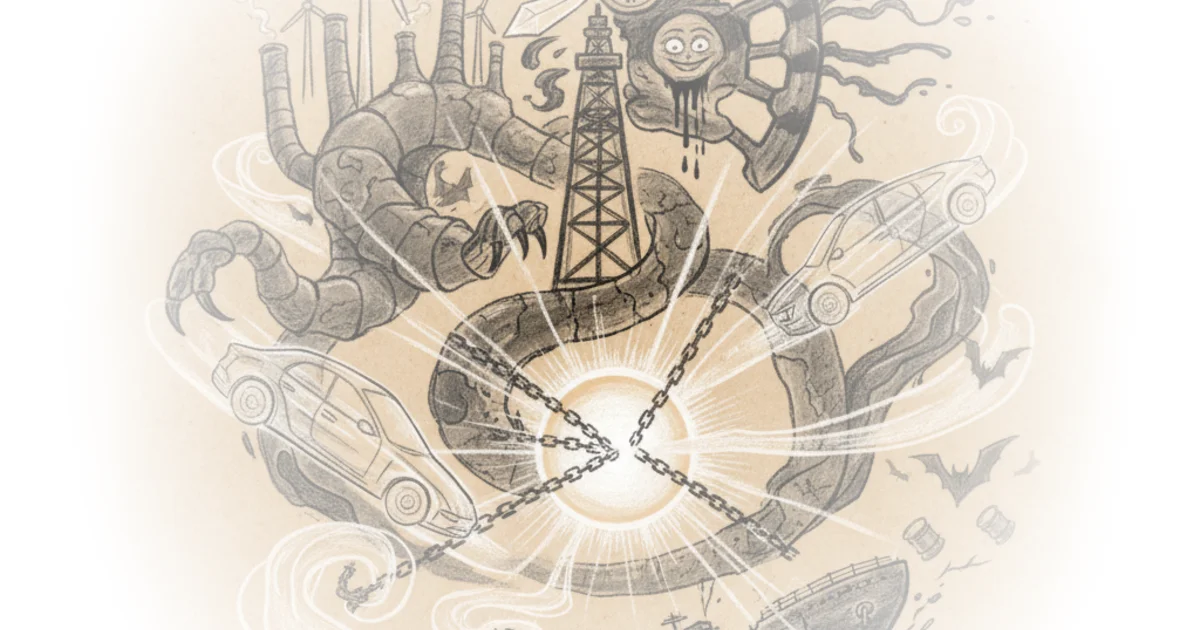
The author traces a clear timeline. In 2020 and 2021, the industry leaned heavily on "net zero pledges" and imagery of wind turbines. However, the invasion of Ukraine in 2022 triggered an immediate strategic pivot. Atkin notes that "instead of talking non-stop about energy transition, the report found, companies started emphasizing security." Fossil fuels were suddenly rebranded not as a problem to be phased out, but as a "safeguard against chaos."
This shift is particularly striking when viewed against the backdrop of the American Petroleum Institute's recent advertising. As Atkin points out, the industry is now telling us that "the only way we're going to have an affordable, safe, and consistent future is to continue to invest in fossil fuels." This argument conveniently ignores the volatility of global markets, where even "American" oil is subject to the same geopolitical shocks as any other barrel. Critics might argue that energy security is a legitimate concern during wartime, yet Atkin effectively dismantles this by highlighting that sunlight and wind cannot be held hostage on a tanker in the Strait of Hormuz.
If fossil fuels were truly inevitable, there would be no need for a constant, multi-billion-dollar campaign to convince us of that fact.
By 2023, the messaging evolved again into a "do both" strategy, promoting carbon capture and hydrogen as ways to expand production while claiming to lower emissions. Atkin cuts through this obfuscation, stating, "By 'do both,' the industry really just meant 'drill more oil' and 'drill more oil but call it climate-friendly.'" This mirrors historical patterns seen in the industry's use of Corporate Social Responsibility reports, which have long served to deflect attention from core business models rather than drive genuine reform.
The Cost of the New Propaganda
The stakes of this narrative shift are not merely rhetorical; they have tangible human and environmental costs. Atkin connects the dots between the industry's insistence on permanence and the reality of conflict, noting that "Big Oil is working overtime to polish its reputation as prices surge and black clouds of poison fill Tehran's skies." The human cost of war and the climate crisis are inextricably linked, yet the industry's ads frame their product as the solution to the very instability they exacerbate.
The financial scale of this effort is staggering. Oil companies spend nearly $7 billion a year on media and public relations. Atkin argues that "ads are one of the most effective ways the oil industry buys social license to operate." Without this manufactured consent, the industry would be far more vulnerable to regulation. The author highlights the irony of this spending: "The oil industry is spending $7 billion a year telling you oil is inevitable not because it's true, but because it desperately needs everyone to believe it."
This relentless assertion of necessity is a sign of weakness, not strength. As Atkin observes, "That insistence is not evidence of inevitability. It's just the sound of power trying not to lose control." The industry's pivot to LNG (liquefied natural gas) as a "climate solution," as seen in Shell's recent strategy, further illustrates this desperation. While the executive branch and various agencies may debate the pace of transition, the industry's own marketing reveals a deep fear that the public is beginning to realize that renewable energy offers a path free from the geopolitical hostage-taking of the past.
Bottom Line
Atkin's most compelling contribution is her identification of the industry's shift from "greenwashing" to "gaslighting," where the narrative has moved from promising a clean future to insisting that the current dirty one is the only safe option. The argument's greatest strength lies in its data-driven timeline of advertising changes, which exposes the industry's opportunistic pivots in response to global crises. However, the piece could go further in detailing specific policy mechanisms that could counter this propaganda, leaving the reader with a clear diagnosis of the problem but fewer tools for the cure.
The industry's claim that fossil fuels are essential for security is a fabrication designed to protect profits, not people. As the world grapples with the consequences of conflict and climate change, the most dangerous lie being told is that we have no choice but to keep burning.