In a cultural moment defined by political exhaustion, Amanda Vines offers a startling pivot: she begins her reflection not with the chaos of the present, but with the artificial comfort of a fairy tale ending. Drawing on Katie Gaddini's sociological work on conservative women, Vines argues that the American Right's political fervor is actually a desperate, misplaced search for the biblical concept of shalom—a peace that politics cannot deliver. For the weary listener navigating a fractured landscape, this piece cuts through the noise of partisan victory to ask a more dangerous question: what happens when we realize our leaders are not the heroes of our story?
The Myth of the Political Happy Ending
Vines, a former chemistry teacher and current doctoral student in Christian education, opens with a subversive observation about how humans are conditioned to expect neat resolutions. "People behave with endings in mind," she writes, noting how the "pretty bow that ties up the tale" is usually reserved for the final page, not the opening. She traces this psychological formation to the storytelling pipeline of her youth, where Disney films promised that goodness would always prevail and that a "happy ending" was guaranteed if one remained righteous.
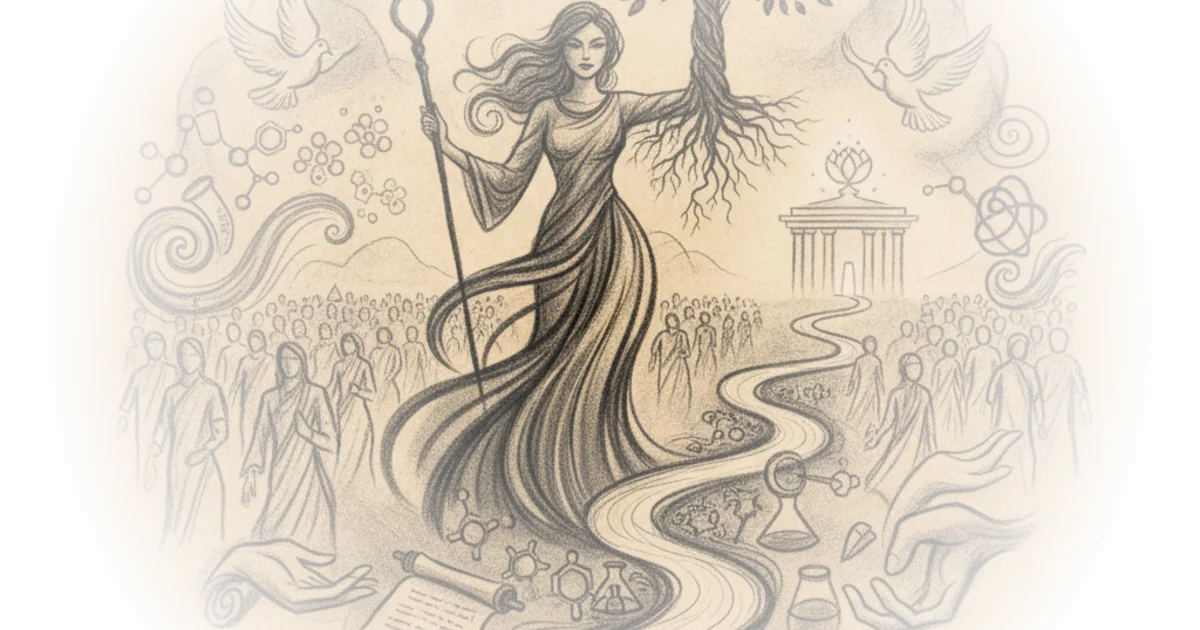
This framing is particularly potent because it identifies a spiritual hunger that has been co-opted by political ideology. Vines suggests that for many, the recent political landscape has been viewed through a lens where the "anti-hero can be and should be heralded" simply because they promise a restoration of order. She writes, "Supporters of Donald Trump have largely celebrated the nation's political landscape since November 2024," observing that this group often operates on the principle that "ends justify the means." This is a crucial distinction; the author is not merely critiquing a policy but diagnosing a theological error where the desire for peace overrides the moral cost of the methods used to achieve it.
Critics might argue that dismissing the genuine relief some feel regarding the shift in political power ignores the very real anxieties that drove them to the polls. However, Vines maintains that this relief is fragile because it is rooted in "broken cisterns of hope that sit apart from trust in God."
"No anti-hero is necessary to bridge the gap to the good life if we embrace a biblical view of flourishing versus American nationalism."
Mapping the Archetypes of Political Hope
The core of Vines' commentary lies in her engagement with Gaddini's six archetypes of conservative women, ranging from the "Liberty Flames" who view politics as spiritual warfare to the "Mama Bears" who feel divinely anointed to protect children from progressive ideologies. Vines does not mock these groups; instead, she validates their convictions before challenging their ultimate source of security. She notes that the "Liberty Flames" and "Regent Royals" often mistake political opponents for biblical enemies, a dangerous shift where "those whom we should debate become those we should defeat."
Vines argues that this tribalism misunderstands the nature of spiritual warfare. "For the church, our greatest enemies are the devil, our own 'flesh' of selfishness, and the world governed by self-interest and pride," she asserts, citing the New Testament to reorient the reader's focus from cultural battles to spiritual realities. This is a strong rhetorical move, as it respects the intensity of the believer's conviction while redirecting its energy away from partisan conflict.
Similarly, when addressing the "Mama Bears," Vines affirms the sacredness of motherhood and the biblical mandate to protect the vulnerable. Yet, she gently pushes back against the idea that political conservatism is the only vehicle for this protection. "Moms hold great influence and wisdom, yet we entrust our children to the Lord's sovereign care, and faith cannot be forced," she writes. This nuance is vital; it acknowledges the fear driving these mothers without validating the conclusion that the state must be the ultimate guardian of their children's souls.
The piece also touches on the "Blexiters," women who reject systemic racism narratives in favor of conservative alignment, and the "Powerhouses," who defend traditional gender roles. In each case, Vines finds a kernel of truth—the desire for dignity, the rejection of stereotypes, the value of family—before pointing out the "broken cisterns" where these desires are being stored. She writes that the "diversity of all peoples and nations will be represented under the reign of Christ," suggesting that the political solutions these women seek are actually already present in the theological promise of the gospel, not in the ballot box.
This approach mirrors the ancient tradition of the "City Lament," where prophets acknowledged the deep pain and brokenness of a society while refusing to let that pain become the final word. Just as the city of Babylon was not the ultimate reality for the exiles, Vines implies that the current political order is not the final destination for the believer.
"In the end, no political party offers shalom like Jesus offers shalom. He is the Prince of Peace."
The Gospel as the True Shalom
The final section of the commentary serves as a corrective to the "ends justify the means" mentality. Vines argues that the "White Suburbanites," who prioritize law and order and the American Dream, are seeking a version of prosperity that the kingdom of God redefines. She writes, "Jesus describes the kingdom of God as all that is fair and good, emphasizing humility and self-giving love, which his people can emulate now as an invitation to the world."
Here, the author leverages the concept of shalom not just as the absence of conflict, but as a state of holistic flourishing. She contrasts the "material wealth, individualism, and the necessity of war" often found in nationalist visions with the "diverse kingdom of self-giving love embodied by Christ." This distinction is the intellectual anchor of the piece. It suggests that the exhaustion many feel comes from trying to build a kingdom of heaven with the tools of an earthly empire.
Vines concludes by flipping the narrative arc entirely. Instead of waiting for a political savior to fix the nation, she invites the reader to look toward a different kind of ending. "The kingdom of God promises community for the Liberty Flames and Regent Royals, safety for the children of the Mama Bears, identity for the Blexiters, dignity for the Powerhouses, confidence for the Influencers, and prosperity for the White Suburbanites," she writes. It is a comprehensive vision that addresses the specific longings of each group but locates their fulfillment in a reality far beyond the next election cycle.
Critics of this theological approach might argue that it risks disengaging believers from the urgent, practical work of civic justice, effectively telling them to wait for a divine solution while the world burns. Vines anticipates this, noting that "civic engagement is good and necessary for democracy," but insists that the motivation for that engagement must be rooted in the gospel, not in a desperate hope for political salvation.
Bottom Line
Amanda Vines' commentary succeeds by refusing to dismiss the political passions of conservative women, instead treating them as misdirected theological yearnings for peace. Its greatest strength is the reframing of shalom as a divine reality that renders political idolatry unnecessary, offering a profound sense of relief to those tired of the cycle of hope and disappointment. However, the piece's vulnerability lies in its assumption that the reader shares the premise that political power is inherently incapable of delivering true peace—a premise that may not resonate with those who see the immediate, tangible benefits of their political victories. For the busy listener, the takeaway is clear: the story of the world is not being written by the administration or the opposition, but by a narrative of grace that has already secured the ending.
"We began with an ending, so I'll end with a beginning. 'Coming soon to a kingdom near you: Our Lord Jesus Christ!' Amen."