Stephen West, writing for Philosophize This!, challenges the modern assumption that nihilism is a problem to be solved, arguing instead that it is a profound, individual experiment that must be fully experienced to be understood. While Western philosophy often treats the loss of meaning as a crisis requiring a new framework to fix, West suggests this approach merely masks the depth of the void rather than confronting it. This distinction is vital for anyone navigating a world where traditional structures of meaning are increasingly fragile.
The Western Reflex to Fix
Philosophize This! begins by contrasting the Western tendency to view nihilism as a defect with the Japanese Kyoto School's approach. The author notes that many people in the West claim to be nihilistic but in practice simply retreat into comfort. "What this will often turn into is someone who in practice chooses to sit around, and tries to be as comfortable as they possibly can," West observes. This behavior, he argues, is not true nihilism but a passive reaction that smuggles in new values under the guise of having none. The commentary here is sharp: it exposes how the desire for security often masquerades as philosophical acceptance.
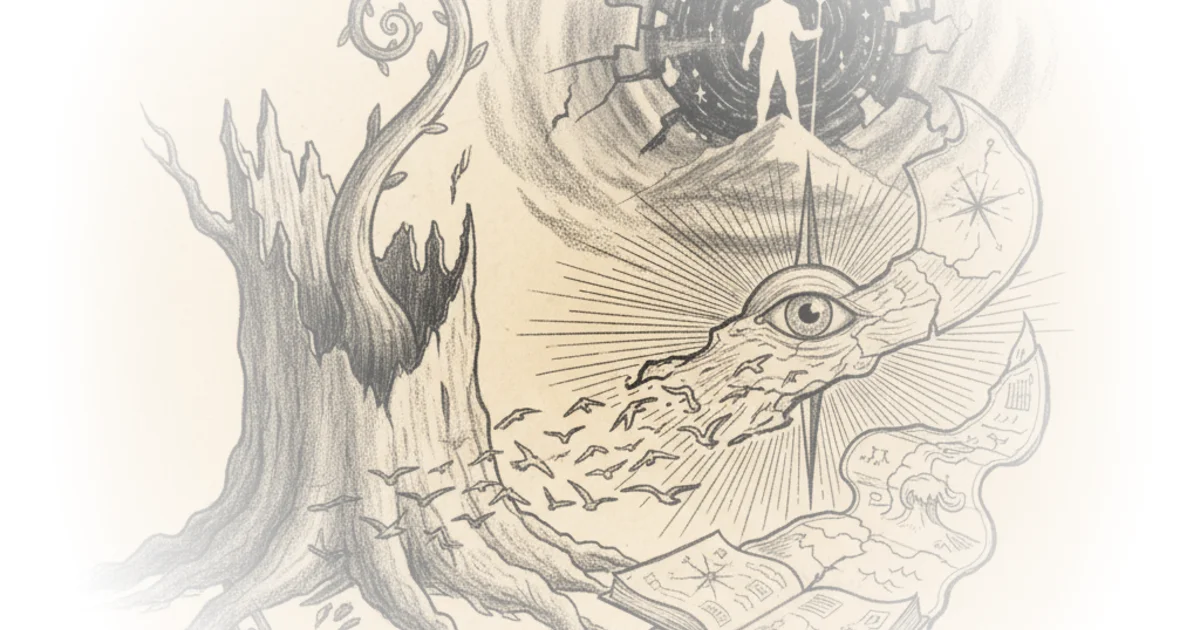
The piece then pivots to Keiji Nishitani, a central figure in the Kyoto School who studied under Martin Heidegger and spent decades engaging with Western mysticism. Nishitani's work, developed in the shadow of post-World War II Japan and the atomic bomb, offers a different lens. "Nishitani says what we're left with when we execute this whole strategy is a sort of positive response to nihilism," West explains, highlighting the Western impulse to treat meaninglessness as a puzzle to be solved. This framing is effective because it identifies a cultural blind spot: the assumption that meaning must be constructed or imposed from the outside.
Critics might note that dismissing the Western drive to create meaning risks undervaluing the psychological necessity of structure for human stability. However, West's point is not that meaning is useless, but that the method of seeking it often prevents a genuine encounter with the void.
"The idea is: that nihilism is a problem to be solved. That when I'm feeling nihilistic that's something we need to fix."
The Limits of Definition
West argues that Western thinkers often try to reduce nihilism to a rigid definition or a static feeling of despair. "They'll try to reduce nihilism down into a rigid definition of some kind," the author writes, pointing out how this approach fails to capture the lived reality of the experience. By categorizing nihilism as a universal emotion, we miss the nuance of how it manifests uniquely for each individual. This is a crucial insight: the attempt to define the undefined is itself a form of avoidance.
The commentary suggests that Nishitani's approach is more radical because it demands a personal confrontation. "Nihilism in some other important sense has to also be understood as an experiment that each individual self needs to run for themselves," West states. This shifts the focus from abstract theory to personal transformation. The argument gains strength by connecting this philosophical stance to the historical context of Japan's post-war soul-searching, where the collapse of old values was not just an intellectual exercise but a national trauma.
A counterargument worth considering is that this highly individualized approach may be inaccessible to those without the privilege of time and safety to engage in such deep reflection. Yet, West's emphasis on the universality of the need for this experiment, rather than the ease of the process, mitigates this concern.
The Unstable Self
The final section of the piece applies Nishitani's logic to the very concept of the self. If meaning is unstable, then the identity that seeks meaning must also be questioned. "How stable or durable is that self when you take a closer look at it?" West asks, pushing the reader to consider whether the "I" that experiences nihilism is as solid as it feels. This is the most challenging part of the argument, as it undermines the foundation of Western individualism.
The author concludes that true engagement with nihilism requires letting go of the desire for stable forms and essences. "We're putting in a lot of energy trying to turn these concepts into durable, unchanging things," West notes, highlighting the futility of this effort. The piece effectively uses the metaphor of death to illustrate this point: just as one cannot truly understand death until facing it, one cannot understand nihilism until living through the dissolution of meaning.
"You can understand, theoretically, that you're going to die someday. You can say you're in touch with death. But then something unexpected can happen... and all of a sudden it becomes far more real to you."
Bottom Line
Philosophize This! succeeds in reframing nihilism from a psychological malady to a necessary philosophical crucible, offering a compelling alternative to the Western obsession with constructing meaning. Its greatest strength lies in exposing the limitations of definition and the necessity of personal experience, though it risks underestimating the practical difficulties of sustaining such a radical stance in everyday life. Readers should watch for how this perspective might reshape their own approach to uncertainty, moving from a search for answers to a willingness to dwell in the question.