The Hated One delivers a chilling, first-hand account of a decade-long mission to protect financial privacy, culminating in a 5:00 a.m. raid by fifty armed FBI agents. This is not a theoretical debate about cryptocurrency; it is a raw chronicle of how a software developer's "passion project" became a federal crime in the eyes of the United States Attorney's Office. For the busy reader, the stakes are immediate: if building tools to obscure transaction trails on a public ledger is now a prison offense, the definition of financial freedom has fundamentally shifted.
The Illusion of Core Change
Keonne Rodriguez, the co-founder of Samourai Wallet, frames his journey not as a desire to hide illicit activity, but as a necessary response to a broken financial system. He traces his motivation back to the 2007 financial crisis and the Greek debt default, where citizens found their money frozen by the very institutions meant to protect it. Rodriguez saw Bitcoin initially as an "electronic version of a type of gold or silver" that could bypass this fragility. However, he quickly identified a fatal flaw in the original design: total transparency.
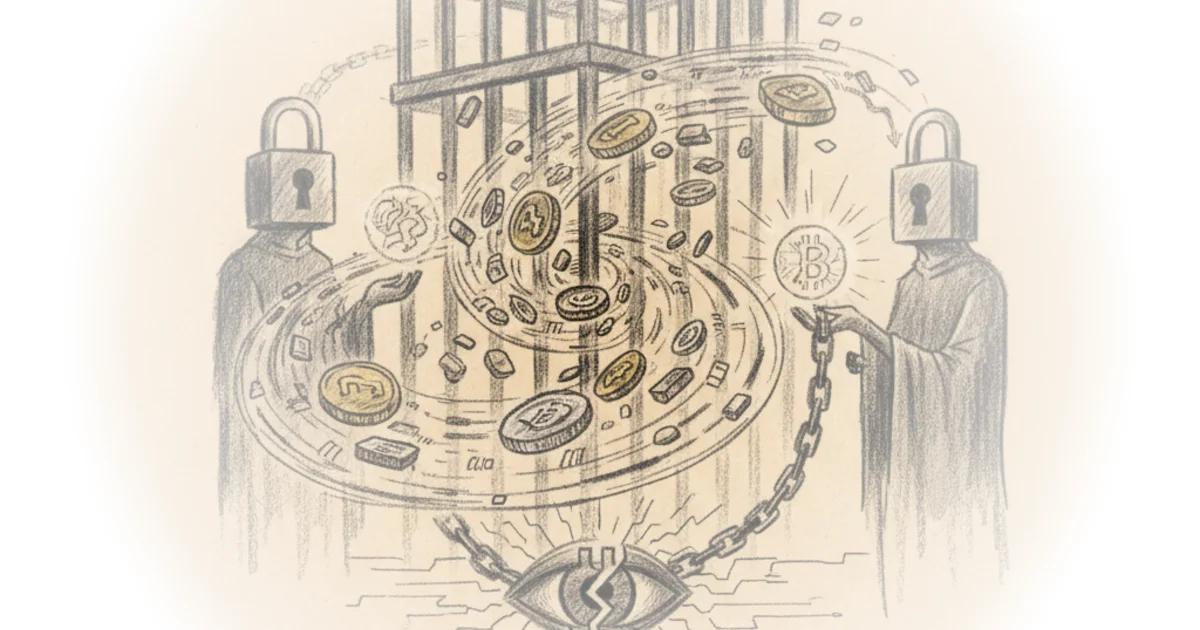
The Hated One captures Rodriguez's realization that "censorship resistance really can't be obtained without some base level of financial privacy as well." This is a crucial distinction often missed in mainstream crypto coverage. While the blockchain is immutable and resistant to censorship, its public nature means every transaction is traceable, effectively creating a permanent, public ledger of personal spending habits. Rodriguez argues that the original Bitcoin white paper envisioned a more private system, but the protocol failed to evolve in that direction.
As the value of Bitcoin rose, the incentives for developers shifted. The Hated One notes that "the desire by developers who worked on the core protocol became less and less about privacy." Instead, the community prioritized features that would appeal to Wall Street and institutional investors, viewing privacy as a barrier to adoption rather than a fundamental right. Rodriguez and his partner, Bill, concluded that if the core protocol would not change, they would have to build privacy at the application level.
Critics might argue that building privacy tools on a public ledger is inherently risky and that the developers should have anticipated regulatory pushback. However, Rodriguez's account suggests that for nearly a decade, the software operated without any contact from authorities, challenging the notion that the illegality was obvious from the start.
"The regulator doesn't have a problem with what we're doing. The prosecutors have a major problem with what we did."
Undermining the Public Ledger
The core of Samourai Wallet's innovation was not about hiding transactions from the network, but about making them unintelligible to the observer. Rodriguez explains that the Bitcoin blockchain is a "game of probabilities," and their goal was to introduce enough "false positives" and doubt to break the chain of surveillance. Features like Whirlpool and Ricochet were designed to mix funds from multiple users, creating a web of transactions where it becomes statistically impossible to determine who paid whom.
The Hated One describes this strategy as "undermining a public system by introducing false positives and introducing doubt." By grouping five people into a single transaction, the number of possible combinations increases exponentially, rendering the data useless for tracing. This approach treats privacy not as a secret to be kept, but as a mathematical problem to be solved by increasing the noise in the signal.
This technical nuance is vital for understanding the legal conflict. Rodriguez insists that they did nothing illegal, viewing their work as a pure "passion project" to restore the privacy principles he believed were inherent to Bitcoin's original vision. The Hated One highlights the suddenness of the crackdown, noting that the first contact with law enforcement came on April 24, 2024, with a raid that left Rodriguez "arrested pretty rapidly" with "lots of guns, lots of shouting."
The Absence of Due Process
The most disturbing element of the coverage is the procedural reality Rodriguez describes. He was not charged with a crime until after he was already in custody, with a public defender reading him the indictment hours after his arrest. The Hated One emphasizes the lack of transparency, quoting Rodriguez: "There was no chance of a fair trial here. We've been convicted and we're going to prison in less than 2 weeks."
This narrative suggests a legal system where the mere existence of privacy software is treated as a crime, regardless of intent or actual misuse. The distinction Rodriguez draws between regulators and prosecutors is telling; the regulatory bodies seemingly had no issue, but the prosecutors pursued a criminal case with extreme force. This raises questions about whether the law is being applied to the tool itself or the potential for its misuse.
A counterargument worth considering is that the government's stance is based on the difficulty of enforcing anti-money laundering laws when transactions are obfuscated. However, Rodriguez's account of a ten-year period of silence before a sudden, aggressive raid suggests a shift in enforcement strategy rather than a gradual escalation of illegal activity.
"I knew the system was coming down in 2007... I was worried about the banking system in general."
Bottom Line
The Hated One's coverage of Keonne Rodriguez offers a sobering look at the collision between cryptographic ideals and modern prosecutorial power. The strongest part of the argument is the clear distinction between the technical necessity of privacy for financial sovereignty and the legal reality that such tools are now criminalized. The biggest vulnerability in the prosecution's narrative, as presented here, is the lack of evidence regarding actual criminal misuse versus the mere provision of privacy features. As Rodriguez faces prison, the crypto community must watch whether this sets a precedent that effectively bans the development of privacy tools for all users.