Scott Alexander tackles a paradox that defines our current moment: the more evidence we have that the world is improving, the more convinced we are that it is ending. This piece is notable not for dismissing real dangers, but for exposing the psychological trap where the fear of catastrophe becomes a self-fulfilling prophecy, blinding us to the very progress that could save us.
The Black Box of Doom
Alexander anchors his argument in a fictional narrative by Jason Pargin, using the story to illustrate how algorithms and media consumption create a distorted reality. He writes, "The real danger is the metaphorical 'black box' of Internet algorithms, which make us waste our lives 'doom' scrolling instead of connecting to other human beings." This framing is sharp because it shifts the blame from external events to the mechanisms that curate our perception of them. The story's protagonist is trapped in a loop where he believes the world is collapsing, while the narrative voice insists that this belief is the actual collapse.
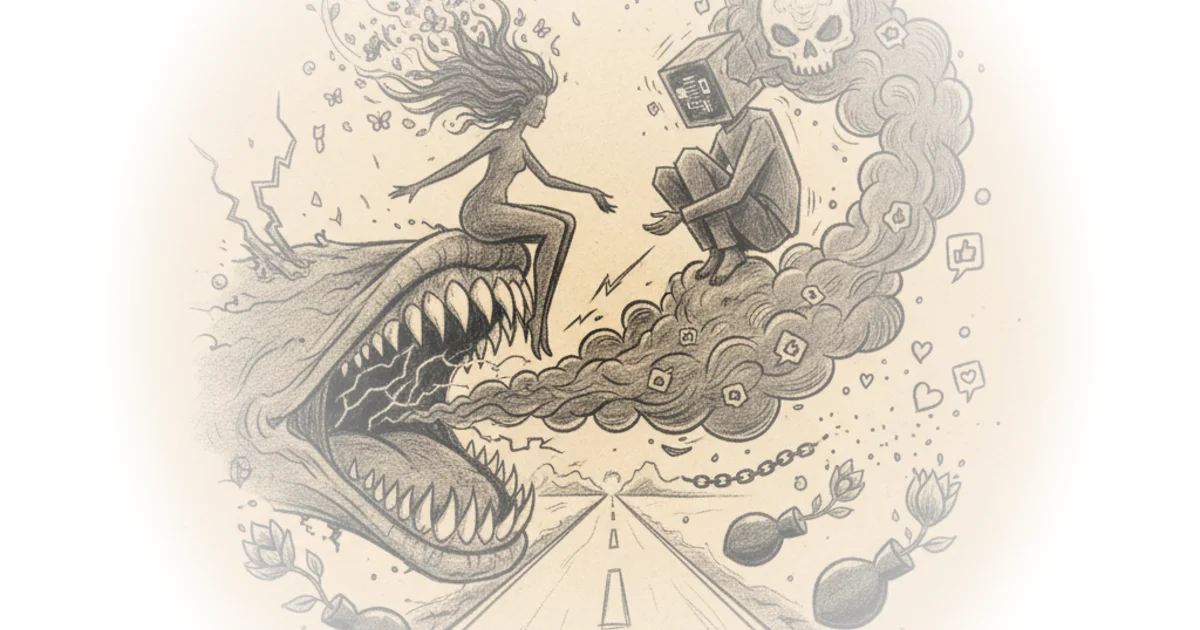
The author draws a parallel to the concept of "Mean world syndrome," where heavy media consumption convinces people that the world is more dangerous than it statistically is. Alexander notes that this isn't just about right-wing paranoia; it affects everyone. He quotes the fictional character Ether asking, "Are you one hundred percent sure, Abbott, that you haven't fallen into the exact same trap, just from the other side?" This question cuts to the heart of the issue: whether one fears the rise of authoritarianism or the death of traditional values, the conclusion that "the world is ending" is often a shared delusion driven by the same media ecosystems.
"It is an objective fact that what you're describing is how virtually all humans have lived through all of history. Until, that is, about thirty years ago."
Alexander marshals data to support the idea that we are living in a "reverse apocalypse." He points out that billions have gained access to clean water, electricity, and medicine in a single lifetime. "Infant mortality has been cut in half, illiteracy has dropped almost as much," he writes, contrasting these hard numbers with the subjective feeling of impending doom. This evidence is compelling because it relies on long-term historical trends rather than daily news cycles. However, critics might argue that aggregating global statistics can obscure local tragedies or the specific, acute crises that feel immediate to individuals, such as the opioid epidemic or climate displacement.
The Paradox of Optimism
The commentary then pivots to the irony of the "bloomers"—those who advocate for optimism. Alexander observes that these thinkers often treat the crisis of doomerism as an unprecedented emergency, demanding radical changes to how we think. He writes, "You cannot possibly imagine how bad this one is, and we must treat it as an absolute emergency which requires us to uproot everything about our lives." This highlights a logical inconsistency: if the world is generally improving and crises are often overblown, why is the fear of crises treated as the ultimate crisis?
Alexander connects this to the work of Peter Thiel and Tyler Cowen, noting how they warn against fear-mongering while simultaneously using fear to justify their own agendas. He asks, "Isn't the idea that if we try to regulate things, it will summon the literal Antichrist and plunge the world into eternal darkness, kind of a scare story?" This rhetorical question exposes the hypocrisy of using apocalyptic rhetoric to argue against apocalyptic thinking. The author suggests that this blind spot prevents a nuanced view where we can acknowledge real threats without surrendering to nihilism.
"Some crises will be overblown, and we may want a slight bias against taking them seriously, but this bias can yield to evidence like anything else."
Here, Alexander proposes a middle ground. He argues that optimism should be a heuristic—a useful rule of thumb—not a dogmatic refusal to see problems. This approach avoids the trap of both the "doomer" who sees only ruin and the "bloomer" who sees only progress. It acknowledges that while the world is better than it was in the past, it is not perfect, and new challenges require genuine engagement rather than emotional detachment.
Bottom Line
Alexander's strongest move is reframing pessimism not as a rational response to data, but as a psychological prison maintained by algorithms and social pressure. The argument's vulnerability lies in its potential to minimize the very real, localized suffering that fuels the sense of doom, risking a dismissal of legitimate grievances. Readers should watch for how this tension between statistical progress and lived experience plays out in future policy debates, particularly regarding climate change and social stability.