This piece cuts through the noise of veteran statistics to expose a quiet, decades-long crisis: the moral injury that persists long after the uniform is hung up. Wayfare argues that while post-traumatic stress is a physiological response to danger, the deeper wound comes from the prefrontal cortex—the part of the brain that processes guilt, shame, and the violation of one's own moral code. It is a rare exploration of how a soldier's faith and the necessity of killing collide, creating a silence that can last a lifetime.
The Anatomy of a Nightmare
Wayfare opens with a visceral scene: a father, safe in his suburban bedroom, reliving a combat nightmare forty-three years after leaving Vietnam. The article captures the terrifying dissonance of a man who "sprung from his kitchen seat" only to find his father "entangled in sheets, his arms and legs flailing... fending off attackers like an injured ant." The narrative quickly pivots from personal horror to a broader historical context, noting that this condition is as old as war itself. The editors draw a direct line to Gaius Marius, the Roman general who died in 86 BC, who "suffered from night terrors and flashbacks and had to numb himself to sleep with alcohol near the end of his life." This historical anchor effectively dismantles the idea that modern trauma is a new phenomenon; the human brain has always struggled to reconcile the violence of war with the peace of home.
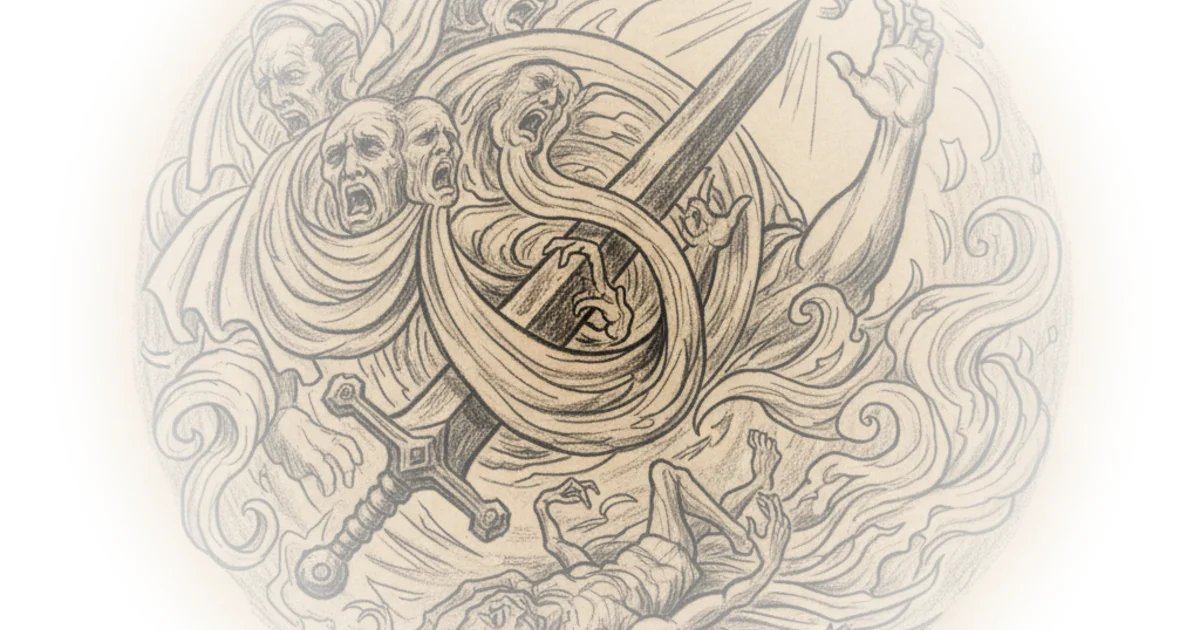
The piece distinguishes clearly between the fear-based symptoms of PTSD and the soul-crushing weight of moral injury. Wayfare reports that "moral injury occurs when someone sees or does something that violates their personal principles." This distinction is crucial because it shifts the conversation from medical pathology to existential crisis. Reverend Rita Nakashima Brock, quoted in the text, articulates the terrifying isolation of this state: "Moral injury is an inner anguish that can lead to you feeling like you're not a good person and if anybody ever figures that out, they're never going to love you again." This quote lands with devastating force, highlighting that the enemy for these veterans is often their own conscience, not an external threat.
"Moral injury is an inner anguish that can lead to you feeling like you're not a good person and if anybody ever figures that out, they're never going to love you again."
The Cost of the Order
The article then moves to the specific mechanics of combat, illustrating how the "rules of engagement" can force soldiers into impossible moral binds. Wayfare recounts the author's father, a cavalry commander, who ordered a grazing fire just feet above the ground to save an infantry unit trapped in a rubber plantation. The citation for his Silver Star praises his "aggressive actions" and "precise artillery," but the narrative reveals the haunting aftermath: "It was difficult to distinguish between American and Vietnamese dead." The only way to tell them apart, the piece notes, was that the Americans had their dog tags laced into their boots.
This section effectively critiques the sanitized language of military commendations. While the official record celebrates a "successful victory," the soldier's internal reality is dominated by the fear that he may have killed his own men. The editors note that for fifty-five years, the father ruminated on the possibility that "even one might have died by his own men's fire." This aligns with the experience of John Musgrave, a Marine in the Vietnam War, who is quoted making a desperate pact with himself: "I will waste as many gooks... wax as many dinks... smoke as many zips as I can find... But I ain't gonna kill anybody." Musgrave's words reveal the brutal dehumanization required to survive, a coping mechanism that often fractures the soldier's identity long after the war ends.
Critics might argue that focusing on the moral ambiguity of specific battles risks undermining the necessity of military action in defense of national interests. However, the piece does not question the strategic validity of the mission; rather, it questions the human cost of executing it. The argument holds that a soldier can be a hero in the eyes of the state while remaining a broken man in the eyes of their own soul.
Faith, Silence, and the Path Forward
The commentary then explores the intersection of military service and religious faith, specifically within the context of the author's Mormon upbringing. Wayfare points out the tension between a faith tradition that valorizes service and one that lacks a framework for processing the guilt of killing. The article references the biblical story of Nephi, who justified the murder of Laban by declaring, "Behold the Lord slayeth the wicked to bring forth his righteous purposes. It is better that one man should perish than that a nation should dwindle and perish in unbelief." The editors use this scriptural precedent to show how soldiers often lean on religious doctrine to rationalize violence, only to find that the rationalization offers no comfort when the adrenaline fades.
The narrative arc concludes with a moment of profound vulnerability. After decades of silence, the father finally admits to his son, "Did I tell you about PTSD? I signed the paperwork to start the process." The piece describes this admission as an act of an "outlaw turning himself in after years of evading arrest." This metaphor is powerful, reframing the help-seeking process not as a medical procedure but as a moral reckoning. The author notes that in that moment, "the separation between me and God and Dad disappeared," suggesting that the only cure for moral injury is the restoration of connection and the breaking of the silence that protects the wound.
Bottom Line
Wayfare's most compelling argument is that moral injury is a spiritual crisis that medical treatment alone cannot fix, requiring a community willing to bear witness to the guilt of the soldier. The piece's greatest strength lies in its refusal to separate the soldier's valor from their trauma, treating the two as inextricably linked. The biggest vulnerability is the heavy reliance on a single family's narrative, which, while deeply moving, may not capture the full spectrum of the veteran experience across different faiths and conflicts. Yet, as a meditation on the long shadow of war, it offers a necessary, if painful, clarity.