Jordan Schneider delivers a counterintuitive reality check: the sudden legal sale of Nvidia's H200 chips to China is less a geopolitical breakthrough and more a "transitional trump card" that exposes the fragility of the U.S. export control regime. While the White House frames this as a calibrated compromise, Schneider argues the move reveals a deeper truth—that Chinese AI labs have already bypassed direct bans via cloud service providers, rendering the "new" permission largely symbolic for top-tier players. This piece is essential listening because it strips away the political theater to reveal the hard economics of compute, showing how a "previous-generation flagship" is actually the most dangerous product for American long-term strategy.
The Cloud Loophole and the Illusion of Control
Schneider begins by dismantling the assumption that the ban on direct sales effectively stopped China from accessing advanced hardware. He highlights how the "Cloud Service Provider" (CSP) model allowed frontier model makers to rent compute power on clusters of original, uncut chips, technically keeping ownership with the provider rather than the end-user. "Under the CSP model, however, ownership of the chips resides with the cloud providers, so technically it does not violate the ban," Schneider notes, citing the nuance that the U.S. government has been turning a blind eye to this gray market for years.
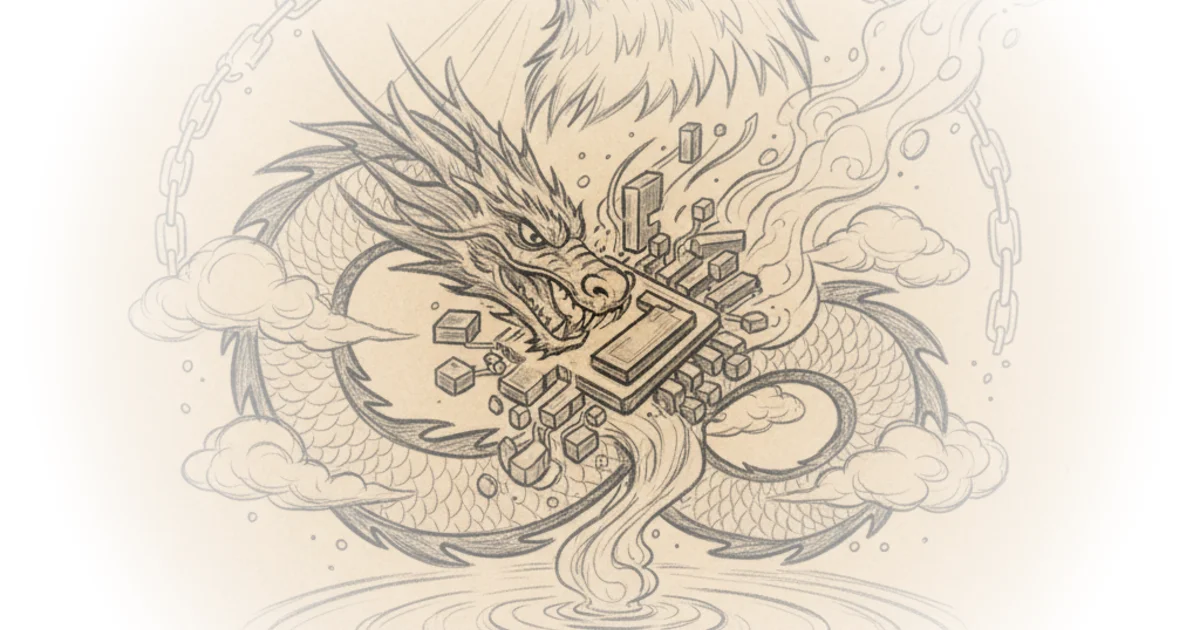
The author's analysis of the H200's technical specifications is particularly sharp. He points out that while the chip is based on the older Hopper architecture rather than the cutting-edge Blackwell, its memory capacity makes it a "transitional trump card." "When training and serving large models with more than 175 billion parameters, the H200's performance is more than six times that of the H20," he writes, emphasizing that this is a "previous-generation flagship," not a "downgraded product." This distinction is crucial; it suggests the administration is selling a product that is still vastly superior to what China can currently produce domestically, yet not quite the bleeding edge they fear most.
"Precisely because the base is low, even if the H200 comes in, domestic GPUs still have considerable room for growth... but a base of 150,000 is still very low, and for domestic CSPs' total demand of at least 4 million cards, the share is not high."
Schneider leans heavily on the warnings of Wu Zihao, a former TSMC engineer, to argue that this influx of foreign chips could be a double-edged sword. The immediate relief for Chinese startups like DeepSeek is undeniable, allowing them to "rapidly deploy H200 clusters" and overcome bottlenecks. However, the long-term risk is a deepening dependency. "In the long run; the dependence on the Nvidia ecosystem may prove impossible to reverse," Schneider paraphrases Wu's concern. This framing is effective because it acknowledges the short-term tactical win for Beijing while highlighting a strategic vulnerability that the U.S. administration seems to have overlooked in its pursuit of immediate revenue.
Critics might argue that this dependency is already baked in and that the H200 simply accelerates the inevitable, but Schneider's data on domestic shipment volumes—where even Huawei's Ascend chips struggle to reach the scale needed for mass CSP adoption—suggests the gap is still massive. The administration's decision to legalize these sales essentially admits that the "decoupling" narrative is economically unsustainable for Nvidia, even if it remains a political necessity.
The Engineering Trap of Migration
The commentary shifts to a fascinating technical argument: why Chinese developers are likely to stick with the Hopper architecture (H200) rather than migrating to the newer Blackwell chips, even if those become available. Schneider explains that the software ecosystem is a moat as deep as the hardware itself. "No one has adapted their models to the B-series yet. Otherwise you'd have to redo all the operators, the toolchain, and the underlying software from scratch—that's an even bigger engineering effort," he quotes an industry analyst.
This is a critical insight often missed in high-level policy debates. The transition from one microarchitecture to another isn't just a hardware swap; it requires a massive overhaul of the code that runs on the chips. "Migrating from the Hopper architecture to any new architecture requires redeveloping computation modules, building dedicated tooling pipelines, and restructuring the low-level integration code," Schneider writes. This creates a "lock-in" effect where the H200, despite being older, becomes the most practical choice for the next few years.
"Letting Hopper chips out, but not Blackwell, still allows them to tell their domestic audience, 'we're still a generation and a half ahead,' while Chinese customers can still buy what they want."
Schneider uses this to critique the administration's "compromise." By selling the H200, the U.S. gets to claim it is withholding the "most dangerous" Blackwell chips, while simultaneously providing China with the hardware that is actually most useful for their current software stack. The author notes that for Nvidia, this is a "most dangerous yet also the safest compromise product," offering high margins without triggering a total rupture. This is a sophisticated read of the market dynamics, suggesting that the "safety" of the product is an illusion created by the lag in software adaptation.
The Unstoppable Drive for Autonomy
Despite the short-term benefits of the H200, Schneider's analysis of the long-term trajectory for Chinese chipmakers remains grim for U.S. strategists. He cites DeepTech, a branch of MIT Technology Review, to argue that the psychological impact of the last two years of sanctions has permanently altered Chinese corporate behavior. "No one can guarantee that what is allowed today won't be revoked tomorrow with a single tweet," he writes, capturing the pervasive anxiety that drives the push for self-sufficiency.
The data supports this shift. Schneider points to Morgan Stanley's estimate that China's AI chip self-sufficiency rate will jump from 34% in 2024 to 82% by 2027. "The back-and-forth swings of the past two years have already made Chinese companies acutely aware of how important supply chain security is," he argues. Even with the H200 available, the state will not roll back its support for domestic firms like Huawei, whose Ascend roadmap extends well into the future.
"Selling large numbers of H200s to China will give rocket fuel to the Chinese AI industry," giving them enough compute to dramatically narrow the gap within two years.
This quote, attributed to a former Council on Foreign Relations official, serves as the piece's most chilling warning. It suggests that the administration's attempt to balance fiscal revenue with national security is actually accelerating the very threat it seeks to contain. Schneider concludes that the H200 deal is a "valve" that allows the U.S. to monitor Chinese progress, but it also provides the "rocket fuel" needed for China to catch up faster than anticipated. The irony is palpable: the more the U.S. sells to keep China dependent, the more it funds the R&D that will eventually make that dependency obsolete.
Critics might note that domestic Chinese chips still suffer from significant ecosystem gaps, but Schneider's evidence suggests that the sheer scale of state investment and the urgency of the situation are forcing rapid iteration that market forces alone might not achieve. The "narrative of decoupling" is being replaced by a "narrative of diversified sourcing," a shift that could ultimately prove more resilient for Beijing.
Bottom Line
Schneider's strongest argument is that the H200 sale is a tactical victory for Nvidia and a short-term relief valve for China, but a strategic blunder for the U.S. that accelerates Beijing's drive for autonomy. The piece's biggest vulnerability is its reliance on optimistic projections of domestic Chinese chip growth, which could be derailed by unforeseen technical bottlenecks in HBM manufacturing. However, the core insight—that software lock-in and the fear of future sanctions are driving a permanent shift toward indigenous supply chains—is a compelling warning that the era of easy U.S. dominance in AI hardware is ending, regardless of which chips are currently on the shelf.