The Affluence Paradox
Matthew Yglesias frames the DoorDash debate as a window into something larger: how Americans spend when they have more money but face higher nominal prices. The piece sidesteps moralizing about delivery app usage and instead asks whether growing reliance on convenience services reflects imprudence or simply the behavioral shifts that accompany rising household income.
Discoverability and Convenience
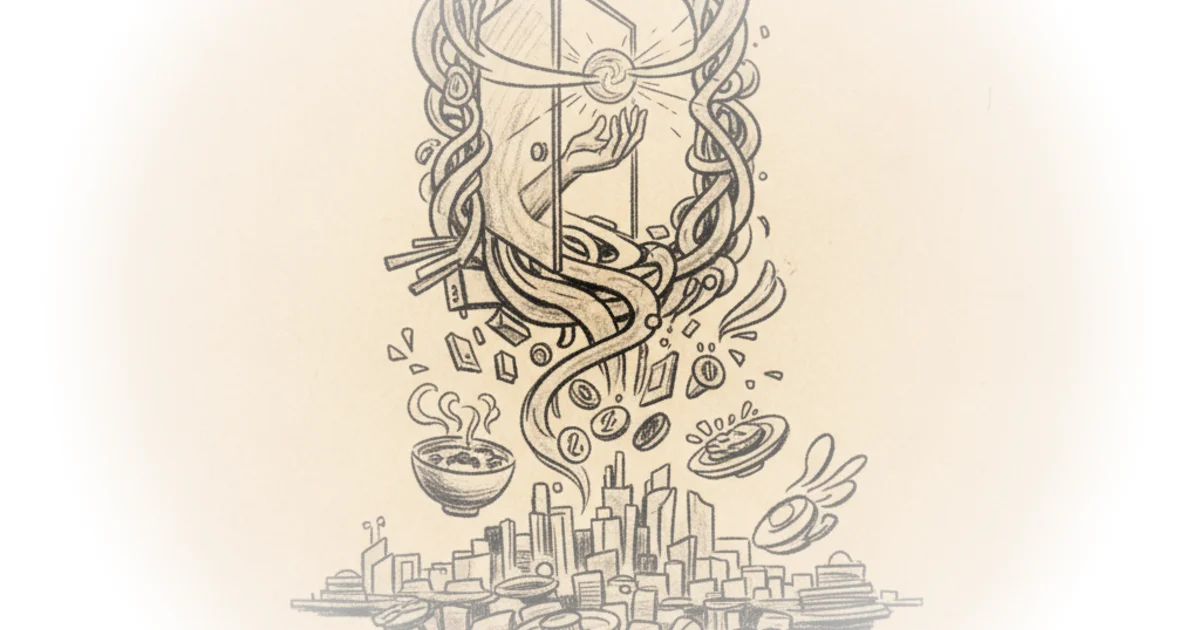
Matthew Yglesias writes, "Paying someone to go to a sushi restaurant, pick up food, and deliver it to your hotel room is, in the grand scheme of things, a high-cost way of getting a meal." Yet he argues the apps solved a structural problem. Before DoorDash, most neighborhoods offered delivery only for pizza and Chinese food. Restaurants serving other cuisines faced a chicken-and-egg dilemma: customers didn't know delivery was available, so restaurants couldn't justify hiring drivers. The apps made discovery automatic.
The Worcester, Massachusetts reference illustrates the point. A family unexpectedly stranded there can summon sushi to a hotel room rather than settling for adjacent options. This convenience carries a premium price, but the service exists because technology resolved the coordination failure.
Spending Patterns and Income Growth
Matthew Yglesias puts it bluntly: "I think it's fair to say that if you're spending upwards of a quarter of your gross salary on meal delivery, you are making some imprudent life decisions." The Priya Krishna New York Times profile of a young woman spending $400 to $600 weekly on delivery while earning $40,000 annually exemplifies this. But Matthew Yglesias argues such anecdotes don't establish a social trend.
"The data debunks the idea that Americans have on average DoorDashed themselves into bankruptcy, but that exact same data is just saying that real incomes have risen." Bureau of Labor Statistics figures show both grocery and restaurant spending have declined relative to income over four decades. Real median household income reached record highs in 2024 and continued climbing in 2025.
Critics might note that median income gains mask distributional reality. Households in the bottom quintile haven't experienced the same income growth as the median, and inflation since 2022 has eroded purchasing power for fixed-income families. The aggregate data may conceal genuine financial stress among lower earners.
"There's nothing wrong with becoming less thrifty as you get richer."
Cooking as Hobby, Not Necessity
Matthew Yglesias observes that cooking's social meaning has transformed. "This trend isn't new. Megan McArdle wrote a good piece back in 2011 about how Americans' kitchens and appliances keep getting nicer even as Americans are in practice cooking less." Contemporary cooking content targets aspirational hobbyists, not people minimizing meal costs.
"It's occurred to me during the DoorDash Discourse that the rise of this kind of content may be obscuring from young people exactly how cheap and lazy you can be if you want to." Elaborate recipes calling for pancetta, three ground meats, and gelatin-hydrated stock stand alongside the reality that browned ground beef with jarred sauce feeds a person for far less.
Matthew Yglesias acknowledges he enjoys food-science content but has no intention of freezing tomahawk steaks with liquid nitrogen. The point: zany food content and ambitious home cooking are responses to abundance, not necessity. Americans can afford frivolity their grandparents couldn't.
Critics might note that delivery apps' marketing and default settings actively discourage frugal choices. The interface design nudges users toward premium options, and surge pricing during peak hours extracts maximum willingness-to-pay from time-pressed customers.
The Social Cost of Convenience
Matthew Yglesias identifies a deeper concern. "I think a real problem in our society is that people in the bottom half of the extraversion distribution face an increasing dilemma around the short-term vs long-term tradeoffs with socializing." Delivery growth comes at the expense of restaurant dining, and restaurant dining comes at the expense of home cooking—but the loss of shared meals matters.
Technology makes solitude increasingly comfortable. People maintain relationships less frequently, and the macro-scale reason isn't parenthood (birth rates are falling). Matthew Yglesias argues political commentary must remind people that "government and politics aren't going to give you a meaningful life and a strong community; you need to do that for yourself."
Critics might note this framing individualizes a structural problem. Third places have declined, work hours have expanded, and urban design prioritizes cars over pedestrian gathering. Social isolation isn't purely a personal choice—it's shaped by policy and infrastructure.
Stubborn Consumption and Price Discrimination
Matthew Yglesias admits he underestimated 2022 inflation's persistence. He expected consumers to refuse high prices, but they spent savings while complaining. Beef prices surged, yet Americans kept buying beef instead of switching to chicken. "The price goes up, and people keep buying. They're not happy about it, but they're also not changing their consumption behavior, so the price keeps going up."
This stubbornness reflects affluence. Food spending is a shrinking budget share, so households absorb price increases without behavioral adjustment. Matthew Yglesias warns that AI-driven pricing algorithms will target this inertia: "If we get supercharged pricing algorithms, it will mostly be the consumer surplus of the rich and lazy that gets clawed back by more sophisticated vendors."
Price discrimination would extract surplus from those least sensitive to cost. The thrifty would still hunt deals; the affluent would pay personalized premiums. Regulation debates focus on impacts on low-income households, but the wealthy stand to lose most from algorithmic pricing sophistication.
Bottom Line
Matthew Yglesias treats DoorDash usage as a symptom of affluence rather than financial dysfunction. The argument holds for median households with rising real income, but obscures distributional reality and the social costs of convenience culture. Delivery apps solve discoverability problems while extracting consumer surplus—and the extraction will intensify as pricing algorithms mature.