In a landscape often dominated by legal maneuvering or political posturing around capital punishment, this piece from The Pillar offers something startlingly rare: an unflinching look at the spiritual interiority of the execution chamber itself. It bypasses the familiar debates on deterrence or cost to focus on the human cost of state-sanctioned death, arguing that the moment of execution is not a political victory but a profound theological crisis where dignity must be fiercely defended.
The Architecture of Certainty
The piece immediately distinguishes the unique horror of an execution from natural death. Fr. Estevan Wetzel, the director of prison ministry in the Diocese of Phoenix, contrasts the uncertainty of a hospital vigil with the cold precision of a state calendar. "When my dad was dying... you're kind of guessing," Wetzel explains to The Pillar. "But, with an execution, you know it's going to be 10:00 on a Wednesday." This specificity transforms the event from a tragedy into a scheduled administrative act, stripping away the organic flow of life. The editors note that this certainty creates a spiritual vacuum; unlike a hospital room where prayer is often already present, the execution chamber feels like "a space" where one must actively invoke the divine because "I don't know how many people have ever prayed in this building."
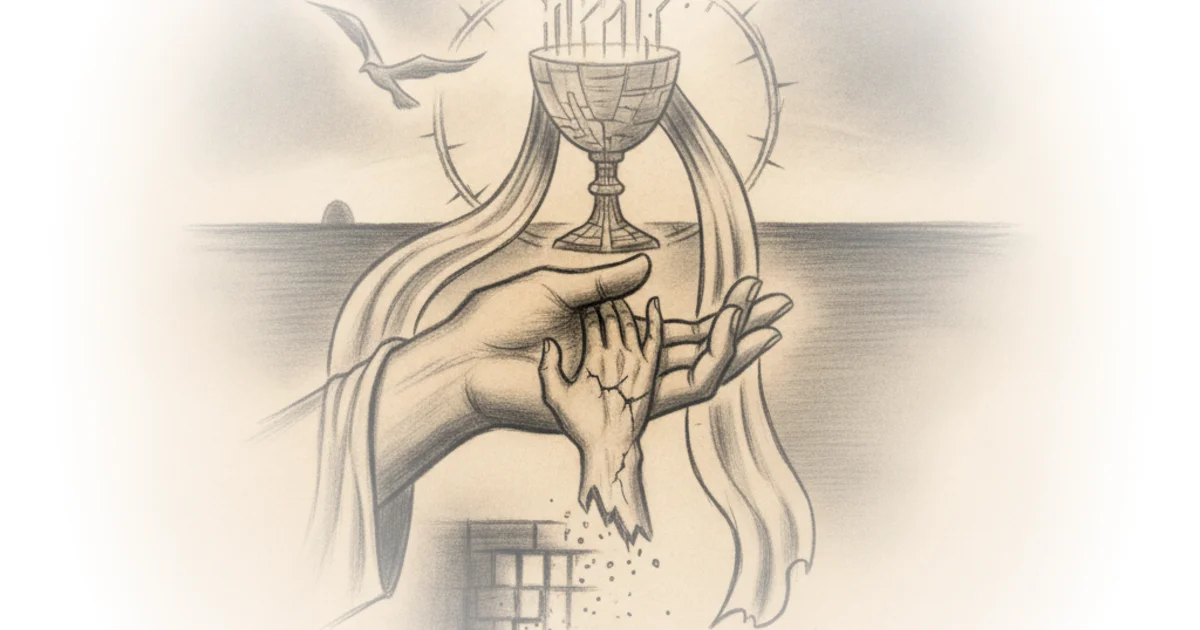
This framing forces the reader to confront the institutional machinery behind the lethal injection. The article does not shy away from the grim reality that Leroy McGill was executed by lethal injection on May 20 at the Arizona State Prison Complex – Florence, a facility known for its role in the state's capital punishment history. Yet, the narrative refuses to let the method of death define the man. Instead, it highlights the paradox of "participatory evil," where Wetzel describes the dissonance of being present for a killing while praying against it. "It's weird to be participatory in an evil," he admits. "Someone is going to be killed, and that's a crazy thought." The piece argues effectively that the chaplain's role is not to bless the state's action but to shield the soul from the finality of the moment, praying for deliverance rather than a smooth procedure.
"You already pray your holy hours... So, then maybe just to be a little more silent, a little more reflective and almost reverential for the Spirit to do something."
Solidarity in the Last Meal
Perhaps the most striking element of The Pillar's coverage is its focus on radical solidarity rather than judgment. In a move that redefines spiritual preparation, Wetzel details how he chose not to fast before McGill's execution but instead shared in the inmate's final meal ritual. "I knew... what Leroy's last meal was: some Irish food, cottage pie, onion rings, chocolate cake," the piece reports. "And I realized, Oh, you know what? Before I drive out to the prison, let me just be in solidarity with him, by having a favorite food of mine: tripas tacos." This act of eating at the same time as an inmate awaiting death serves as a powerful rebuttal to the dehumanizing nature of the prison system. It suggests that before the state can take a life, it must first acknowledge the shared humanity of the condemned.
Critics might argue that such spiritual comfort cannot undo the brutality of the crime McGill committed or the pain inflicted on victims' families, and the article acknowledges this tension by emphasizing restorative justice for all parties. However, Wetzel's approach reframes the conversation: "While justice requires that we take responsibility for our sins, our dignity is never lost." This assertion challenges the prevailing narrative that some lives are forfeit entirely. The piece notes that this perspective aligns with a broader Catholic understanding where even those who have committed heinous acts—like St. Paul before his conversion or David regarding Bathsheba's husband—are not beyond redemption.
The Dignity of the Condemned
The core of the argument rests on the idea that incarceration, and especially execution, threatens to erase a person's identity as a child of God. Wetzel observes that in prison ministry, one often sees inmates find a freedom "that you could never have on the outside." The editors highlight how this environment can strip away worldly distractions, allowing for a deeper spiritual encounter. "Many come to this falling in love with the Lord... and there's this permission to fall completely in love with Jesus and to be redeemed by him," Wetzel states. This is not a defense of the crime, but a defense of the sinner's capacity for grace.
The coverage also touches on the enduring impact of these interactions after the execution. Wetzel describes receiving a list of prayer requests from McGill just before his death, including prayers for the diocese and other incarcerated people. "To ask for someone to pray for you when they're in purgatory and in heaven is just a really different conversation," he reflects. This shifts the dynamic from one of finality to one of ongoing spiritual relationship, suggesting that the state's power ends at death while the community's responsibility continues.
"Our dignity is never lost... No one is a second-class Christian, if we choose to repent and return to the Lord, who saved every single one of us from eternal death."
Bottom Line
The Pillar succeeds in humanizing a process that society often prefers to keep abstract and distant, forcing readers to sit with the uncomfortable reality that the condemned are fully capable of spiritual transformation. While the piece leans heavily on theological frameworks that may not resonate with secular arguments against capital punishment, its strongest contribution is the insistence that dignity is an inherent right that the state cannot revoke. The biggest vulnerability lies in balancing this message of mercy with the undeniable suffering of victims' families, a tension the article acknowledges but does not fully resolve; however, it leaves the reader with a necessary question: if we lose our humanity by dehumanizing the worst among us, what have we truly saved?