John Pistelli delivers a rare, lucid meditation on the modern novel's struggle to remain relevant in an age of algorithmic noise and ideological polarization. Rather than offering a standard book review, he dissects the very mechanics of how fiction communicates meaning, arguing that the most enduring works are not those with clear moral instructions, but those that embody a complex, often contradictory worldview. This is essential reading for anyone trying to navigate the current cultural fog, where the line between revelation and mystification has all but vanished.
The Thesis Trap
Pistelli begins by dismantling the binary debate over whether a novel should have a "thesis." He observes that readers crave rules, wanting to believe that books without arguments are soulless or that books with arguments are mere propaganda. However, he points out that literary history contradicts this simplification. "You can go to the new Barnes and Noble and buy both Uncle Tom's Cabin and Madame Bovary from the classics shelf tomorrow," he writes, noting that both books survive despite having radically different approaches to moral instruction. The former is overtly didactic, while the latter aspires to be a book "blank as the wall of the Parthenon," yet both possess powerful, if hidden, theses.
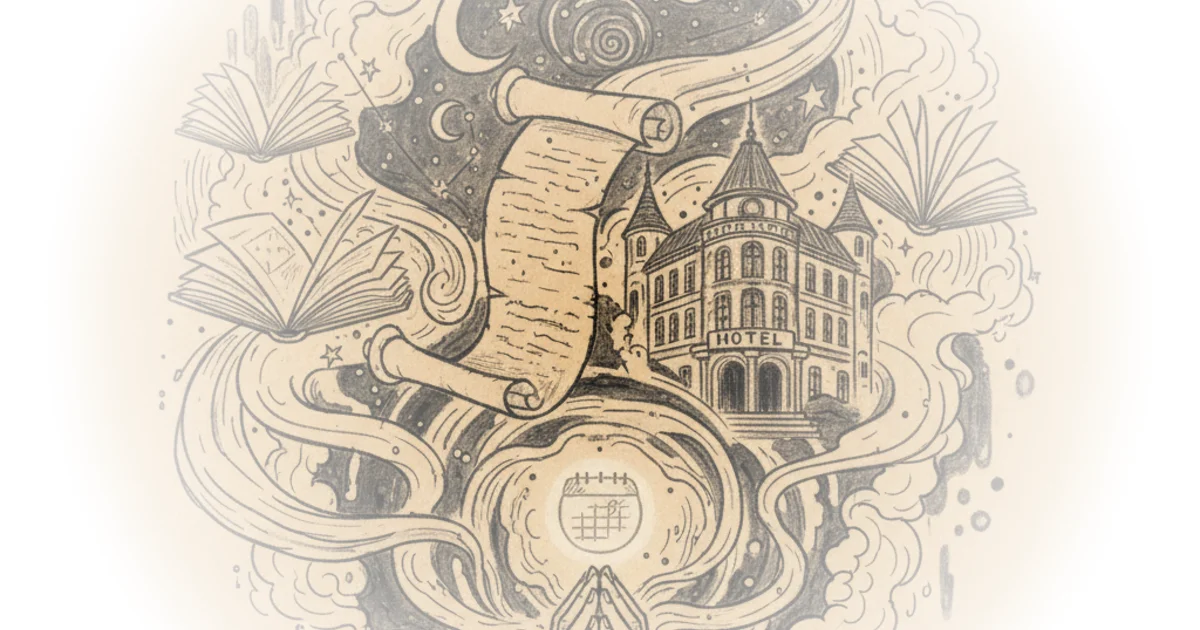
The author's insight here is crucial: the quality of the writing precedes the question of its moral stance. "Even a novel with a very, very explicit thesis will, if it's a strong novel... invite multiple interpretations," Pistelli argues. He uses his own recent work, Major Arcana, as a case study in this ambiguity, noting that reviews have wildly diverged, with some praising it as a "woke queer novel" while others laud it as an exposé of patriarchal collapse. This divergence isn't a failure of the book, but a testament to its complexity. "A complex text will generate such rival interpretations," he notes, drawing a parallel to the sectarian wars waged over readings of the Bible. This framing effectively shifts the burden from the author to the reader, suggesting that the novel's job is not to persuade, but to provoke a genuine engagement with life's ironies.
Critics might argue that this defense of ambiguity allows authors to dodge accountability for the political implications of their work. If a text can mean anything, does it mean nothing? Pistelli anticipates this, suggesting that the novel is not a thesis statement but a "worldview" that is "imbued in every line." The distinction is subtle but vital: a thesis is an argument to be won; a worldview is a reality to be inhabited.
A novel doesn't have a thesis but is a thesis, that thesis being nothing less than the author's entire style of experiencing and reflecting on reality.
The Secret Tradition and the Fog of Disclosure
Pistelli expands his scope to discuss the "secret tradition" of literature—a lineage of authors from the Greek tragedians to James Joyce who explore the occult and gnostic undercurrents of culture. He highlights Thomas Mann's The Magic Mountain, describing the author as a "sparklingly ironical adept" who introduces his protagonist to the paranoid possibility that normative culture is merely the surface expression of a war between secret societies. This historical context adds depth to the current moment, suggesting that the feeling of living in a conspiracy-laden world is not entirely new, even if the mechanisms have changed.
He connects this literary history to the modern phenomenon of information overload. In a striking footnote, Pistelli describes the current political climate not as a revelation of truth, but as a "happy hunting ground of all minds that have lost their balance." He argues that the unprecedented release of chaotic investigative materials—ranging from anonymous tips to celebrity gossip—does not create a democratic counterforce. Instead, it creates an "ever-thickening fog of confusion." "The effect is not the assemblage of a new democratic counterforce... Rather we find an ever-thickening fog of confusion," he writes. This analysis is particularly sharp because it refuses to romanticize the "leak" as a tool of liberation. Instead, he sees it as a mechanism that reinforces the illusion of a unified, malevolent power bloc, trapping the public in a cycle of paranoia.
Here, Pistelli draws a parallel to a specific scene in The Magic Mountain, where the protagonist dreams of a paradisal landscape that turns into a scene of ritualistic violence. Mann's dream, Pistelli notes, reveals "the old State-secret": that the bourgeois order, like every other, runs on a form of child sacrifice. This historical reference serves as a grim reminder that the violence beneath the surface of civilization is not a modern invention, but a recurring structural feature. The author suggests that while artists are often suspected in these times of disclosure, the real danger lies in the "general inculpation" of everyone, leaving no safe harbor.
The Contemporary Challenge
The most urgent part of Pistelli's commentary addresses the difficulty of writing realism in the digital age. He expresses mystification at writers who exclude phones and the internet from their fiction, arguing that great realists from Balzac to Joyce always integrated the technology of their time. "Imagine Balzac and Joyce leaving newspapers out of Lost Illusions and Ulysses," he challenges. To ignore the current technological landscape is to flee the very reality that defines our experience.
He predicts that semi-autonomous automation will soon be layered into every aspect of daily life, altering human consciousness in ways we cannot yet fully articulate. "I suspect semi-autonomous automation is about to be layered more or less thickly into everyone's experience of the quotidian whether we want it to be or not," Pistelli writes. He posits that fiction remains the best tool for documenting these alterations, even if the task feels like "writing realism as if it were science fiction." This is a vertiginous challenge, one that requires writers to confront the "moving target of the contemporary" without the safety of established canons.
Pistelli acknowledges the temptation to retreat into the past, to write memoirs in disguise or pastoral fantasies of a pre-digital era. "Is the personal the pastoral, at least for a moment?" he asks. But he ultimately rejects the idea that the internet fad will simply go away. The consensus among many writers that the AI bubble will pop and we will return to a "safe" time is, in his view, a delusion. The interaction with artificial intelligence will permanently alter how we experience reality, and fiction must grapple with this shift rather than flee from it.
The interesting question is not whether this can be stopped (it cannot) but whether it can be inflected.
Bottom Line
Pistelli's argument is strongest in its refusal to simplify the role of the novel, insisting that great literature thrives on ambiguity and the embodiment of a complex worldview rather than the delivery of a moral lesson. His critique of the modern information ecosystem as a generator of confusion rather than clarity is a necessary corrective to the prevailing narrative of "truth-telling." The piece's greatest vulnerability is its reliance on a somewhat esoteric "secret tradition" of literature, which may alienate readers looking for more direct political analysis. However, for those willing to engage with the deeper currents of the text, it offers a profound framework for understanding how fiction can help us navigate a world that feels increasingly unreal.