Mehdi Hasan frames a confirmation hearing not as a routine political ritual, but as a potential tipping point for the rule of law, arguing that the nomination of Todd Blanche represents an unprecedented consolidation of power within the executive branch. The piece distinguishes itself by moving beyond standard partisan bickering to scrutinize the specific, documented actions of a nominee who has already overseen the weaponization of the Department of Justice against political opponents and the cover-up of sensitive criminal files. For a reader navigating a complex news cycle, this analysis cuts through the noise to ask a fundamental question: can the Senate confirm an attorney general whose primary qualification appears to be loyalty to a single individual rather than fidelity to the Constitution?
The Architecture of Retribution
Hasan opens by contextualizing the stakes of the confirmation hearing, noting that Blanche is not merely a candidate but the architect of what the New York Times calls "Blanche's role in Trump's Retribution Campaign." The author argues that Blanche's tenure has been defined by a pattern of abuse that transcends typical political maneuvering. He writes, "Nakedly political investigations are too numerous to list," citing targets ranging from the Southern Poverty Law Center to former officials like James Comey and Jerome Powell. This framing is effective because it treats the Department of Justice not as a neutral arbiter, but as a tool for personal vendettas, a shift that fundamentally alters the nature of American governance.
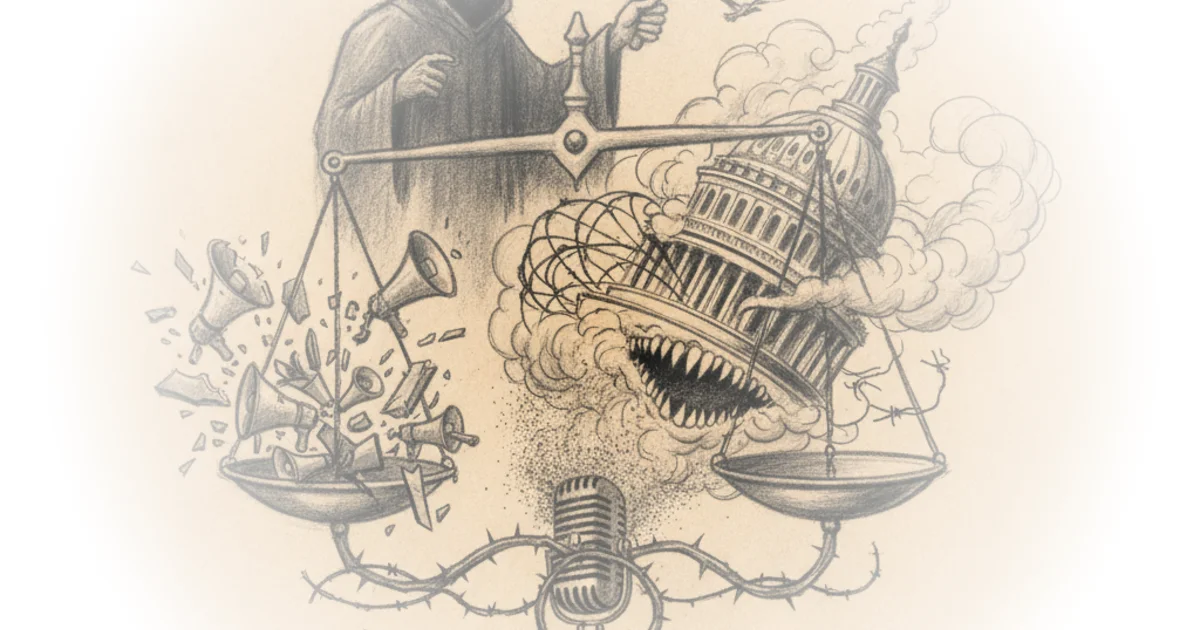
The commentary highlights a disturbing precedent set during Blanche's time as acting attorney general, where he oversaw a $10 billion lawsuit against the Internal Revenue Service and engineered a settlement that created a "$1.776 billion Anti-Weaponization Fund." Hasan points out the sheer audacity of this move: "That proved too much even for Trump's GOP," noting that a federal judge in Florida rebuked the action as collusive. This evidence is crucial; it suggests that Blanche's actions have already triggered internal checks within the legal system, yet the administration is pushing forward with his confirmation regardless. A counterargument might suggest that the administration views these actions as necessary corrections to perceived biases under previous leadership, but the judicial rebuke and the specific nature of the fund—designed to pay off political allies with tax immunity—undermine the claim of good faith.
"Senators should judge Blanche not by his assurances at a confirmation hearing, but by the record he has already built."
The Epstein Files and the Cost of Silence
Perhaps the most damning section of Hasan's piece focuses on Blanche's handling of the Jeffrey Epstein files. The author details how Blanche, while serving as a deputy to Attorney General Pam Bondi, led a cover-up that delayed the release of documents and mismanaged the redaction process. Hasan writes, "It was Blanche who led the cover-up of the Jeffrey Epstein files and therefore Trump's friendship with the late financier and sex offender, the files still not revealed in full despite congressional action." This is not a minor administrative error; it is a direct obstruction of justice that has tangible human consequences.
The piece brings in the voices of survivors to ground the legal analysis in human suffering. Hasan notes that Danielle Bensky, a survivor of Epstein's crimes, will testify, her name exposed due to Blanche's failures. He quotes the group World Without Exploitation, which stated, "Under Blanche's leadership... Epstein survivors' personal information... was exposed, while the names of many alleged abusers and other powerful individuals connected to Epstein remained redacted." This argument is powerful because it shifts the focus from political maneuvering to the betrayal of vulnerable victims. The connection to the 2023 Lewiston shootings context is subtle but potent: just as the failure to act on warning signs in Maine had fatal results, the failure to properly manage these files has real-world repercussions for those seeking justice. The administration's claim that Blanche is a "good lawyer" rings hollow when his record includes the exposure of victims to further trauma.
The Human Cost of Enforcement
The commentary pivots to the violence in Maine, where ICE agents fatally shot Joan Sebastian Guerrero, a legal immigrant who was not the intended target. Hasan does not shy away from the brutality of the event, describing how "Agents handcuffed his lifeless body and left it to lie on the street. His wife and young daughter looked on." The author critiques the political reaction, particularly from Senator Susan Collins, who claimed credit for a "pause" in vehicle stops while simultaneously blaming Democrats for delays in reforms she helped fund. Hasan writes, "Assurances of a 'pause' in ICE vehicle stops ring mirthlessly hollow" in the face of such violence.
This section is critical because it connects the abstract concept of "executive overreach" to the visceral reality of a man dying on a street corner. The administration's attempt to blacken the victim's name, claiming he tried to use his car as a weapon, is exposed as a fabrication that was quickly dropped. Hasan notes that Border Czar Tom Homan insisted that "deportations are at record numbers," signaling that the pause is merely tactical. This aligns with the broader theme of the piece: the administration's actions are driven by a desire for dominance rather than public safety. The human cost is not a sidebar; it is the central metric by which these policies must be judged.
The Shadow of War
Finally, Hasan addresses the administration's escalating conflict with Iran, framing it as a series of "Oval Office idiocy" rather than a strategic military campaign. The author details the reversal on a proposed shipping fee and the subsequent reimposition of a naval blockade, noting that Trump told Fox he planned to hit bridges and power plants, actions that would constitute war crimes. Hasan writes, "U.S. Central Command said U.S. forces began launching another 'wave of strikes against Iran,'" while an Iranian spokesperson confirmed that "at least 30 civilians have been killed." This juxtaposition of official rhetoric with the reality of civilian casualties is stark and necessary.
The piece also touches on the domestic political fallout, noting that Senate Democrats blocked the National Defense Authorization Act in protest. This highlights a growing fracture within the political establishment regarding the administration's foreign policy. The reference to the Trump v. United States context is implicit here; the administration's aggressive stance on foreign policy mirrors its domestic strategy of testing the limits of executive power. Hasan's framing suggests that the same disregard for legal and ethical norms seen in the domestic sphere is now being exported to the international stage, with potentially catastrophic results.
"The true extent of his friendship with Epstein remains to be seen. Blanche slow-rolled the file releases, mismanaged them, orchestrated the cover-up."
Bottom Line
Mehdi Hasan's strongest argument lies in his refusal to treat Todd Blanche's nomination as a standard political event, instead presenting it as a litmus test for the integrity of the Department of Justice itself. The piece's greatest vulnerability is its reliance on the assumption that the Senate will act as a meaningful check on executive power, a hope that seems increasingly fragile given the current political landscape. Readers should watch for the testimony of survivors and the responses of key Republican senators, as these moments will reveal whether the institution can still hold the line against the consolidation of unchecked authority.