Francis Fukuyama spent three decades arguing that liberal democracy was humanity's final political form. Now he's reversing course. In a rare public revision of his influential thesis, the Stanford scholar now says Western liberal democracy exhausted itself by 2008 — and no coherent alternative has emerged to replace it.
The End of History, Revisited
Francis Fukuyama earned global fame in 1992 with The End of History and the Last Man. Drawing on Hegel and Marx, he argued that history was a linear process where human societies progressed through sequential forms — feudalism gave way to capitalism, then socialism. After the Soviet Union collapsed, Fukuyama declared Western liberal democracy the final form of human government.
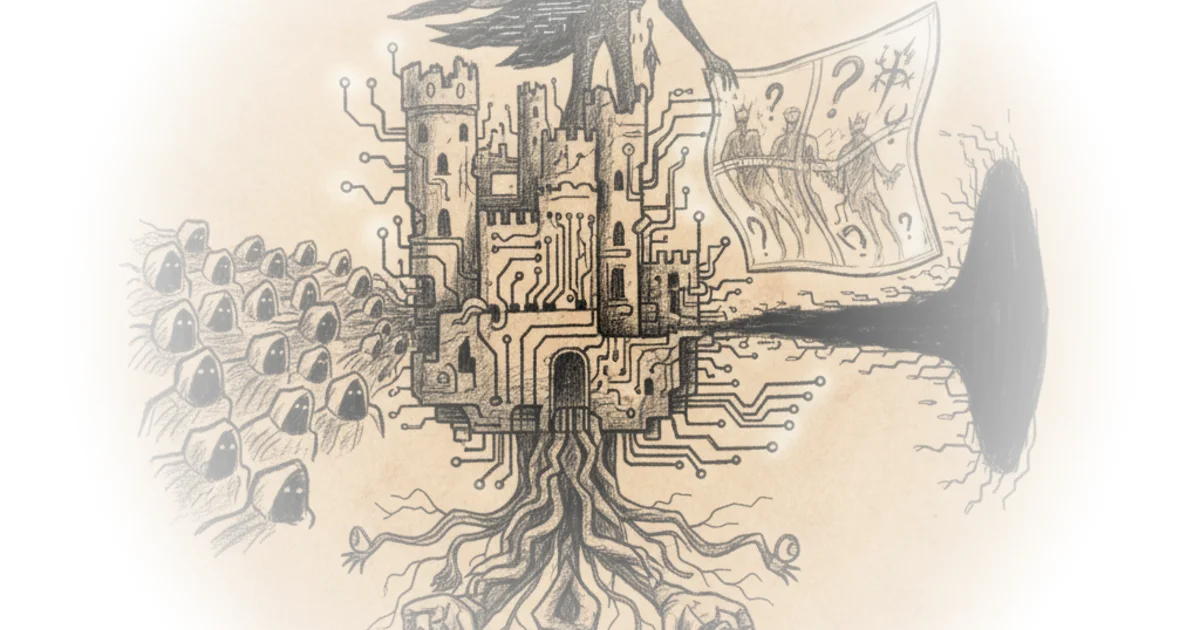
That thesis has been updated, revised, and debated ever since. Today, Fukuyama himself is pulling away from it.
Two Moments That Changed Everything
Two events shifted Fukuyama's thinking — and indirectly powered Donald Trump's rise.
The Iraq War demonstrated the bankruptcy of certain conservative ideas. His former neoconservative friends believed hard military power could reshape an entire region culturally different from America. It was a catastrophic miscalculation.
Then came the 2008 financial crisis. The neoliberal model of deregulation didn't work. While Fukuyama believes many parts of the American economy need deregulation, the financial sector definitely should not be deregulated. The crisis showed that without heavy regulation, you're headed for trouble.
The consequence was a backlash. Both events hurt ordinary people — especially the financial crisis. Millions of Americans lost homes due to the subprime meltdown. People were resentful because Wall Street types who engineered the crash suffered briefly, then returned to their billions. That created long-term shock waves still being felt today.
A staggering statistic from 2016: the single greatest predictor of whether a household voted for Trump or Clinton was whether they had a family member or knew someone who died in the Iraq and Afghanistan wars.
The Disruption of American Order
Trump won the popular vote. Before that, there was an insurrection at the Capitol. What does this mean for the current order?
Fukuyama believes America is in for a much deeper disruption than anyone anticipated. The traditional debate used to be liberals want this, conservatives want that — one wants higher tax rates, the other lower tax rates. Those were the outer limits of debate.
Today, those limits have shifted dramatically. On the left, things will be on the table that weren't before. On the right, ideas long excluded under the old liberal order are returning.
Fukuyama describes himself as something of a social democrat nowadays. With capitalism and market economy come inequalities. Without careful regulation, first you get instability — as shown by the financial crisis. Second, you get an increasingly skewed distribution of income and wealth. You must take the edges off those inequalities. They can't be eliminated but can be mitigated.
The most sensible starting point is what almost every modern democracy already has: Social Security and health care. America was very late on health care. Every other modern democracy had universal guaranteed access to health care decades before the United States. Clinton tried it in the 1990s. It failed. Obama got the Affordable Care Act in 2010, and Republicans spent the next decade trying to dismantle it.
On inequality, there's a proposal from people like Peter Thiel to build "freedom cities" — special economic zones inside the US. Fukuyama doesn't see this as politically viable. They tried it in Honduras. It's called Prospera. It strikes him as rich elites trying to ignore the problems by creating a Disneyland for themselves where they can get away from the problems afflicting the rest of society. That's not a just outcome.
The Real Crisis: Technology vs. Politics
How much of today's political chaos comes from social media, and how much is an underlying real political crisis?
Fukuyama admits this is hard to pin down. Both factors are obviously involved. But as time has gone on, he tends to think technology's contribution is more important than he originally thought.
The reason: the rhetoric coming from both sides suggests we live in an absolute hellscape of censorship and tyranny. That simply doesn't correspond to anything Fukuyama has experienced. Castle culture exists — he's seen examples. But that's not living under Stalin's Soviet Union. There's a real difference.
The extreness with which people think we're in the midst of a social crisis is hard to explain apart from social media. The internet allows you to live in your own bespoke world where you only see facts confirming the biases you started with.
Fukuyama chaired a Stanford working group on platform scale in 2020 during the pandemic. They tried addressing who should control social media. It's a dilemma: you don't want big private platforms as arbiters of what's true, but you also don't want government doing that. The government tried after 2016 and created a revolt on the right, where they claimed the government was trying to censor them.
The only solution was something called "middleware" — taking away mediation functions from big platforms and giving it to third parties. Instead of X or Facebook deciding what you see through their algorithms, you'd pick what you want. That was the original vision of the internet: not everybody seeing the same thing regulated by government, but having choice.
The real intention is actually not efficiency. It's just destruction. What organization if you simply fired a random 20% of their employees would function well after that? Without thought to which 20% you're getting rid of. It makes you think the real intention is actually not efficiency. It's just destruction.
Bottom Line
Fukuyama's core argument — that liberal democracy exhausted itself by 2008 and no coherent alternative has emerged — is his most provocative claim, and it draws on decades of scholarship across multiple continents. His biggest vulnerability is strategic: he's advocating for social democracy as a stabilizing force, but the political machinery to implement it seems broken. The tension between diagnosing what's wrong and prescribing solutions is where this interview leaves the most interesting questions unanswered.