Tom van der Linden identifies a paradox at the heart of modern Star Wars that explains why the franchise feels stuck: the Jedi Order is trapped in a quantum state of identity, simultaneously revered as mythic heroes and scrutinized as a flawed political cult. This isn't just a critique of recent movies; it is a diagnosis of a franchise unable to choose whether it is a fairy tale about the soul or a sociological mirror of our world.
The Schrödinger Jedi
Van der Linden argues that the core issue is not that the Jedi are being criticized, but that the storytelling refuses to commit to a single definition of them. He coins the term "Schrödinger Jedi" to describe this state where the order exists in multiple contradictory realities at once. "The Jedi have been suffering from somewhat of an identity crisis for some time now like they are stuck between conflicting ideas of what they are supposed to be in the modern Star Wars Universe," van der Linden writes. This framing is sharp because it moves beyond the usual "good movie vs. bad movie" debate to address a structural failure in the narrative architecture.
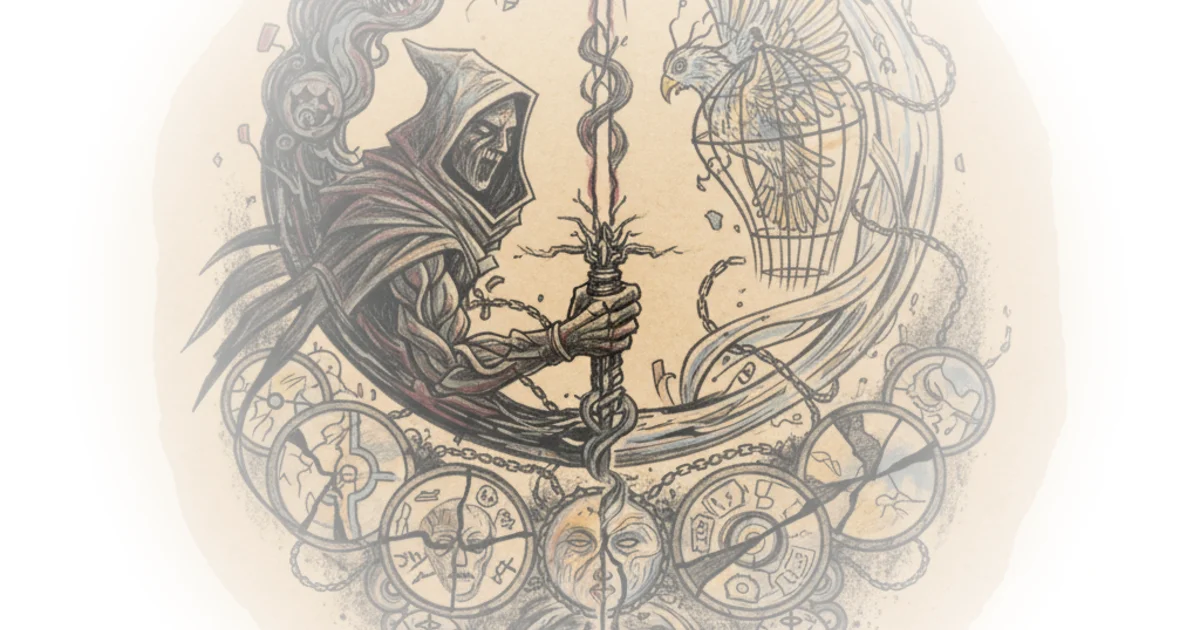
The author contrasts successful stories like Rogue One and Andor, which sidestepped the Jedi entirely to explore the mechanics of oppression, against recent Jedi-centric projects that have faltered. "The most popular ones are those that don't focus on the Jedi at all and how it might be precisely because they steered away from them that they were able to actually do something interesting," he observes. This suggests that the problem isn't the setting, but the specific burden of carrying the Jedi's legacy. When the story focuses on bounty hunters or rebels, the universe feels lived-in; when it focuses on the Jedi, it feels like it is arguing with itself.
The real issue points to a deeper problem of quality in the way that the Jedi story is told, the way their philosophy, their lore and general identity is progressed and expanded upon.
Van der Linden's analysis of The Boys as a parallel is particularly effective. He notes that modern franchises often engage in "horizoning of plot," where the main conflict is artificially stretched to prevent resolution. However, with the Jedi, the stasis isn't in the plot but in the philosophy itself. The story cannot move forward because it cannot decide if the Jedi are the solution or the problem. "It's not just an issue of Jedi good or Jedi bad," van der Linden asserts, highlighting that the tension lies in the inability to resolve the order's fundamental nature.
From Myth to Politics
The essay traces the roots of this crisis to the transition from George Lucas's era to the Disney era, specifically pinpointing The Last Jedi as the moment the franchise pivoted from myth to sociology. Van der Linden offers a precise distinction: "In the original trilogy and in the prequels the Jedi were an ideal Complicated by politics whereas in this new vision they have become politics Complicated by idealism." This reframing is crucial. It suggests that the old stories used politics to test a spiritual ideal, while the new stories use spiritual ideals to critique political structures.
This shift has exposed the fragility of the Jedi's philosophical foundation when viewed through a modern, realistic lens. Van der Linden argues that when you strip away the mythological context, the Jedi's practices look less like noble wisdom and more like institutional failure. "When you actually deconstruct them there just isn't all that much left," he writes, pointing out that their philosophy is a "grab bag of fakely Buddhist and stoic ideas" and their recruitment practices resemble "borderline child abductions."
Critics might note that applying real-world sociological standards to a space fantasy risks missing the point of the genre's allegorical nature. However, van der Linden anticipates this by arguing that the franchise itself invited this scrutiny by trying to be more "self-aware" and "ironic." The attempt to ground the story in reality has backfired, leaving the Jedi looking like a "delusional cult that claims to control the uncontrollable" rather than the guardians of peace they were meant to be.
The Jedi used to form the spiritual Bedrock of the story in the sense that if the rebels and the empire were fighting over the material Galaxy then the Jedi and the Sith were battling for its Soul.
The author points out that this deconstruction has also weakened the Sith. In a mythological framework, the Dark Side is a necessary shadow reflection of the Light. In a sociological framework, they are just another ideological faction. "Now they seem to have become just another ideology in the mix, just another Viewpoint to be considered and debated," van der Linden notes. This flattens the moral stakes, turning a cosmic battle into a political debate.
The Oscillation of Vision
The most damning part of van der Linden's argument is that the franchise isn't just moving toward deconstruction; it is actively oscillating between deconstruction and uncritical nostalgia. He highlights the jarring inconsistency between The Last Jedi, where Luke Skywalker throws away his lightsaber, and The Rise of Skywalker, which immediately resets the stakes to a traditional good-versus-evil binary. "It's why we get both the Jedi are problematic story and the uncritical Nostalgia bait," he writes. This constant flip-flopping prevents any meaningful character or thematic development.
Van der Linden suggests that the solution requires a hard choice: the creators must decide if Star Wars is a mythological reflection of the heart or a political examination of the world. "They have to decide if Star Wars is a mythological reflection of matters of the heart and soul or a social political examination of matters of the world," he argues. Without this commitment, the franchise will remain in a state of "constant friction between two conflicting visions."
The constant oscillation between competing perceptions of what the Jedi are supposed to be and what play they are supposed to occupy in the modern Star Wars universe.
This analysis holds up well against the recent track record of Star Wars media, where shows like The Acolyte attempt to explore the Jedi as a political institution while other projects like The Mandalorian lean heavily on the classic hero's journey. The result is a fragmented audience and a confused narrative direction. Van der Linden's call for a unified vision is not just a creative preference; it is a necessity for the franchise to survive its own identity crisis.
Bottom Line
Van der Linden's strongest contribution is identifying that the Jedi's identity crisis is a failure of narrative commitment, not just a failure of execution. His argument that the franchise is trying to be two incompatible things at once explains the pervasive sense of stagnation in recent years. The biggest vulnerability in his analysis is the assumption that a clear choice is even possible in a modern, multi-platform franchise designed to appeal to every demographic simultaneously, but his diagnosis of the problem remains the most compelling explanation for why the Jedi feel so lost today.