In a landscape where advertising is universally reviled, Rick Rubin offers a counterintuitive thesis: the only way to survive the noise is to stop selling and start entertaining. This piece, a deep dive into the mind of Mike Cessario, the mastermind behind Liquid Death, argues that the barrier to entry for great marketing isn't budget or reach—it's the willingness to treat a commercial like a hit TV show. For the busy professional tired of being sold to, Rubin's analysis reveals why a water brand that looks like a heavy metal album is outperforming traditional health products: it gives the audience something of value instead of taking their time.
The Entertainment Economy
Rubin begins by dismantling the traditional hierarchy of media consumption. He posits that while creating a hit album or a hit TV show is incredibly difficult, the bar for advertising is so low that "anybody can make a good commercial" because the default is "just kind of garbage." This framing is crucial. It suggests that the market is starving for quality, not just exposure. Rubin notes that when a brand finally provides genuine entertainment, the consumer's reaction shifts from annoyance to gratitude: "Oh, you didn't just waste 30 seconds of my life just now. Thank you."
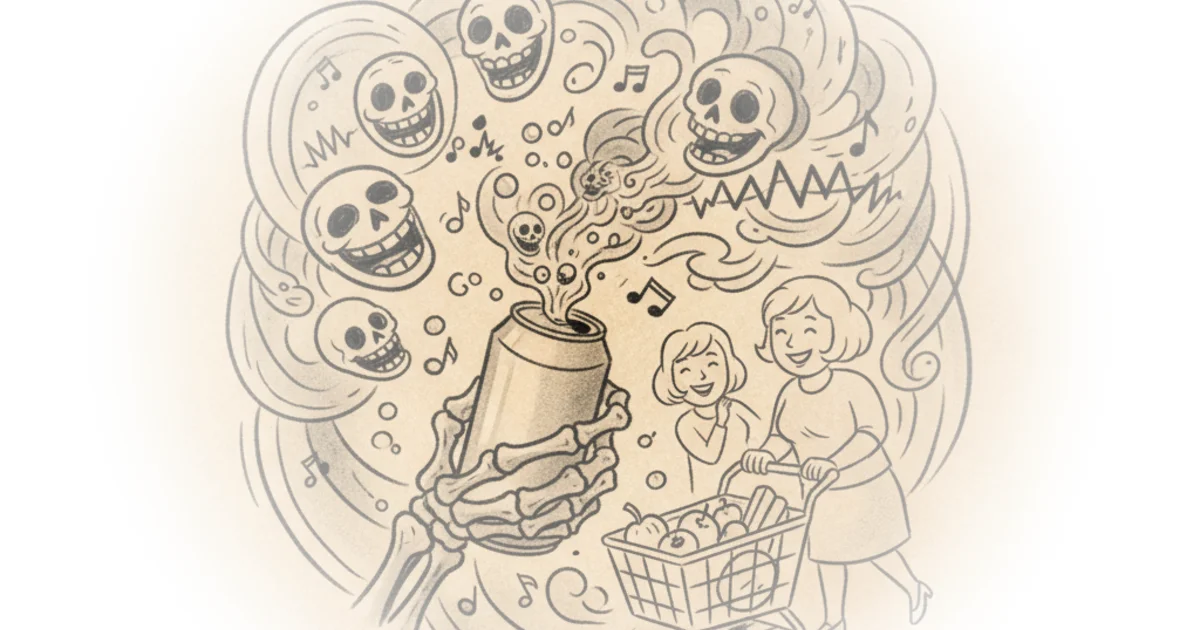
The core of the argument rests on the idea that humor creates a unique emotional bridge. Rubin points out that 91% of people report a better feeling toward a brand that makes them laugh, viewing the ad as a gift rather than an interruption. This is particularly effective for Liquid Death, which uses skulls and sarcasm to brand something as innocent as water. The strategy works because it allows "Target moms who are not metal heads" to participate in the joke without feeling out of place. Critics might argue that this approach alienates conservative demographics, but Rubin suggests the data proves that the broad appeal of humor outweighs niche exclusion.
"If you can make someone laugh in marketing, it's like 91% of people say that they have a better feeling towards the brand because I think you've given them something of value."
Mental Availability and the Shelf Decision
Moving from theory to the point of sale, Rubin explores the concept of "mental availability." He describes the grocery store experience as a high-speed decision-making process where shoppers have only "two to three seconds" to choose a product. In this chaotic environment, a brand must occupy a specific "little place inside their mind" to be considered. Rubin explains that this isn't about convincing someone to buy water every time they enter a store, but rather ensuring that when they do want flavored sparkling water, Liquid Death is one of the five brands they instantly recall.
The distinction Rubin draws between advertising and marketing is subtle but significant. He treats them as the same fundamental act of communication, yet emphasizes that traditional advertising often fails to account for the speed of modern consumer behavior. By focusing on creating memorable, funny moments, brands can bypass the need for deep consideration. The goal is simply to be "somewhere near the real consideration set" when the need arises. This pragmatic view strips away the pretension of branding, reducing it to a simple game of memory and association.
The Creative Grind vs. Corporate Art
The narrative takes a personal turn as Rubin reflects on Cessario's time in traditional advertising agencies. Here, the text exposes the soul-crushing nature of corporate creativity. Rubin describes a system where "95% of what you work on is never made," leaving creatives to pitch ideas that are rejected before they ever see the light of day. The frustration stems from a lack of control; in an agency, "the creativity is determined by the client." If the client wants a "shot of the cheese pool" for a frozen pizza, that is what gets made, regardless of the creative spark.
This section highlights the pivotal moment that led to the creation of Liquid Death: the realization that waiting for the "perfect client" was a fool's errand. Cessario decided to "make my own thing" so he could control the marketing entirely. Rubin illustrates this with a story about a rejected campaign for Callaway golf clubs, where the idea was to offer a free club to anyone who "sold their soul" to the brand. The client rejected it as "too out there," yet Cessario later executed a version of this exact concept for Liquid Death, resulting in 100,000 people signing a "legally binding contract" to sell their souls. The irony is palpable: the very ideas that agencies kill are the ones that build empires.
"I had too much of a creative spark to want to make really interesting things. And it just wasn't happening with clients who just don't want to buy interesting things."
The Organic Industry's Missed Opportunity
Rubin traces the genesis of Liquid Death back to a campaign for Organic Valley, where Cessario and his team created a funny, irreverent video called "Save the Bros" to market organic protein shakes. The campaign was a massive success, garnering millions of views and national press, yet it terrified the client's traditional "picturesque family farmers." This moment served as Cessario's "light bulb moment": why do healthy brands preach to the choir while junk food brands like Snickers and Cheetos get to be cool and funny?
The argument here is that healthy brands have been failing because they are too serious. By marketing only to people who already care about health, they miss the opportunity to convert the masses. Rubin suggests that the solution is to "use brand to get people who don't typically buy healthy things to maybe start a little bit." This insight drove the decision to launch water in cans—a move that required finding a manufacturer in Austria because no one in North America could can non-carbonated spring water at the time. The commitment to the can, despite the logistical nightmare, was driven by the desire to reject plastic and embrace a format that felt more like a beer or soda than a health product.
Bottom Line
Rubin's commentary on Cessario's journey offers a compelling blueprint for modern branding: stop trying to be a brand and start trying to be a piece of entertainment. The strongest part of this argument is the empirical evidence that humor and irreverence can penetrate even the most skeptical markets, turning a commodity like water into a cultural phenomenon. However, the biggest vulnerability lies in execution; not every brand has the creative courage to risk a "soul-selling" campaign or the logistical grit to build a supply chain from scratch. For the busy reader, the takeaway is clear: in an economy of low attention spans, the only way to be heard is to be worth listening to.