Yascha Mounk delivers a startling correction to the climate conversation: the most terrifying scenario we've been fearing for a decade is likely physically impossible. This isn't a call to relax; it is a sophisticated dismantling of how a legitimate scientific stress test was hijacked by activism and media to create a feedback loop of fear that may have actually obscured the real, more nuanced dangers we face.
The Bridge and the Tanks
Mounk begins by identifying a peculiar "context collapse" where a technical modeling tool, Representative Concentration Pathway 8.5 (RCP8.5), was mistaken for a prediction. He argues that scientists originally designed this scenario not as a forecast of the future, but as a theoretical extreme to test the limits of climate models, much like an engineer testing a bridge. "Imagine you're an engineer tasked with designing a highway bridge," Mounk writes. "You need to figure out where your structure's weak points are... Maybe you'd want to whip up a computer simulation and ask what would happen if 250 fully loaded M1 Abrams battle tanks drove onto your bridge at the same time."
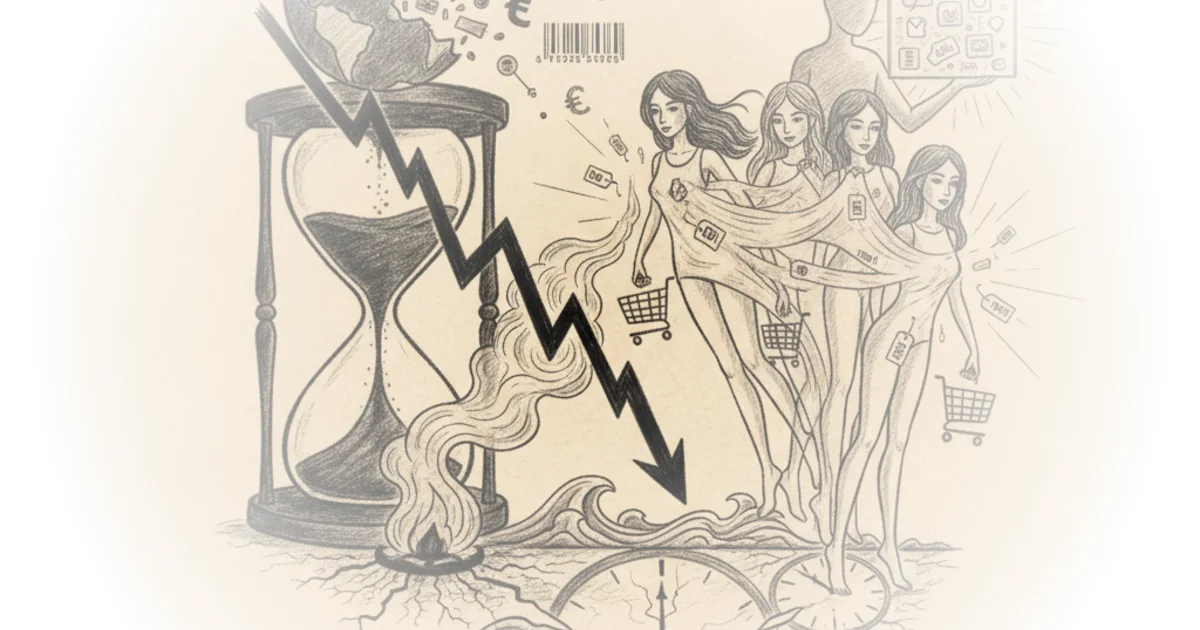
The core of his argument is that this "tank scenario" was never meant to be realistic. It was a way to isolate variables in a chaotic system. However, once this tool left the lab, it was repurposed. Mounk notes that RCP8.5 became "a fundraising bonanza for climate activist groups from Adelaide to Zurich," fueling narratives of imminent mass extinction. He points out that this scenario underpinned Greta Thunberg's 2019 UN speech and the rise of Extinction Rebellion, creating a "hermetically sealed system where the science and the activism fed back on one another in an unbreakable loop of messed-up incentives."
This framing is effective because it shifts the blame from the science itself to the downstream interpretation. It explains why the public has been so terrified while scientists have been quietly correcting the record. However, one might argue that Mounk underestimates the political utility of "worst-case" thinking; in a democracy, sometimes the only way to mobilize action against a slow-moving crisis is to present the absolute worst outcome as the baseline.
"The story of RCP8.5 is ultimately the story of what goes wrong when people convinced they are defending 'The Science' catastrophically misunderstand how science works, and when politicized activists glom onto legitimate scientific tools and insist on ramming the round peg of probabilistic forecasting into the square hole of fundraising emails."
The Physics of Impossibility
Mounk then moves to the hard data that proves the scenario is obsolete. He highlights that the original 2011 paper characterized RCP8.5 as a world with 12 billion people burning massive amounts of coal. Yet, demographics and energy trends have diverged sharply from this path. "In 2023, solar and wind made up almost 91% of net new global power capacity additions, while fossil fuels contributed just 6%," he notes, citing recent UN population data that projects a peak of 10.3 billion rather than the 12 billion required for the scenario.
He cites a pivotal 2017 study by economists Justin Ritchie and Hadi Dowlatabadi which showed that reaching RCP8.5 would require burning more coal than exists in the world's recoverable reserves. Mounk uses this to illustrate the absurdity of the situation: "It was as though engineers had shown conclusively that 250 M1 Abrams tanks wouldn't even fit on the highway bridge we want to build." Despite this, the narrative persisted because "too many activist groups had built business plans around scaring the bejeezus out of people on the basis of highly emotive, RCP8.5-inspired catastrophist research."
This section is the piece's strongest evidentiary pillar. It relies on hard constraints—coal reserves and population curves—that are difficult to dispute. It suggests that the "business as usual" label activists applied to RCP8.5 was a fundamental error. Critics might counter that while the specific pathway is impossible, the rate of warming could still accelerate due to unforeseen feedback loops, meaning the "bridge" could still collapse even without the full load of tanks. Mounk anticipates this, but the distinction between "impossible pathway" and "unlikely but possible catastrophe" is a fine line that deserves more scrutiny.
The Real Danger: Unknown Unknowns
The most crucial part of Mounk's commentary is his refusal to let the reader off the hook. Just because the "tank scenario" is dead, he argues, does not mean the bridge is safe. He warns that the Earth System contains "poorly-understood, hard-to-measure, hard-to-model feedback loops" that could trigger catastrophic outcomes independent of human emissions. He points to the potential thawing of Siberian permafrost or the release of methane from seabeds as risks where "the error bars around their estimates are often very wide."
He connects this to the concept of "Shared Socioeconomic Pathways," noting that while we are moving away from the extreme RCP8.5, we are still on a path that could lead to 2.5 to 3 degrees of warming. "Nobody lives at the global mean temperature," Mounk writes, emphasizing that people care about local floods, fires, and droughts, which are harder to predict than global averages. He concludes with a sobering analogy: "So it may be that we were only ever going to pile 100 M1 tanks onto that bridge, not 250. But maybe we're also creating conditions for a herd of elephants to pile onto the bridge at the same time."
This pivot from debunking alarmism to highlighting genuine uncertainty is the piece's masterstroke. It avoids the trap of "climate denial" while rejecting the "climate panic" narrative. It forces the reader to confront the limits of our knowledge. As Mounk puts it, "We're forced, just now, to face them 'naked'—in the terrifying awareness that our best guesses about the hazards we face probably aren't very good."
"The maddening reality about climate change is that Earth System science is not really up to the task of quantifying the risks for the worst outcomes."
Bottom Line
Mounk's argument is a vital correction to a decade of distorted climate discourse, successfully separating the science of modeling from the politics of fundraising. His strongest move is demonstrating that the most extreme scenario was never plausible, yet his most important warning is that this does not eliminate the risk of collapse due to unknown feedback loops. The reader should watch for how the IPCC's new, less extreme scenarios are received; if the public and activists cannot adjust their expectations to a "less catastrophic but still dangerous" reality, the debate may simply shift to a new, equally unhelpful extreme.