This isn't just another story about a bad landlord; it is a forensic expose on how the very guardrails built to protect tenants have been hijacked by criminals. Michael Macleod reveals a chilling reality: scammers are no longer hiding in the shadows, but are actively purchasing government-approved badges of legitimacy to rob renters blind. For anyone navigating London's housing market, this investigation proves that trust is now a commodity that can be bought for less than £250.
The Illusion of Legitimacy
Macleod opens with the harrowing case of "Callum," a victim who did everything right. He verified the agent, checked the credentials, and even saw the royal coat of arms on the paperwork. Yet, he was duped. Macleod writes, "What baffled him was this: how had a fraudulent estate agent been able to gain real membership of government-approved schemes designed to protect renters from dodgy estate agents?" The answer is a bureaucratic failure that turns consumer protection into a weapon for fraudsters.
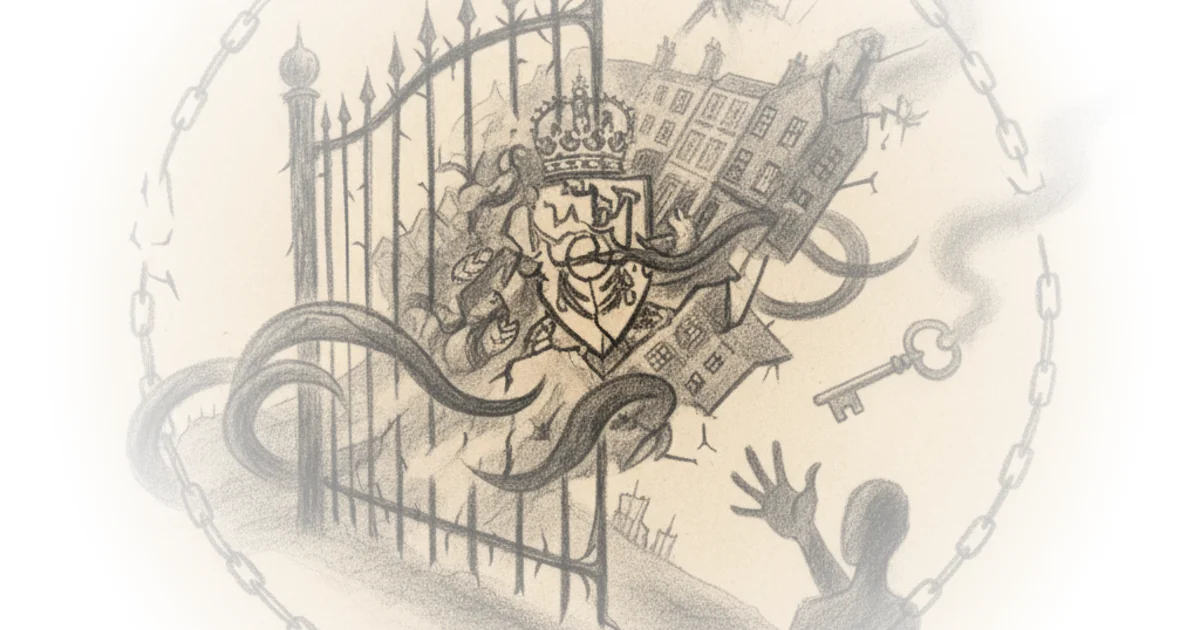
The author meticulously details the "repeatable process" used by these criminals. They create a shell company, pay a nominal fee to join a redress scheme, and purchase a cheap insurance policy for deposits. Macleod notes, "For less than £250 they were able to repeatedly highlight their legitimate use of government-endorsed registers as evidence that people could trust them with thousands of pounds." This framing is devastating because it shifts the blame from individual gullibility to systemic negligence. The scammers aren't breaking the rules; they are following them perfectly, exploiting a system designed for honest operators.
"They're doing everything except for actually having a flat... That's the one bit they don't have."
The piece draws a sharp parallel to other regulatory failures in the UK, echoing the long-standing issues where private bodies like The Property Ombudsman or water company regulators struggle with enforcement against bad actors. Just as deposit schemes were reformed after years of tenant exploitation, this new loophole suggests that without active verification, registration is merely a paid stamp of approval rather than a guarantee of safety.
The Profit Motive Behind Protection
Macleod does not shy away from the financial incentives that allow this to happen. He points out that the Property Redress Scheme, which operates under license, makes millions in profit by charging annual fees to agents. "The more agents the Property Redress Scheme signs up, the more money it makes for its owner, major US insurance company Brown & Brown," Macleod writes. This creates a perverse dynamic where the regulator has a financial interest in onboarding as many members as possible, regardless of their legitimacy.
Critics might argue that these schemes are simply overwhelmed by volume and cannot feasibly vet every new application manually. However, Macleod's reporting suggests the issue is deeper than capacity; it is a lack of will to verify basic facts like whether the company actually owns the properties they claim to let. The investigation found that even after London Centric reported the fraud, the scam agency remained on the public register for weeks. This inaction implies that the "protection" offered by these schemes is largely performative until it is too late.
The author highlights the sophistication of the operation, noting that victims were sent fake but convincing gas certificates and electrical safety paperwork. Macleod observes, "Ironically... the only remarkable thing about Anchor Gate Lettings was just how professional, thorough, and responsive they were for a London estate agency." This professionalism is the trap. In a market as overheated as London's, where tenants are desperate and time-poor, the appearance of competence is often mistaken for actual competence.
The Human Cost of Bureaucratic Failure
The narrative takes a somber turn when discussing the aftermath for victims like Callum, who lost thousands of pounds and had their personal data stolen. Macleod writes, "Immediately I felt sick, I knew then this was a scam." While Callum eventually recovered his money through his bank, the author warns that many others are not so lucky. The systemic issue is that the burden of proof falls on the victim to navigate complex fraud claims while scammers vanish into the digital ether.
The investigation also uncovers the human cost for the "token" directors used by these criminal rings. Macleod describes a man in Bushey who was likely paid a small sum to sign paperwork, only to be left facing legal and reputational ruin. He notes that this individual had recently been homeless and suffering health challenges, making him an easy target for exploitation. This detail adds a layer of tragedy often missing from financial crime reporting: the criminals are not just faceless hackers, but networks that prey on the vulnerable at every level of their operation.
"The guardrails put in place by the authorities to protect tenants are now aiding the criminals in duping the public."
This observation is the piece's most potent critique. It suggests that the current regulatory framework has been inverted. Instead of filtering out bad actors, the system provides them with the tools to appear trustworthy. The reliance on self-declaration and paid membership creates a false sense of security for renters who assume that a government logo equals safety.
Bottom Line
Macleod's investigation delivers a stark verdict: the UK's rental protection schemes are currently failing their primary function by allowing fraudsters to buy legitimacy. The strongest part of this argument is the evidence that scammers are not circumventing regulations but exploiting them for profit, turning "protection" into a revenue stream for private companies and a weapon against tenants. The biggest vulnerability remains the lack of proactive verification; until authorities move from passive registration to active auditing, these schemes will continue to be infiltrated. Readers should watch for whether the government responds to this specific loophole or if it remains another gap in London's housing safety net.