The broadcast opens with energy and anticipation - polls closing in just under 15 minutes, hosts Ash Sarar and Aron Bastani ready to guide listeners through what they describe as a "historic moment" for the Conservative Party. The framing is immediately dramatic: this isn't just any election coverage, it's a live event marking what appears to be the collapse of one of Britain's major political parties.
The Historic Stakes
Novara Media frames the night not as a Labour victory, but as a Conservative collapse - and that distinction matters. "There is a sense in which sort of looking at this election from a historic perspective it does feel like it's that collapse of the conservatives that people are going to remember," they argue. This is their thesis: the story isn't Labour winning, it's the Conservatives imploding.
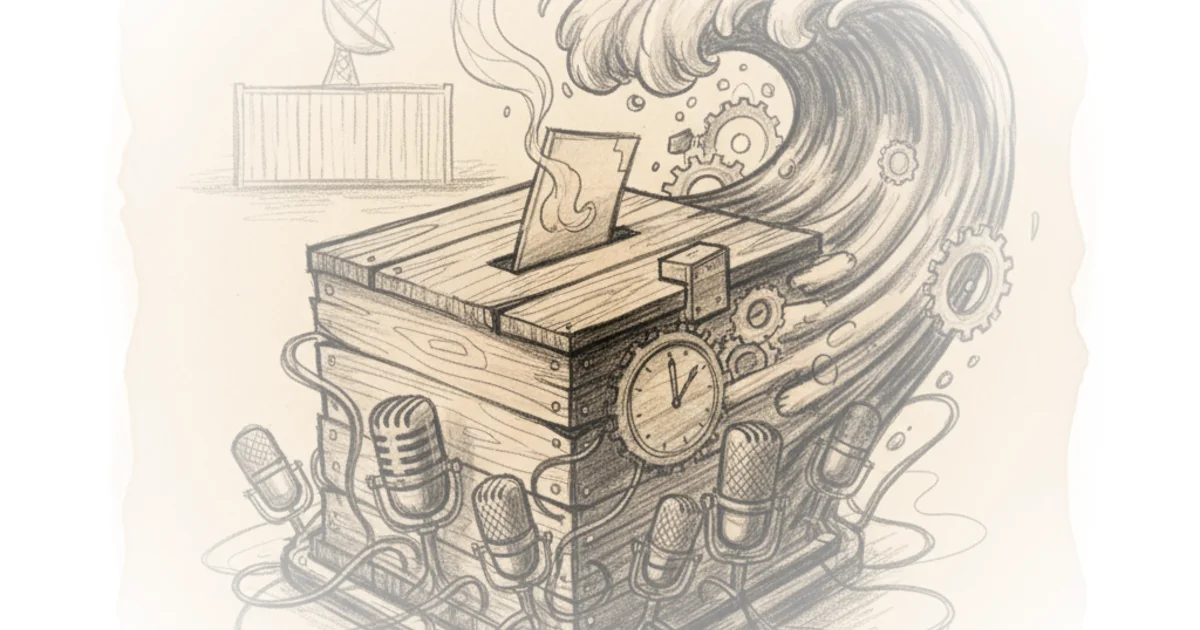
The evidence they cite is striking - polling suggests potentially "the biggest majority ever" since Stanley Baldwin in 1931. They detail how Labour could win with fewer votes than Jeremy Corbyn in 2017 yet secure a far larger majority - what would be "bigger than somebody who gave the world L gr te" (a reference to Lloyd George). The hyperbole is deliberate and emphatic: this would be "huge."
It is principally about the collapse of the Conservatives which explains that potential majority.
The Tory Floor
The conversation turns to what numbers matter. Before the election was called, Conservatives were describing 150 seats as "an utter catastrophe" - their worst possible scenario. But now, the question becomes: are they over or under 100? This matters because "if it's under 100 you would really struggle to see how they would get their act together within a single parliamentary term."
The hosts acknowledge this is "completely arbitrary" but argue the psychological weight is real. Under 100 represents "a really big psychological point" - a phrase that captures both the arithmetic and the symbolic weight of opposition viability.
The Smaller Parties
A particularly lively section covers the Liberal Democrats and Ed Davey. The hosts note that Ed Davey's water slide stunt - going down a water slide at a public event - "did seem to be somewhat effective" because he ended with higher approval ratings than other party leaders. They describe his campaign as smart: "he managed that quite neatly all he had to do is humiliate himself on television."
The Greens get serious analysis. They're currently represented by one MP in Brighton Pavilion, but throwing "absolutely everything" at seats like Bristol Central - a seat held by a Labour MP "very much on the right of the labour party." The Greens are "trying to ride two horses" - pitching to urban student constituencies as being left of Labour on Gaza, while in rural seats adopting a more conservative environmentalist approach.
The discussion of independents is where the piece gets most interesting. Even if no independents win, they anticipate "a record number of votes nationally for Independence" whether in Ashfield or familiar seats like Jeremy Corbyn and FIS Shaheen. The combined Labour-Conservative vote share "had since 1918" - and tonight it will be even smaller. This tells a story about "political promiscuity" - voters trying different kinds of politics.
Counterpoints
Critics might note that framing this as primarily about Conservative collapse overlooks the substantive policy differences between the parties. The coverage focuses heavily on Labour's expected majority without fully exploring what that majority would actually do - the hosts mention Labour's record on Gaza, taxes on working people, and housing policy only in passing. Additionally, predicting an "under 100" result for Conservatives is based on exit polls that haven't yet been released - the broadcast was recorded before the exit poll data became available.
Bottom Line
The strongest part of this coverage is its dramatic framing: not Labour wins, but the Conservatives face their worst defeat since 1931. The vulnerability is in the analysis - much of it is based on pre-election polling rather than actual results, and the "biggest majority ever" claim depends heavily on which polls Novara Media chose to cite. What should readers watch for? The exit poll numbers dropping in just minutes will determine whether this thesis holds or whether the Conservatives stage a recovery.
The broadcast's real contribution is tracking smaller parties - Greens, LibDems, Reform, independents - and suggesting the political landscape may be fragmenting faster than the headline majority suggests.