Rana Ayyub does not merely report on the erosion of press freedom in India; she documents her own systematic dismantling by a coordinated ecosystem of digital mobs and state inaction. This is a harrowing firsthand account of how technology, when weaponized by majoritarian politics, can turn a journalist's private life into a public battleground, forcing her to question the very viability of reporting in the world's largest democracy.
The Digital Avalanche
Ayyub opens with a visceral description of a nightmarish intrusion that began not with a warrant, but with a phone call at 1.20 am. She describes the moment her personal security evaporated: "It felt like an avalanche had hit my android phone." Within minutes, her device was flooded with a barrage of harassment, ranging from sexually explicit messages to death threats, all triggered by the doxxing of her official number by a right-wing Twitter handle. The scale of the attack was immediate and overwhelming, with messages rolling in from banks, matrimonial sites, and pornographic platforms simultaneously.
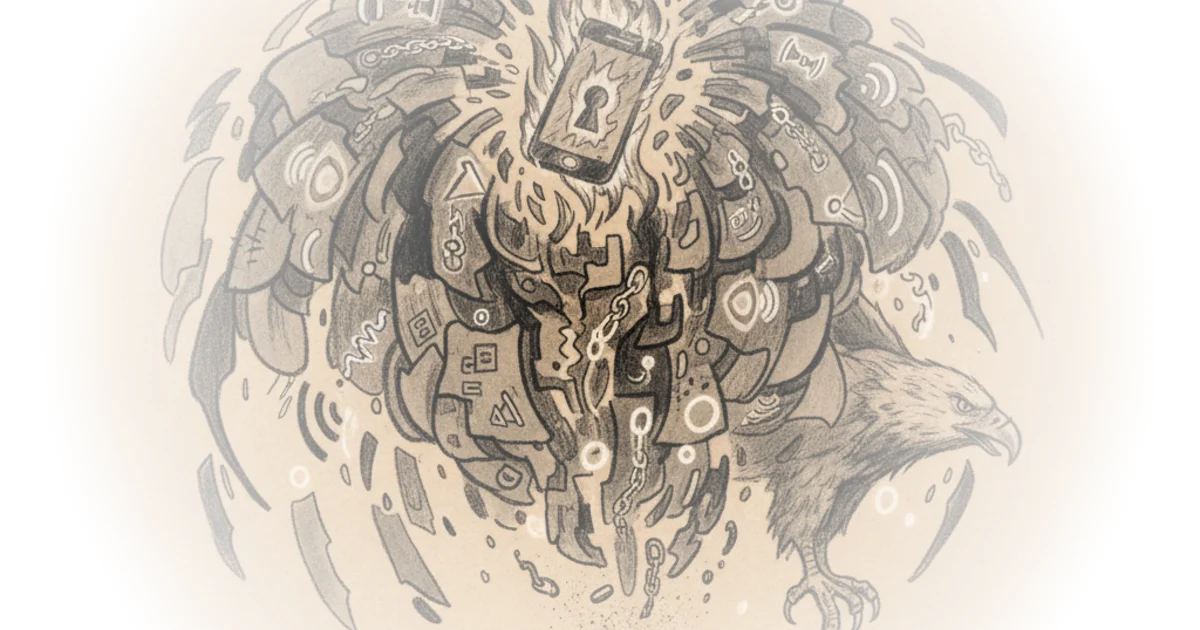
The author's account highlights a critical failure of digital governance. Despite reporting the doxxing to the platform, she notes, "Till today I have not heard from Twitter." This silence from the social media giant, coupled with the platform's refusal to remove deepfake pornography later in the ordeal, underscores a systemic gap in protecting users from state-tolerated harassment. The argument here is not just about personal safety, but about the complicity of tech giants in amplifying hate speech that targets specific demographics.
"My journalism, my achievements were sexualised and discredited, not for the first time."
Ayyub details how the harassment escalated from annoyance to a targeted campaign to destroy her reputation. An investigation by the fact-checking site Alt-News revealed that the primary aggressor was linked to the social media campaign of the ruling Bharatiya Janata Party (BJP). This connection transforms the incident from random cyberbullying into a political tool. The author argues that the state's failure to act is not an oversight but a feature of the current political climate, where critics are presumed disloyal by virtue of their faith.
The Illusion of State Protection
The narrative shifts from the digital realm to the physical one, exposing the paralysis of law enforcement. Ayyub describes spending eleven hours at a police station, providing details of the threats while the harassment continued in real-time. The police response was dismissive, initially claiming lack of jurisdiction before grudgingly taking a complaint with "no commitment to register an offence." When the investigation finally began, it yielded a bizarre result: the police claimed the perpetrators were "just seventeen year old innocent young boys who were not sure who they were calling."
This explanation strains credulity, as Ayyub points out the sophistication of the attack, which included leaked passwords, passport scans, and AI-generated deepfakes. The police's dismissal of the threat reflects a broader institutional bias. Ayyub confronts an officer directly, asking, "Is this how you plan to protect women in a country considered by some to be the rape capital of the world?" The officer's eventual promise to act, followed by the release of the suspects, illustrates a justice system that prioritizes the comfort of the powerful over the safety of the vulnerable.
Critics might argue that law enforcement in India faces overwhelming caseloads and that attributing every delay to political bias is an oversimplification. However, Ayyub's evidence of coordinated surveillance and the specific targeting of her identity as a Muslim woman suggests a pattern that goes beyond bureaucratic inefficiency. The state's inaction in the face of such explicit, organized violence signals a dangerous shift in how dissent is managed.
"A cop who I inquired with recently on the status of my criminal complaint said in good humor 'If the government changes, you might see the culprits behind bars.'"
This quote encapsulates the chilling reality of the situation: justice is contingent on political power, not the rule of law. The author's experience in Manipur further reinforces this, where she was surveilled by intelligence officials, followed to a restroom, and recorded without consent. The state's presence, which should guarantee safety, instead becomes a source of terror, compromising the security of her sources and the integrity of her reporting.
The Weaponization of Identity
At the core of Ayyub's argument is the intersection of gender, religion, and journalism. She posits that her identity as a Muslim woman makes her a specific target in a country sliding toward majoritarianism. "My words are picked up and weaponised against me in court cases because of my Muslim-ness," she writes. This presumption of disloyalty means her journalism is not viewed through the lens of objectivity but as an act of sedition.
The harassment campaign leveraged this identity, spreading fake news that she hated Hindus and using sexualized slurs to discredit her professional achievements. A lawyer filed a complaint against her for "anti-Hindu hatred," citing the very misinformation spread by her harassers. This circular logic traps the journalist in a legal quagmire where the state and its supporters use the law to silence criticism. The author notes that she is now fighting at least five different cases, spending more time with lawyers than on the ground reporting.
The emotional toll of this existence is profound. Ayyub describes the constant anxiety of the doorbell ringing, wondering if it is the postman or the police with a warrant. She admits to being "emotionally drained, often with episodes of a mental breakdown." This human cost is often missing from statistical reports on press freedom, but Ayyub brings it to the forefront, showing that the threat to democracy is not just abstract but deeply personal.
"How does a journalist then report in the World's largest Democracy where tech platforms like X have only enabled and amplified the sexualised assault against me and the female members of my family."
This question hangs over the entire piece, challenging the global narrative of India as a thriving democracy. The author's experience serves as a microcosm for a broader trend where digital tools are used to enforce conformity and silence minority voices. The failure of international platforms to intervene effectively adds a layer of global complicity to the domestic crisis.
Bottom Line
Rana Ayyub's account is a powerful indictment of a system where the state, the judiciary, and tech platforms converge to silence dissent. The strongest part of her argument is the detailed evidence of how digital harassment is weaponized to undermine the credibility of a journalist based on her identity, rendering the rule of law moot. The biggest vulnerability for the reader is the realization that this is not an isolated incident but a structural feature of the current political order in India. What to watch next is whether international pressure can force tech platforms to enforce their own policies or if the domestic legal system will ever hold the perpetrators of such coordinated attacks accountable.