In an era where health warnings often feel like background noise, Rohin Francis cuts through the static with a case so extreme it borders on the surreal: a 21-year-old man whose heart stopped pumping effectively because he treated energy drinks as a daily staple. Francis, writing for Medlife Crisis, doesn't just recount a medical tragedy; he exposes the terrifying gap between the casual consumption of high-caffeine beverages and the catastrophic, yet rare, physiological collapse they can trigger. This isn't a story about sugar; it's a forensic look at how a young, healthy body can be dismantled by a specific, unregulated cocktail of stimulants.
The Anatomy of a Collapse
Francis opens with a satirical, self-deprecating monologue that disarms the reader before delivering a clinical gut-punch. He frames the narrative not as a moral lecture, but as a medical detective story where the culprit was hiding in plain sight. "A 21 year old university student and keen gamer previously entirely well presented to hospital with four months of shortness of breath on exertion," Francis writes, setting the stage for a case that defies the typical risk profile of heart failure. The patient's kidneys were failing, his heart was ejecting only nine percent of its blood volume, and clots had formed in both ventricles—a scenario usually reserved for the elderly or those with severe genetic defects.
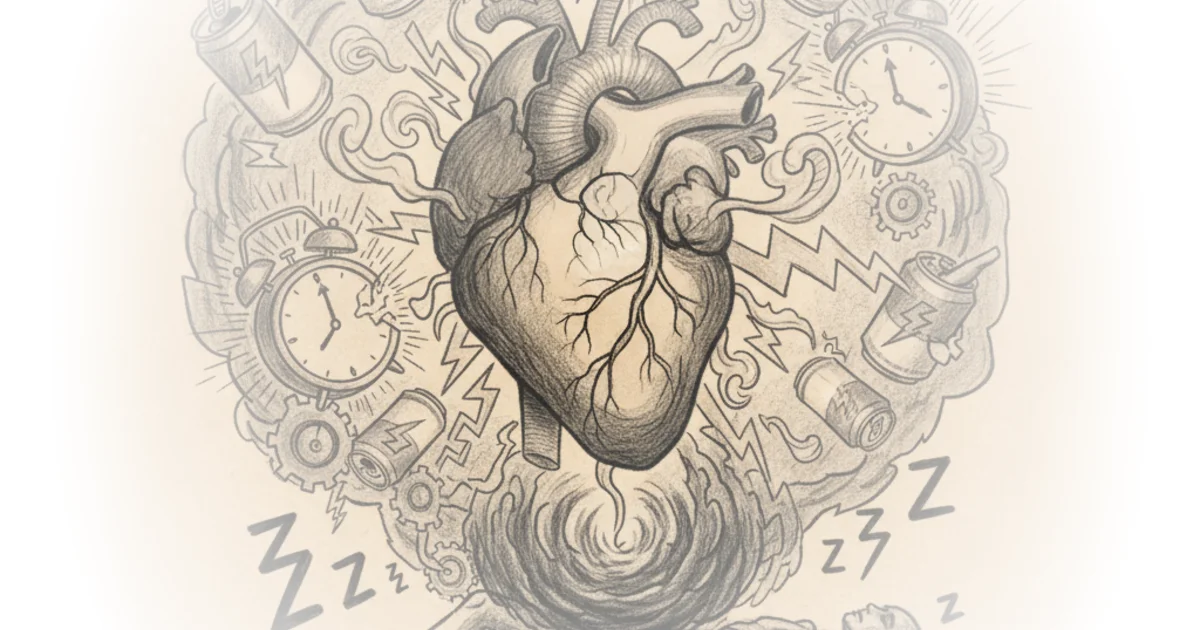
The author's choice to highlight the sheer volume of consumption is crucial. "His creatinine was 562 urea 48 and he required bilateral nephrostomys for urinary obstruction," Francis notes, translating the medical jargon into a stark reality: the patient's organs were so overwhelmed they required tubes inserted directly through the skin to drain. This level of detail grounds the horror in clinical fact, moving beyond anecdotal fear-mongering. The argument here is that the human body has a breaking point, and for this individual, two liters of Monster a day was the threshold.
"The toxins that had built up due to his kidneys not working had also affected his brain... he was emergently started on dialysis and intensive care and transferred to a specialist hospital for consideration of combined heart and kidney transplantation."
The narrative strength lies in Francis's admission that even the medical team was initially blind to the cause. He interviews the lead author of the case study, Dr. Andy De Silva, who admits the link was only clear in retrospect. "The sort of history of um how much energy drink he was consuming actually came quite a few days or into the admission," Francis reports. This is a critical insight: the medical system is not currently wired to immediately suspect energy drinks as a primary cause of organ failure in young adults. Critics might argue that focusing on such a rare outlier creates unnecessary panic, but Francis counters that the rarity is precisely why the warning is needed—because the mechanism is unknown and the stakes are life or death.
The Unknown Mechanism
One of the most compelling aspects of Francis's commentary is his refusal to offer a simple explanation. He dismantles the assumption that caffeine alone is the villain. "I don't believe we do [understand the mechanism]," Francis quotes De Silva, emphasizing that while caffeine is ubiquitous, the specific formulation of energy drinks seems to hold a unique danger. The author suggests a genetic predisposition might be the missing variable, where certain individuals cannot handle the "over activation of the sympathetic nervous system" triggered by the drink's proprietary blend.
This uncertainty is framed not as a failure of science, but as a warning of the unknown. "We don't know any safe dose but um it doesn't seem like there's any um harm so far reported with energy drink consumptions of for example two cans a day might be more appropriate and safer," Francis paraphrases the expert's cautious guidance. The distinction is vital: the danger isn't necessarily in moderate consumption, but in the lack of a known upper limit for vulnerable populations. The article effectively shifts the burden of proof from the consumer to the industry, noting that the ingredients are a "black box" of high-concentration stimulants.
The Human Cost
Beyond the physiology, Francis weaves in the patient's own harrowing account of his descent into delirium and depression. The piece includes a direct testimony from the young man, who described suffering from tremors, severe migraines, and an inability to concentrate. "I was eventually admitted to the icu this experience was extremely traumatizing for several reasons first i was suffering from delirium i had memory problems to such an extent i could not remember why i was in the icu," the patient recalls. This personal narrative transforms the clinical data into a visceral human story, illustrating the psychological toll of physical collapse.
The patient's call for regulatory change is echoed by Francis, who notes the disparity between tobacco and energy drink labeling. "I think warning labels similar to smoking should be made to illustrate the potential dangers of the ingredients in energy drinks," the patient argues. Francis supports this by highlighting the addictive nature of these products and their accessibility to children. The argument is that the current regulatory framework treats these potent chemical mixtures as mere soft drinks, ignoring the pharmacological reality of their ingredients.
"I think there should be more awareness about energy drinks and the effect of their contents i believe they're very addictive and far too accessible to young children."
Bottom Line
Francis's piece succeeds by balancing medical rigor with narrative urgency, proving that while energy drink-induced heart failure is rare, the consequences are so severe that the risk cannot be ignored. The strongest part of the argument is the admission of scientific uncertainty regarding the specific mechanism, which serves as a powerful call for caution rather than a definitive diagnosis. However, the piece's vulnerability lies in its reliance on a single case study; without broader epidemiological data, it remains a warning of the possible rather than a prediction of the probable. Readers should watch for future studies that attempt to isolate the specific compounds responsible, as the current lack of a "safe dose" remains the most unsettling takeaway.
"We don't know any safe dose but um it doesn't seem like there's any um harm so far reported with energy drink consumptions of for example two cans a day might be more appropriate and safer."
The ultimate verdict is clear: in the absence of definitive safety data, the most prudent path is moderation, not because the drinks are inherently evil, but because the human body's tolerance for their specific chemical cocktail is a variable we cannot yet measure.