Scot McKnight reframes the ancient Gospels not as a manual for moral perfection, but as a clinical guide for psychological survival. In a landscape often saturated with platitudes about "faith over feelings," McKnight makes the startling claim that Jesus specializes in "trauma therapeutics," treating the body's natural defense mechanisms with the same urgency as physical disease. This is not a call to ignore pain, but a theological argument that the divine imagination is the only force capable of entering the "trauma zone" without causing further harm.
The Body Keeps the Score
McKnight begins by dismantling the idea that trauma is merely a mental abstraction. He writes, "Trauma is storied in the body and trauma has a very good memory." This observation grounds the spiritual discussion in biological reality, acknowledging that the nervous system remembers danger long after the mind tries to move on. The author argues that Jesus' healings in Matthew 8–9 were not just magic tricks, but "social liberations" that restored the identity of those shunned by society.
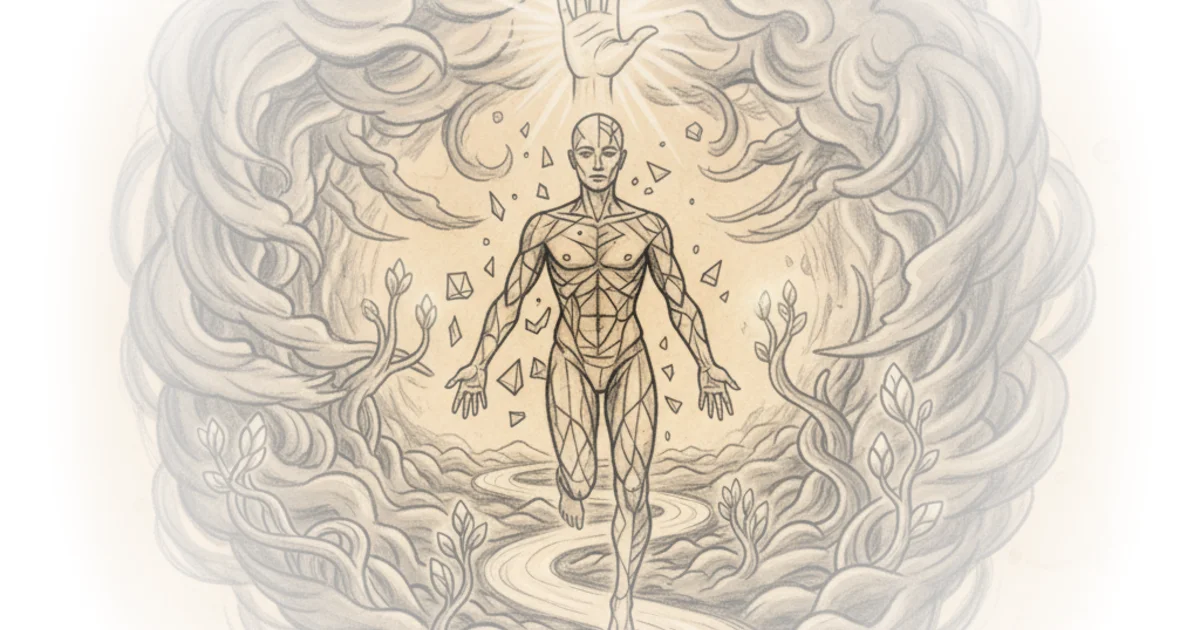
He draws a sharp distinction between modern pity and the radical empathy of the incarnation. Citing Roman Krznaric, McKnight defines empathy as "the art of stepping imaginatively into the shoes of another person, understanding their feelings and perspectives, and using that understanding to guide your actions." The author illustrates this with a personal anecdote about delivering newspapers to a struggling elderly couple, realizing that true empathy requires the imagination to feel another's poverty as one's own. This lands powerfully because it shifts the burden of healing from the sufferer's ability to "get over it" to the community's (and Christ's) capacity to enter the pain.
"Empathy is the art of stepping imaginatively into the shoes of another person, understanding their feelings and perspectives, and using that understanding to guide your actions."
Critics might argue that McKnight's medicalized language risks reducing complex theological redemption to a therapeutic session. However, the author anticipates this by insisting that the "therapeutics" are rooted in a cosmic battle against the "captain of sinners," not just individual psychology. As he notes, "salvation is principally a work of deliverance, of redemption, of liberation."
Shattering Cultural Codes
The commentary then pivots to how trauma is often exacerbated by societal structures. McKnight identifies three specific "culture codes" that Jesus dismantled: spirit world codes, body codes, and nature codes. He points to the woman with the twelve-year bleeding condition—a zavah—who was physically impaired and socially isolated. "The woman had been bleeding for twelve years," McKnight writes, noting that while she could mix in society, she could not enter the temple, effectively cutting her off from the sacred.
This historical reference to the zavah adds necessary depth, showing that what we call "trauma" today was often codified into religious law yesterday. McKnight argues that Jesus ignored these restrictions, touching the untouchable and healing the "unclean." He extends this to modern contexts, asking the reader to consider if their own trauma is being reinforced by "culture codes" that restrict women, the young, or the poor. "These culture codes restrict and even traumatize people," he asserts, framing the Gospel as a direct challenge to the systems that keep people in the trauma zone.
The Courage to Trust
Perhaps the most distinct contribution of this piece is its redefinition of faith. McKnight rejects the notion that healing requires perfect belief. Instead, he suggests that "trusting Jesus unshackles the trusting person." He uses the story of Hagar, who named God El-Roi ("God Seeing Me") after being abused and abandoned, to illustrate that the divine gaze is the antidote to the trauma of invisibility. "Did I really see here, after he was seeing me?" McKnight quotes Hagar, highlighting that the act of being seen is the first step toward healing.
The author lists various forms of "imperfect" faith found in the text: wondering, fearful, friend-based, and physical faith. "Jesus sees not enough faith, failed faith, burned and burned up faith, and a lack of energy as faith that is ready to trust all over again," he writes. This is a crucial pivot for the weary reader. It suggests that the barrier to healing is not a lack of spiritual horsepower, but the willingness to look into the eyes of the healer.
"The issue is not Jesus. He says to you and to me, 'I am willing. Are you?'"
A counterargument worth considering is whether this emphasis on "looking into his eyes" places too much weight on the individual's emotional state, potentially overlooking systemic solutions to trauma. Yet, McKnight balances this by emphasizing the communal aspect of faith, noting that many were healed through the "faith of your friends."
The Touch of Compassion
McKnight concludes by returning to the physicality of the Gospel accounts. He lists the specific actions of Jesus: touching hands, taking a girl by the hand, and touching eyes. "The touch of Jesus breaks the devil's grip," he writes, quoting the restoration of sight and speech. The author invokes Pope Leo to summarize the theological point: "The touch of compassion is the first medicine."
The argument culminates in the incarnation itself, citing Hebrews 2:14–18 to show that Jesus became fully human to become a "merciful and faithful high priest." "Because he himself suffered when he was tempted, he is able to help those who are being tempted," McKnight writes, grounding the promise of healing in the shared experience of suffering. This moves the piece from a theoretical discussion of trauma to a visceral promise of presence.
Bottom Line
McKnight's strongest move is reframing the Gospels as a manual for trauma recovery rather than a list of moral imperatives, offering a profound sense of validation for those whose bodies and minds are still reacting to past wounds. The argument's vulnerability lies in its heavy reliance on the reader's willingness to engage in the risky act of trust, which may feel insufficient for those requiring clinical intervention. For the busy reader, the takeaway is clear: the divine response to trauma is not a command to be strong, but an invitation to be seen.