Brad DeLong distills a complex industrial strategy into a single, piercing observation: SpaceX is not primarily an aerospace company, but a telecommunications firm disguised by rocketry spectacles. This piece cuts through the mythos of the "heroic techno-entrepreneur" to reveal the cold economics of satellite broadband and the inevitable, high-stakes gamble of building a proprietary handset. For the busy reader, this analysis matters because it predicts where billions in capital are actually flowing: away from pure innovation and toward the familiar, margin-squeezed grind of vertical integration in the telecom sector.
The Rocket as Marketing Expense
DeLong begins by dismantling the popular narrative that SpaceX's value lies in its ability to land boosters. He argues that these feats are merely a brilliant, albeit expensive, marketing department for the real business engine: Starlink. "SpaceX is like, it's Starlink, and then it's a really expensive marketing department that launches rockets," he writes, echoing the sharp analysis of podcasters David Pierce and Nilay Patel. This reframing is crucial; it shifts the viewer's gaze from the visual spectacle of a Falcon 9 perching on a barge to the unglamorous reality of pipes in orbit delivering bits to the ground.
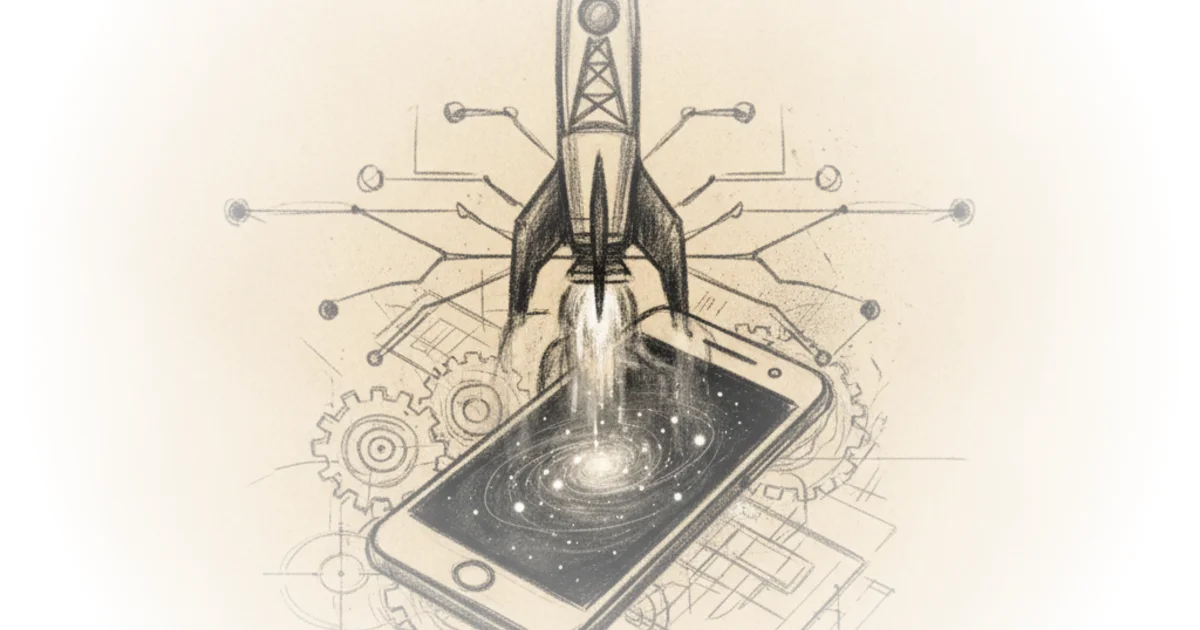
The author suggests that while the rocket landings capture the public imagination, they do not alter the fundamental economics of the industry. Telecom is historically an sector where "you spend huge sums upfront on fixed capital" and fight price wars for a return that is solid but unspectacular. DeLong notes that even with vertical integration down to the device level, the business remains "a capital-intensive, regulated, margin-squeezed, utterly prosaic provider of bits from orbit to ground." This perspective grounds the discussion in financial reality rather than hype.
The spectacle hypnotizes: The Falcon 9 descends from the heavens, flips, and perches on its barge like a smug, metallic pigeon; the crowds cheer... But the underlying Mr. Money is the StarLink broadband service.
Critics might argue that this view underestimates the strategic value of controlling the entire stack, from launch to handset, which could eventually lower costs or create unique network advantages. However, DeLong's point holds weight: history shows that telecom operators rarely achieve world-historical rents regardless of their technological prowess. The economics of broadband are well understood, and adding a rocket company on top does not magically change the physics of spectrum or orbital slots.
The "Not-Phone" Paradox
The commentary then turns to SpaceX's rumored entry into the smartphone market with an AI-driven device. DeLong highlights the inherent contradiction in this strategy: if you build a phone, you must admit you are a telecom company, but admitting that breaks the "magic" of the brand. Consequently, the company is forced to claim it is building a "not-phone," even though every feature that makes it distinct from a phone also makes it functionally worse for the average user.
Drawing on the podcast conversation, DeLong points out the absurdity of trying to bypass the duopoly of Apple and Google by creating a device that lacks essential applications like Instagram or Outlook. "If you are, in truth, a telecom firm, there are only so many knobs you can turn to goose growth," he observes, explaining why vertical integration into hardware is the only logical next step for growth. Yet, this move requires convincing consumers to abandon the ecosystems they rely on daily.
The author notes that while Sam Altman and others share this "everything app" dream, it often clashes with reality. DeLong writes, "Yet everything that would make your device a not-phone is also something that makes your device unambiguously worse than a phone, wouldn't it?" This rhetorical question underscores the difficulty of competing in a market where user habits are deeply entrenched. The idea of an AI agent replacing the need for apps is appealing in theory but faces significant hurdles in execution and adoption.
You want to be Apple plus Verizon plus WeChat, riding on top of StarLink. But to say that you are building a phone would break the magic: hence you have to claim that you are building a not-phone.
A counterargument worth considering is that the "everything app" model has succeeded in other markets, such as China with WeChat, suggesting that a unified ecosystem could indeed capture significant value. However, DeLong rightly points out that replicating this in the West requires overcoming the dominance of established platforms and the specific needs of Western users who rely on a diverse array of specialized apps.
The Telecom Reality Check
Ultimately, DeLong concludes that the rumored device is less about bold innovation and more about a familiar telecom gambit wrapped in delusion. He emphasizes that "telecom in general is not—by the standards of modern capitalism—the road to world-historical rents." The excitement around SpaceX's potential handset is fueled by the same charisma that powers its rockets, but the underlying business model remains constrained by the same economic forces that govern traditional carriers like T-Mobile.
The piece ends with a sobering reminder: "At the end of the day, it is a broadband company. And we know the economics of broadband companies extraordinarily well." DeLong's analysis serves as a corrective to the narrative of disruption, suggesting that despite the flashy branding and AI promises, SpaceX is simply playing by the old rules of the telecom industry. The "not-phone" strategy may sell units due to brand loyalty, but it is unlikely to rewrite the economic playbook of the sector.
The astonishing disjunction in our info-bio tech-attention economy between the things that are tremendously valuable and important (to humans) and the things that are obscenely profitable (to managers).
Bottom Line
DeLong's strongest contribution is his ability to strip away the "heroic techno-entrepreneur" myth to reveal a standard, albeit high-cost, telecom business model. The argument's biggest vulnerability lies in potentially underestimating how much AI integration could actually differentiate a device enough to overcome app ecosystem barriers. Readers should watch whether SpaceX can successfully navigate the transition from a launch provider to a consumer electronics giant without getting bogged down by the very margins it seeks to improve.