This piece from Animation Obsessive delivers a rare victory for film preservation: the resurrection of a movie so thoroughly forgotten it was considered a lost artifact, only to be saved by a chain of digital curiosity and analog grit. The coverage is notable not just for the discovery itself, but for its unflinching honesty about the film's quality—it is a flop, a disaster, and yet, the editors argue, a masterpiece of accidental surrealism. In an era of algorithmic content, this story proves that human obsession can still unearth the buried treasures of cultural history.
The Archaeology of a Flop
The narrative begins with a stark assessment of the film's initial reception. Animation Obsessive reports that the 1983 Mexican feature Roy del espacio (Roy from Space) was "a complete flop" and "ignored" upon its release. It vanished after a week, categorized as a lost film, and became infamous for its amateurish execution. The piece highlights the irony that a movie so bad it was discarded by its own countrymen became the subject of a decade-spanning rescue mission. Film scholar Alejandro Vidal Charris, quoted in the article, admits his initial motivation was simple boredom: "Everybody was bored in their houses," he says, "so, out of boredom, I started to Google about lost media."
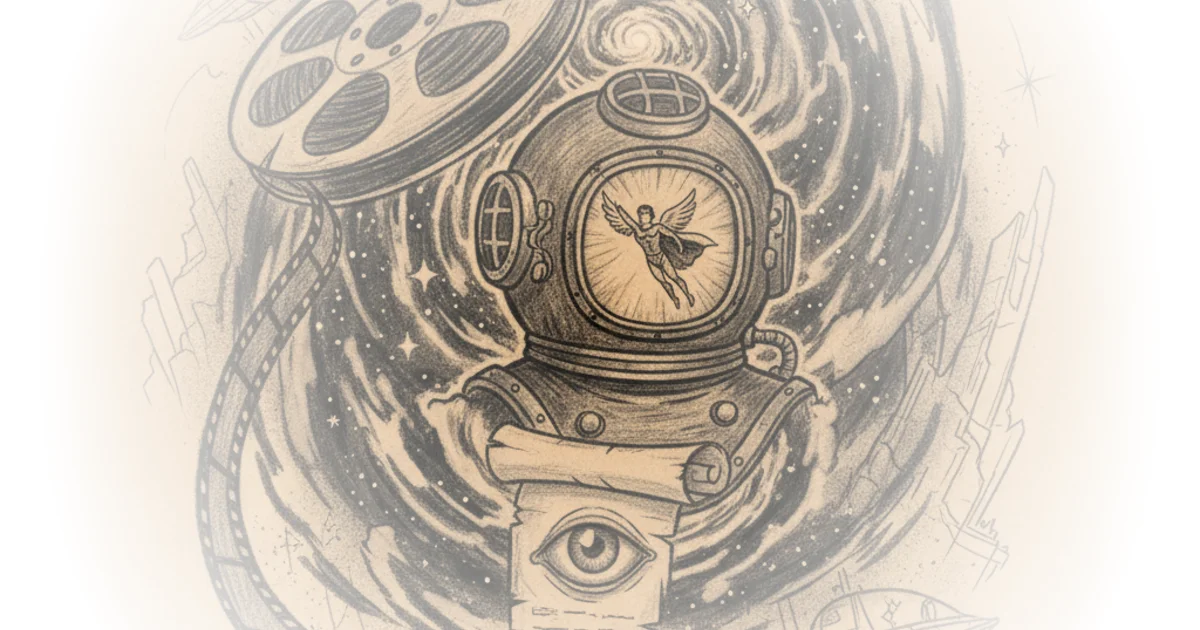
This framing is effective because it demystifies the preservation process. It wasn't a grand institutional mandate that saved the film; it was an individual with a search engine and a persistence that outlasted the film's original creators. The editors note that Charris faced skepticism from historians who felt the film "wasn't worth the effort." Yet, the piece argues that the film's very flaws are what make it a "midnight movie" of the highest order. The animation, described as "accidentally surreal," was rotoscoped in a haphazard way that transformed borrowed elements from 1930s Flash Gordon serials into something "one-of-one, and bizarre."
"If you want me to get dramatic, this movie killed its director. Because he lost his biggest dream."
The emotional core of the story lies in the tragedy of director Héctor López Carmona. The article details how the film's failure crushed him, leading to his death shortly after its release. While the cels and equipment were tossed into a dump truck, the 35mm negative survived in the Cineteca Nacional, the state film archive. This survival is a testament to the importance of institutional archives, even when the public has abandoned the work they hold. Critics might note that the film's preservation relies heavily on the luck of its physical survival rather than a robust cultural policy, but the outcome remains a triumph for the specific artifact.
The Ethics of Restoration
The most compelling section of the coverage addresses the legal and creative hurdles of releasing a film that contains stolen footage. The editors reveal that four to five minutes of the movie consist of live-action clips spliced directly from the Japanese film Message from Space (1978). This detail connects the piece to the broader history of low-budget exploitation cinema, where borrowing footage was often a necessity rather than a choice. Animation Obsessive reports that distributor Deaf Crocodile realized they could not clear the rights for the stolen scenes, noting it would be "next to impossible to clear it for use."
Rather than issuing static "shot missing" cards, the team chose a far more labor-intensive path: commissioning new animation to replace the stolen footage. The piece argues that this decision honors the spirit of the original film, which was itself a patchwork of influences. Animators Brian Smee and Isabelle Aspin were brought in to create "original animation to take the place of the stolen shots," working in a lo-fi, DIY style that matched the source material. Aspin, quoted in the article, describes the process as a dialogue with the past: "We keep talking about how it's, like, a testament to the power of animation."
This approach avoids the trap of sanitizing the film's history. Instead of erasing the theft, the restoration acknowledges it by replacing the stolen material with new art that fits the film's unique grammar. Smee notes the challenge of matching the aesthetic, stating, "It has this reputation of being... not great. So many things about it, before you even see it, tell you, 'Stay away.' But then, when you watch it, you're just, like, 'Oh, my God. This is incredible.'" The coverage effectively reframes the film's "flaws" as its greatest asset, suggesting that the homespun magic of the original team is what makes it worthy of revival.
A Global Ripple Effect
The article concludes by widening its lens to the broader animation landscape, briefly touching on the Crocodile Dance project by Shofela Coker. This section serves as a counterpoint to the Roy from Space story, moving from the recovery of a forgotten past to the ambitious creation of a new future. The piece reports that Coker's project, co-directed with Nadia Darries, is gaining traction with pitch awards in Nigeria and South Africa. Coker is quoted expressing the dual emotion of seeing African representation in animation: "[A] couple of folks mentioned that they had not seen an African woman animated to that level of quality before," he writes, "which made me elated and sad in the same space of thought."
This juxtaposition strengthens the overall argument of the newsletter. Whether it is saving a lost Mexican feature from the 1980s or funding a new African animated feature in 2025, the driving force is the same: a community of artists and enthusiasts refusing to let stories die. The editors note that the Roy from Space team hopes their work inspires others: "I really hope that people follow their passion projects after seeing Roy from Space," Smee agrees. "Anything that they've been wanting to make, I hope they make it."
Bottom Line
Animation Obsessive's coverage succeeds by refusing to treat Roy from Space as a mere curiosity; instead, it presents the film as a vital cultural artifact that demands to be seen, flaws and all. The strongest part of the argument is the ethical decision to replace stolen footage with new animation rather than hiding the gap, a move that respects both the original creators and the audience. The piece's biggest vulnerability is its reliance on the serendipity of digital discovery, a reminder that countless other films likely remain lost simply because no one happened to Google them. Readers should watch for the release of the restored film, a project that proves passion can outlast oblivion.