In an era where institutional inertia often masks decline, a rare moment of structural honesty is unfolding in the north of England. The Pillar reports on a startling administrative reality: one bishop now shepherds three distinct dioceses, a temporary fix that may soon become a permanent merger of historic proportions. This is not merely a story of clerical logistics; it is a case study in how religious institutions are forced to confront the math of shrinking populations and the legacy of 19th-century boundary lines that no longer fit the 21st century.
The Weight of Three Hats
The piece centers on Bishop Marcus Stock, who finds himself in an unprecedented position of overseeing Leeds, Middlesbrough, and Hallam simultaneously. The Pillar notes that since December 2025, Stock has served as the apostolic administrator for Middlesbrough, and since March 2026, he has added Hallam to his duties, bringing the total number of souls under his direct care to 334,000. This consolidation is not happening in a vacuum but is rooted in a specific historical trajectory. The article highlights that these three entities were once a single diocese of Beverley, established in 1850 following the restoration of the Catholic hierarchy in England. As the piece explains, "The Beverley diocese was divided in 1878 into the dioceses of Leeds and Middlesbrough," and Hallam was carved out later in 1980. A potential merger would therefore be framed not as a dissolution, but as a "reunification of sorts."
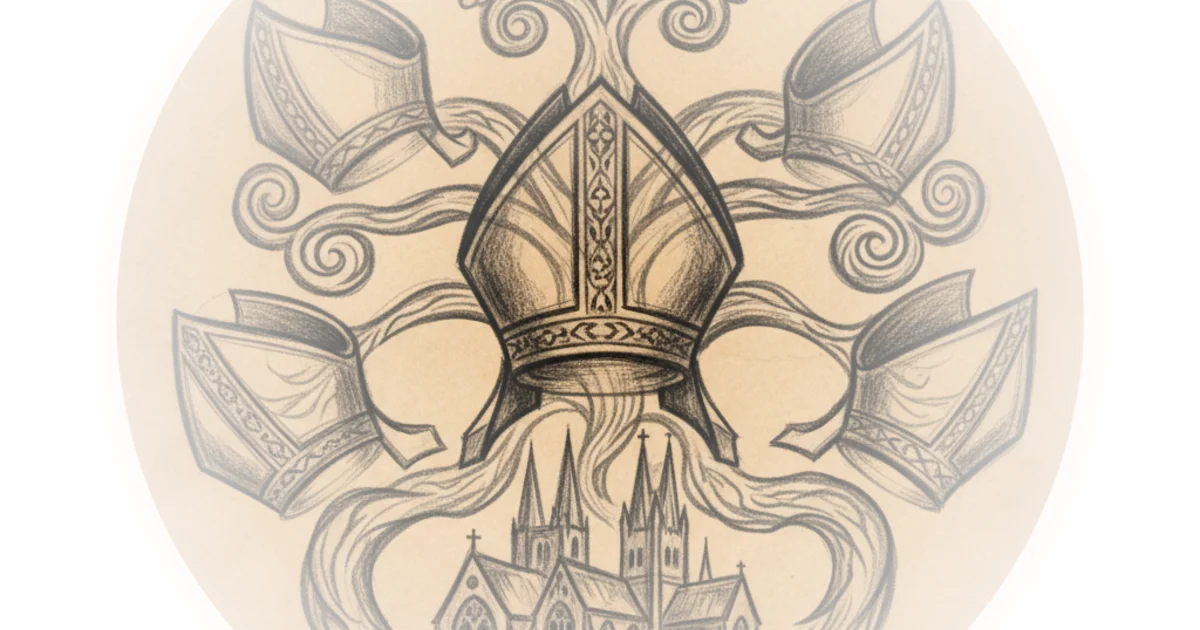
This historical framing is crucial because it softens the blow of administrative contraction. By invoking the precedent of Universalis Ecclesiae (the 1850 bull that restored the hierarchy), the narrative suggests that the current borders were always provisional. The Pillar argues that the current situation is less about a sudden crisis and more about the long-term realization that the 1878 division may have been structurally flawed from the start. An academic study cited in the text suggests that Middlesbrough "from day one didn't really have much of a chance because of the way the division took place." This reframing turns a potential failure of governance into a correction of historical geography.
"Reunification is my word. I don't want to put that into the mouth of the Apostolic See. But effectively, that's what it is, because obviously we were one diocese many years ago."
The Mechanics of Synodality
What distinguishes this coverage is its focus on how the decision is being made, rather than just what is being decided. The Pillar details a consultation process that deliberately mirrors the "synodal" style recently championed by the Vatican. Bishop Stock is not dictating terms; he is facilitating a structured dialogue across nine meetings. The piece describes the method: "Participants are divided into smaller groups, tables of about 10 people... People are invited to discuss the two questions in the consultation document." The process involves three rounds of discussion: stating initial thoughts, reflecting on what others said, and identifying points of convergence.
This approach is significant because it attempts to bypass the cynicism that often plagues top-down ecclesiastical restructuring. The article notes that the consultation is not an open public assembly but is targeted at those with institutional knowledge: clergy, finance committee chairs, and pastoral council leaders. Stock explains the rationale bluntly: "The last thing we need is any old person coming along and telling me what flavor of ice cream they like. You need information that's going to actually help you in the consultation process." This pragmatic exclusion of the general public in favor of stakeholders is a bold move, prioritizing data over sentiment. It acknowledges that while the spiritual impact is universal, the operational viability depends on the specific realities of parish resources and clergy availability.
Critics might note that limiting the consultation to leadership circles risks alienating the laity who feel most the impact of such mergers. However, the piece counters this by noting that online submissions are still being collected, and the feedback loops are designed to be transparent. The argument holds weight because it treats the diocese as a living organism that requires strategic realignment, not just a charity that needs a morale boost.
The Strategic Imperative
The driving force behind this potential merger is a stark demographic reality. The Pillar reports that the push for amalgamation stems from a 2018 ad limina report (a mandatory five-year visit by bishops to Rome) in which the former Bishop of Middlesbrough suggested a merger was necessary due to a "relatively small number of priests incardinated in the diocese." The term "incardinated" refers to priests who are permanently attached to a specific diocese, as opposed to those from religious orders. The shortage of these local priests threatens the long-term viability of the current structure.
The piece argues that the current borders are no longer sustainable. "There does need to be some real strategic thinking about how we're going to exercise our mission in the future," Stock is quoted as saying. The article connects this local issue to a broader trend, noting that similar reviews are underway in Scotland and that Wales has already completed a merger of Cardiff and Menevia. This contextualizes the Yorkshire situation not as an anomaly, but as part of a necessary, albeit painful, evolution of the Church in the British Isles. The underlying message is clear: the administration is acting to prevent a slow collapse by proactively reshaping the landscape before resources are completely exhausted.
"I haven't been given a task to undertake other than the consultation. It will be his decision, not mine."
Bottom Line
The strongest element of this coverage is its refusal to treat the merger as a political maneuver, instead presenting it as a necessary administrative correction based on historical precedent and demographic data. The piece effectively uses Bishop Stock's own voice to demystify the process, showing that the "synodal" approach is being used to gather hard data rather than to manufacture consensus. The biggest vulnerability remains the human cost of such consolidation; while the strategic logic is sound, the emotional toll on communities losing their distinct diocesan identity is a variable that no amount of historical precedent can fully mitigate. Readers should watch to see if the final report to Rome prioritizes the efficiency of the new structure over the preservation of local parish autonomy.