More Perfect Union exposes a startling convergence: the transformation of mixed martial arts from a fringe spectacle into a billion-dollar monopoly that mirrors the most predatory eras of boxing, all while quietly lobbying to dismantle the very reforms designed to protect athletes. The piece doesn't just recount history; it reveals how the current administration's potential alignment with UFC leadership threatens to export this exploitative model to boxing itself, risking a regression in fighter safety and financial fairness. For anyone watching the sports landscape, the question isn't just about ticket prices—it's about whether the executive branch will enable a single entity to rewrite the rules of combat sports for the next generation.
The Architecture of Control
The article's most damning revelation is not that the UFC dominates the market, but how deliberately that dominance was engineered to bypass the regulatory safeguards that eventually saved boxing. More Perfect Union writes, "Unlike boxing, MMA had no sanctioning bodies overseeing it and very few rules," a vacuum that allowed a single promoter to seize total control. The author traces this back to 2001, when the Fertitta brothers and Dana White purchased the struggling organization for $2 million with a specific strategy: "If we can sign enough athletes to an exclusive contract and keep sanctioning bodies out of the game, we can own the sport."
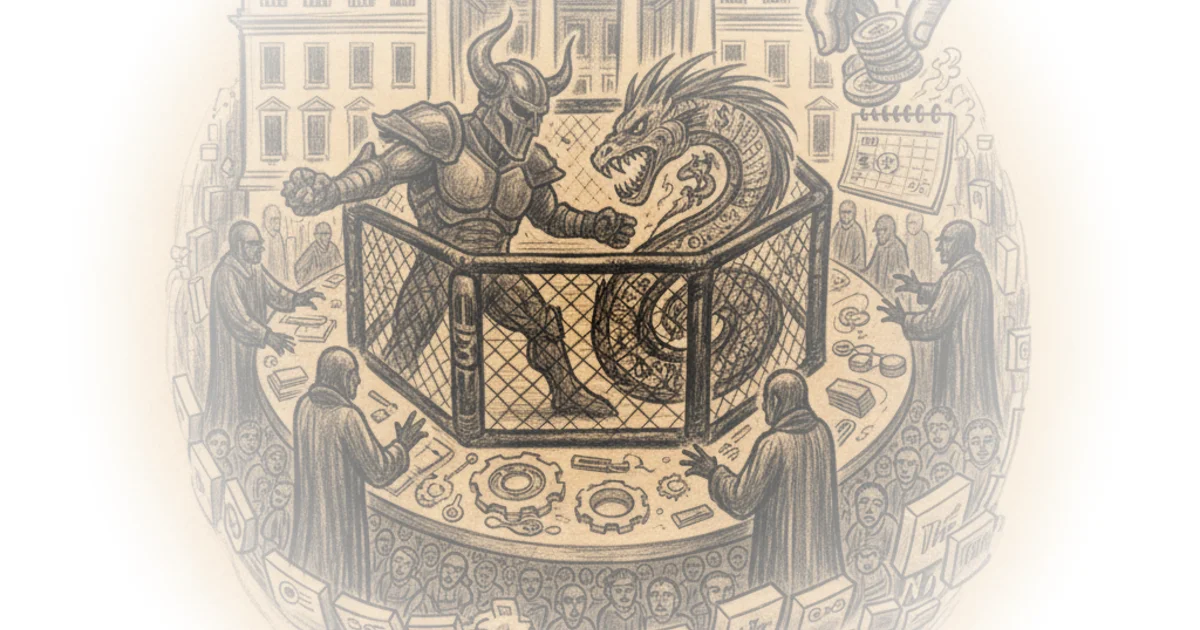
This strategy worked with terrifying efficiency. By locking fighters into exclusive, long-term contracts that function more like indentured servitude than employment agreements, the UFC eliminated the competitive pressure that usually drives up wages and improves conditions. The author notes that while NFL players receive nearly half of league revenue through collective bargaining, UFC fighters see roughly 17%. This disparity is stark, especially when considering the physical toll. The piece highlights the case of Shane Carwin, a former heavyweight who testified that CTE has left him bedridden, yet the organization settled a decade-long antitrust lawsuit for $375 million without admitting any wrongdoing.
"They decided to settle the case out of court. So, for me, that was a bit of a disappointment in that we didn't actually get to argue it, right? We didn't get to call BS."
The commentary here is sharp: the settlement was a financial transaction, not a moral reckoning. Critics might argue that the UFC's market share is a result of superior product quality rather than anti-competitive behavior, but the author effectively counters this by pointing out the lack of viable alternatives for fighters. With no rival leagues and a monopoly on rankings, athletes have no leverage. The author underscores this by noting that the UFC can pause a contract indefinitely if a fighter is injured, leaving them with no income and no way to fight elsewhere.
The Spectacle of Exclusion
The piece pivots to the consumer impact, arguing that the monopoly has created a product that is increasingly inaccessible to the very fans who built the sport. More Perfect Union observes, "Ticket prices to attend fights are through the roof," with some seats costing $500 just to sit in the last row. This price gouging is a direct consequence of having no competition. The author quotes a fan asking, "Why do I need generational wealth to go to a UFC event?"—a rhetorical question that cuts to the heart of the issue. The sport is pricing out its base, replacing grassroots engagement with high-end spectacle.
The article connects this trend to a broader political strategy, noting plans for title fights at the White House and a massive media deal with Paramount. The author suggests this is "great news if you're a Trump donor or a tech mogul, but for your average fan, UFC's massive growth hasn't necessarily been so great." This framing is crucial because it shifts the narrative from business success to public policy failure. The executive branch's potential involvement in hosting these events signals a normalization of a business model that relies on suppressing labor rights.
"We're going to blow them all out of the water is what we're going to do."
This quote, attributed to Dana White regarding the expansion into boxing, is chilling in its ambition. The author contextualizes this by drawing a parallel to the Muhammad Ali Boxing Reform Act of 2000. That legislation was born from the abuses of promoters like Don King, who diverted millions from fighters like Mike Tyson. The Ali Act mandated financial transparency, banned conflicts of interest, and prohibited coercive contracts. The UFC's new venture, Zufa Boxing, appears designed to circumvent these very protections. The author notes that the UFC is working with powerful allies to "rewrite the laws that govern the sport," effectively seeking to roll back the progress made two decades ago.
The Human Cost
The most compelling part of the coverage is the human element, specifically the story of Kinjun Johnson, a fighter whose career was derailed by injury and contract rigidity. More Perfect Union details how Johnson, after a knockout that broke his jaw in three places, found his contract paused. "And if you're not fighting, you're not getting paid," the author explains. This creates a perverse incentive for injured fighters to compete before they are healed, risking permanent damage just to earn a paycheck.
The author contrasts this with the early days of the sport, where fighters could choose their promoters and maintain their own sponsorships. The UFC's exclusive Reebok deal in 2015 stripped fighters of this income, a move the author describes as taking "80% of our sponsorship dollars." This is framed not as a business decision, but as a direct attack on the livelihood of the athletes. The piece argues that the current system is "designed to screw you and exploit the athlete," a blunt assessment that resonates with the broader trend of labor exploitation in the gig economy.
"You just got to look at the structure and realize it's designed to screw you and exploit the athlete."
This line serves as the emotional anchor of the piece. It moves beyond the statistics of revenue and ticket prices to the fundamental injustice of the contract structure. The author effectively uses the history of boxing to show that this is not an inevitable outcome of combat sports, but a choice made by leadership. The reference to the Ali Act serves as a reminder that regulation is possible and necessary to prevent the sport from becoming a "busted" enterprise where only the promoters profit.
Bottom Line
More Perfect Union delivers a powerful indictment of the UFC's business model, successfully linking its current monopoly to the historical abuses of boxing that led to the Muhammad Ali Boxing Reform Act. The strongest part of the argument is the clear demonstration of how exclusive contracts and the elimination of rival leagues have created a system where fighter safety and financial stability are secondary to profit. The piece's biggest vulnerability is its reliance on the assumption that political will exists to enforce antitrust laws against a deeply entrenched industry, but the warning is clear: without intervention, the future of combat sports looks increasingly like the worst days of the past.