First Brands Group was being marketed as a $6 billion loan opportunity just weeks before its bankruptcy. The company claimed to have nearly $1 billion in cash and its debt was marked near par by private credit funds, with some marks above 100 cents on the dollar.
Triricolor operated as both a used car dealership and subprime lender, offering high-interest loans to borrowers with limited or no credit history. Many of these borrowers were undocumented workers in the southwestern United States. The company packaged those loans into AAA-rated securities and sold them to investors.
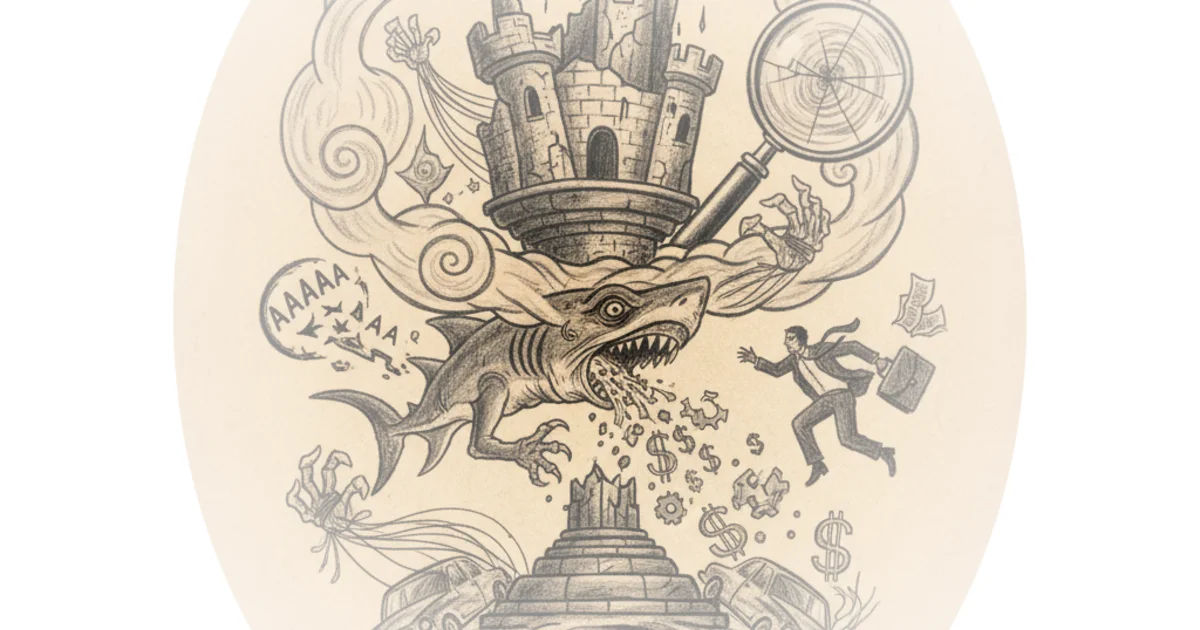
When repayments faltered, both structures unraveled. Fifth Third Bank accused Triricolor of fraud, alleging the company pledged the same collateral to multiple creditors. Investigators are combing through what may be a corrupted loan database. Banks have begun repossessing vehicles from dealership lots across the Southwest.
Today, First Brands' top tier loans fetch just over 33 cents on the dollar, and Triricolor's lower ranking bonds have plunged to 12 cents on the dollar. These weren't supposed to be risky investments. They sat in the portfolios of pension funds, insurers, and asset managers - institutions that aim to avoid volatility.
How They Were Funded
Both companies relied heavily on debt. Triricolor, like many dealerships, earned more from the loans it made to its customers than from the cars themselves. According to Bloomberg, they regularly charged interest rates above 20%. Those loans were bundled into asset-backed securities and sold to investors.
First Brands was built up through acquisitions financed by borrowing. Its owner expanded the company by stitching together smaller manufacturers. He then layered on further leverage by borrowing against invoices and inventory, tapping private credit funds and specialist lenders.
Their business models weren't inherently flawed. Triricolor served a niche market with limited access to traditional credit. First Brands built scale through acquisitions and supply chain finance. But each was exposed to pressures that have intensified in recent years: rising tariffs, inflation, and a consumer base stretched by higher interest rates and elevated vehicle costs.
The Broader Economic Weakness
AutoZone and O'Reilly Auto Parts, two customers of First Brands, have continued to report strong earnings. This makes First Brands' collapse even more striking. The problem wasn't demand. It was the structure of the company's financing.
CarMax, the country's largest used car retailer, missed earnings expectations by more than 37 percent last week, sending its stock to a five-year low. Unit sales fell sharply and management described the quarter as challenging, citing weaker consumer demand and pricing missteps.
Sales of semi-trucks, which can indicate how busy businesses expect to be in coming months and years, have fallen 24 percent since May 2023 to the lowest level seen in five years. Medium duty truck sales are down almost 30 percent too.
Labor market data adds another layer of uncertainty. ADP's private payroll report showed a loss of 32,000 jobs in the most recent period. While this number may not be accurate, it's all that we have right now as the Bureau of Labor Statistics has paused its reporting due to the US government shutdown.
The US consumer economy appears to be splitting. Wealthier American households are feeling quite rich - many bought homes before the pandemic with low interest rate loans and house prices are now up significantly. This group is also up on their investments with the stock market sitting near all-time highs.
Poorer households, on the other hand, are falling behind. Inflation has pushed up the cost of everyday essentials. Interest rates on poorer Americans' loans are high, and things like used car prices, though off their peak, are still high relative to pre-pandemic levels.
While prime auto loans seem fine at present, according to Fitch, 6.6 percent of subprime auto loans are at least 60 days past due. This is the highest level seen since the agency began collecting data on them. Credit card defaults and student loan defaults have risen sharply too.
The Private Credit Problem
The collapse of these companies has drawn attention to the nearly $2 trillion private credit market that has fueled Wall Street's recent boom. Short seller Jim Chanos, who earned his reputation from exposing fraud at Enron in the late 1990s, told the Financial Times that First Brands Group's chaotic bankruptcy could augur a new wave of corporate collapses.
Policymakers have spent the past decade shifting risk away from banks and into the hands of non-bank lenders. That strategy may have reduced systemic exposure, but it has also made it harder to track where pressure in the economy is building.
Private credit ballooned when banks faced with higher regulation withdrew from riskier lending in the wake of the global financial crisis. These new private lenders sought to capture high returns in opaque markets and were willing to accept the risk doing so entailed.
First Brands shows how that model can break. The company had multiple layers of financing - some syndicated, some private, some off-balance sheet. Lenders didn't have a full picture of the overall capital structure. Some may have thought they had seen your claims only to discover they were exposed to collateral that had been pledged more than once.
The fallout has reached deep into Wall Street. Jeffre, which had been marketing First Brands' debt just weeks before the collapse, now faces reputational damage. Its investment unit was also exposed to the company's invoice financing, an arrangement that may not have been adequately disclosed to other lenders.
Other major financial players are among those facing losses. Millennium Management, one of the biggest hedge funds in the world, is also exposed. Other asset managers including PGIM and CIFC held First Brands' debt through collateralized loan obligations. Some of these CLOs bought the debt near face value. It now trades at just over 33 cents on the dollar.
Collapse has hit banks directly. JP Morgan, Barclays, and Fifth Third provided warehouse lines of credit to the company, expecting to be repaid once the auto loans were securitized. That repayment never came. Fifth Third has accused multiple lenders and warned of a $200 million impairment.
Auditors are also coming under scrutiny. BDO gave First Brands a clean audit earlier this year and the company collapsed just months later, revealing a $12 billion web of liabilities.
Some investors saw the trouble coming. Apollo Global Management and Diameter Capital shorted First Brands' debt before the collapse. Others moved in after the fact, buying distressed loans at steep discounts. Goldman Sachs reported that nearly $1 billion of First Brands' debt changed hands in a single day.
Private credit is often described as being outside the banking system. That's not quite true. Non-bank lenders, private credit funds, hedge funds, and specialist finance firms all borrow from banks. They rely on revolving credit lines, warehouse facilities, and bridge loans. These arrangements don't show up in public filings, but they do matter.
Bank lending to non-bank financial institutions has surged. It now accounts for all of the growth in bank lending this year. One regional bank reportedly has $62 billion in loans to shadow lenders - roughly a fifth of its loan book. Most of it is categorized as business private equity or other, which is finance speak for don't ask.
The risk isn't just that these lenders might fail. It's that they might draw down their credit lines at the worst possible moment. A non-bank financial institution under pressure is most likely to tap its bank credit just as the value of its collateral is falling. That's what bankers call wrong-way risk. Regulators can see the exposures, but investors can't. Quarterly filings don't break out NBFI lending in useful ways.
The system is opaque by design. That opacity is part of what makes it fragile.
Wall Street doesn't seem rattled. The leverage buyout of Electronic Arts, a mature gaming company with flat revenue, was announced just days after First Brands collapsed. If there's fear in the market, it's wearing noise-cancelling headphones. The deal valued at $55 billion is the biggest leverage buyout in history. There's no sign of a crisis, but there's no real sign of caution either.
Counterpoints
Some analysts have pointed to immigration enforcement as a contributing factor. Deportation fears and labor force exits may have disrupted repayment patterns, though the extent of this impact remains unclear. Critics might note that blaming immigration enforcement for business failures risks scapegoating vulnerable workers rather than examining the lending practices that preyed upon them.
The timing of audits is also worth considering - BDO gave First Brands a clean audit just months before revealing $12 billion in liabilities. Auditors could not have reasonably predicted the company's collapse, and placing blame on them ignores how complex financial structures can hide true risks from even experienced analysts.
AAA-rated securities are now trading at cents on the dollar, revealing how little the rating agencies knew about these companies' actual capital structures.
Bottom Line
The collapse of First Brands and Triricolor reveals that private credit markets are more fragile than their promoters suggest. Both companies had AAA-rated securities that are now trading at cents on the dollar. The broader economic signals - falling truck sales, weakening job growth, rising defaults in subprime auto loans - suggest this may not be isolated. The leverage buyout of Electronic Arts announced just days after First Brands collapsed suggests the market isn't showing caution yet.