This is not a story about a monster; it is a forensic account of how a survivor was forced to perform her own trauma to be believed. Lisa Banfield, writing for The Walrus, exposes a chilling bureaucratic reality: after escaping Canada's deadliest mass shooter, she had to physically return to the crime scene and re-enact her escape just to prove she wasn't an accomplice. The piece offers a rare, granular look at the mechanics of coercive control and the institutional skepticism that often greets survivors of intimate partner violence.
The Architecture of Control
Banfield begins by dismantling the myth that abuse is always immediately recognizable. She describes a relationship that started with the charm of a "go-getter" who owned denture clinics and made her feel like a priority. "He made me his priority, and I wasn't used to that," she writes, illustrating how isolation is often disguised as devotion. The Walrus captures the insidious nature of this dynamic, noting how Banfield gradually began to "discount my beliefs, my morals, and my own thoughts" to avoid his volatile moods.
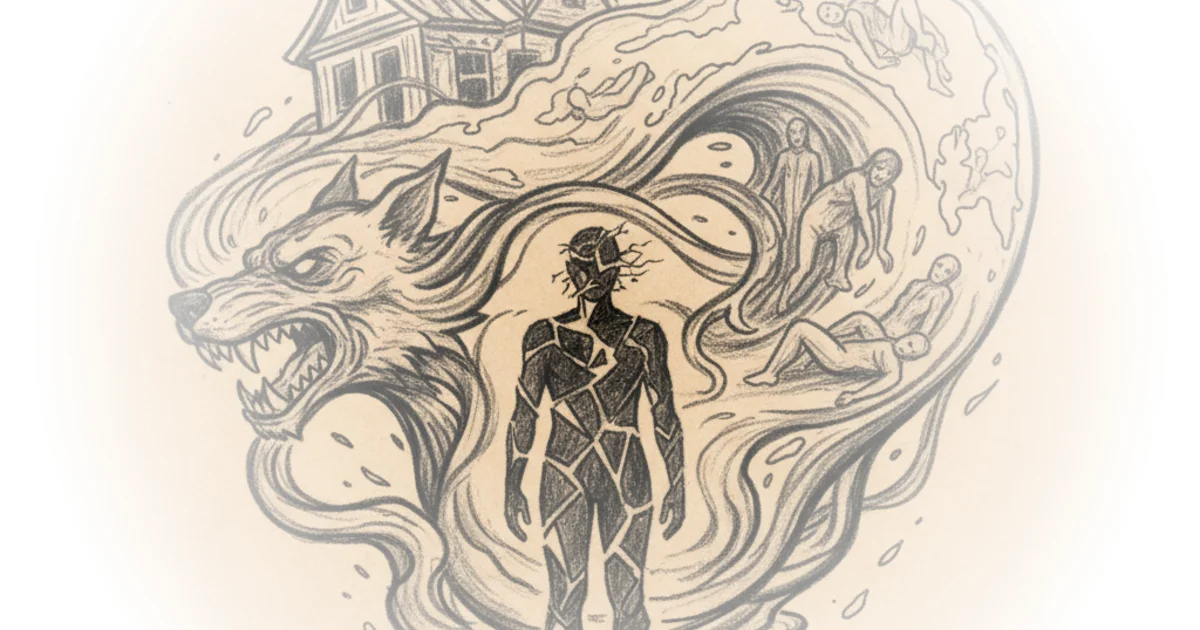
The author details how Gabriel Wortman's control escalated from emotional manipulation to physical terror, including a specific incident where he forced her to get a nose job despite a surgeon's reassurance that nothing was wrong. "I agreed, but I pushed my thoughts aside and pandered to Gabriel's wishes," Banfield recalls. This admission is powerful because it highlights the cognitive dissonance required to survive such an environment. Critics might argue that focusing on the "charm" phase risks humanizing the perpetrator too much, but Banfield's point is precisely that the charm was the trap. The effectiveness of her framing lies in showing that the "Dr. Jekyll to Mr. Hyde" transformation was not a sudden break, but a calculated erosion of self.
"Survival meant focusing on the here and now. I learned to compartmentalize my fear of Gabriel and to smile as though my life behind closed doors didn't exist."
The narrative shifts to the terrifying isolation of the pandemic era, where Wortman's paranoia about the virus and the government intensified. He stockpiled cash and ammunition, demanding Banfield procure bullets while claiming he needed them for protection. "I just want them, Lisa. I told you things are getting bad. Get them," she quotes him saying. This section underscores how the shooter's pre-existing paranoia was weaponized against the community, turning a domestic crisis into a national tragedy. The Walrus effectively links the personal history of abuse to the public catastrophe, suggesting that the failure to intervene earlier was a failure to understand the specific language of coercive control.
The Bureaucracy of Proof
The most harrowing section of the piece concerns the aftermath. Despite Wortman's death, the Royal Canadian Mounted Police (RCMP) faced intense scrutiny for mishandling the search and failing to warn the public. In this climate of distrust, the administration and the police force demanded absolute certainty from the sole survivor. Banfield describes being subjected to a "truth verification" process led by Staff Sergeant Greg Vardy, an expert in polygraph and witness verification.
The Walrus details a scene where Banfield, accompanied by her sisters, was met by a team of investigators and a videographer at a fruit stand. They were told to re-enact the night of the massacre to "get as much detail as possible." "I didn't know it at the time, but my heart-wrenching re-enactment would eventually be posted for the entire world to see," Banfield writes. This reveals a profound ethical failure: the survivor's grief was treated as evidence to be harvested for a public inquiry. The author notes that her sisters were kept outside the camera's view, stripping her of her support system during a moment of extreme vulnerability.
"I bawled. Everything just hit me. The place I helped grow into a home, now levelled. I stared at the leaves on the ground where our house once stood. I felt inconsolable and failed to compose myself."
The commentary here is sharp. The Walrus points out that while the RCMP needed to clear their name and answer to the families of the twenty-two victims, the method of doing so placed an unbearable burden on Banfield. She was forced to walk the path of her own terror to prove she hadn't helped the killer. "I had to find that tree; I had to find my puffy jacket; I needed to show them the truth," she states. This demand for physical proof ignores the psychological reality of trauma, where memory is often fragmented and the instinct is to survive, not to document. The piece argues that the system's need for a clean narrative clashed violently with the messy reality of her experience.
The Cost of Silence
Banfield reflects on the neighbors who tried to intervene, specifically Brenda and George Forbes, who had seen signs of the abuse. "We need to call the police," Brenda urged, but Banfield pleaded, "It would only make it worse." The Walrus uses this to illustrate the terrifying power dynamic that silences victims. Even when neighbors reported the abuse, the RCMP did not follow up, and Wortman retaliated against the Forbeses, eventually driving them from the community.
This failure of the state to act on early warnings is a critical thread in the narrative. The author notes that Banfield avoided the news during the investigation, overwhelmed by "survivor's guilt" and the despair of other families. Yet, the pressure to testify and re-enact the events forced her back into the spotlight. "I know what I lived through, what I survived," she asserts, a defiant statement against the accusations that she was an accomplice. The Walrus frames this as a broader issue of how society treats women in abusive relationships: we often wait for the worst to happen before we believe them.
"I wanted help, but the thought of what could happen terrified me into silence—and, in turn, silenced others."
The piece concludes with the emotional toll of the re-enactment. As the camera rolled, Banfield had to suppress her grief to provide the "truth" the investigators sought. The Walrus does not shy away from the irony that the very institution she hoped would protect her became the source of her latest trauma. The narrative suggests that while the public inquiry was necessary to address police failures, the process of obtaining that truth was deeply flawed in its treatment of the primary witness.
Bottom Line
The Walrus delivers a searing indictment of how institutional skepticism can re-traumatize survivors, using Banfield's personal account to expose the gap between the legal need for evidence and the human cost of providing it. The piece's greatest strength is its refusal to simplify the abuse, showing how the shooter's charm and the victim's fear were inextricably linked. Its vulnerability lies in the unresolved tension between the necessity of the inquiry and the cruelty of the method used to conduct it, leaving the reader to wonder if justice was ever truly served for the survivor.