More Perfect Union drops a bombshell on a sector most Americans ignore until they get sued: the idea that elite law firms aren't just service providers, but the active architects of our oligarchy. The piece argues that these firms function less like legal counsel and more like the "consiliaries of oligarchy," a term that reframes the entire legal industry as a criminal enterprise's right-hand man. In an era of political volatility, understanding how these firms navigate the revolving door between government and private wealth is not just academic—it's essential for anyone trying to grasp why the system feels rigged.
The Powell Memo and the Rise of the Legal Mob
The author traces the explosion of "big law" back to a specific moment of strategic intent in 1971. More Perfect Union writes, "The memo known as the Powell memo is sort of like a moment in a mob movie when the bosses have gotten all the money they could ever dream of, but then they realize what they really want is total domination." This comparison is striking because it strips away the veneer of professional neutrality. The argument posits that when consumer rights movements gained traction, corporate leaders didn't just lobby; they weaponized the courts through a coordinated strategy outlined by future Supreme Court Justice Lewis Powell.
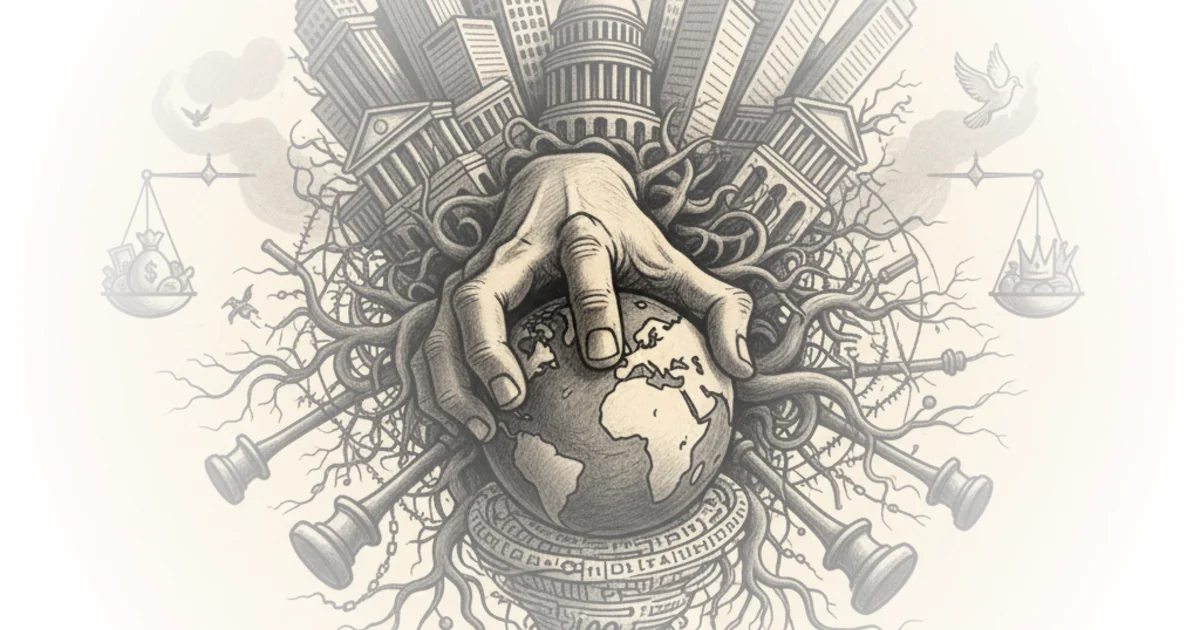
The commentary suggests this was a deliberate pivot toward "shareholder capitalism and monopolization," a shift that was turbocharged by the deregulation policies of the Reagan administration. As the author notes, "Every merger, every hostile takeover, every buyout meant more billable hours and more work for their firms." This creates a perverse incentive structure where the health of the legal industry is tied to the consolidation of corporate power rather than the resolution of disputes. Critics might argue that this framing ignores the legitimate need for complex legal counsel in a globalized economy, but the piece effectively highlights how the scale of this work has shifted from defense to offense.
"You should really think of these big law firms as the consiliaries of oligarchy or basically like their right-hand man."
The Revolving Door and Regulatory Capture
Perhaps the most damning section of the coverage details the mechanism of "regulatory capture," where the people tasked with enforcing the law are former employees of the very entities they are supposed to regulate. The author uses the career of Eric Holder as the prime example, noting his transition from a partner at a firm representing major banks to the Attorney General, and then back to the same firm. More Perfect Union observes, "During Eric Holder's time in the government, not a single banking executive was prosecuted for the fraud that they committed." This is a heavy claim, supported by the specific trajectory of other officials like Loretta Lynch, who moved from the Department of Justice to a top-tier firm.
The piece argues that this isn't a bug in the system; it's a feature. By staffing the government with corporate lawyers, firms like Covington & Burling can "capitalize and monetize on his public service at the highest level." The author suggests this creates a closed loop where the government is staffed by people whose primary allegiance is to the clients they will eventually rejoin. The evidence presented here is compelling because it relies on documented career paths rather than conspiracy theories. However, the narrative leans heavily on the assumption that these individuals act with malicious intent, whereas a counterargument might suggest they are simply operating within the norms of a high-stakes professional ecosystem.
The Achilles Heel: Dependency on the Elite
Despite their power, the author identifies a critical vulnerability in the big law business model: their total reliance on a tiny sliver of ultra-wealthy clients. The piece explains that with billing rates exceeding $2,000 an hour, these firms cannot survive without Fortune 500 companies and private equity firms. More Perfect Union writes, "The fact that big law firms are competing over a small sliver of the business of Fortune 500 companies and a few other large entities and high net individuals is a weakness that can be exploited." This reframes the industry not as an invincible monolith, but as a fragile ecosystem dependent on the continued dominance of the corporations it serves.
This dependency becomes the focal point of the article's discussion on the current political climate. The author details how the administration has begun targeting specific firms by revoking security clearances and banning them from government buildings. The strategy is blunt: "If these firms can't work with the government at all, they can't represent their massive corporate clients, and without the biggest corporations in the world, their business model doesn't work anymore." The commentary suggests this is a direct attack on the firms' bottom line, leveraging their fear of losing revenue to force compliance.
The Double-Edged Sword of Pro Bono Work
The article concludes with a nuanced look at why the administration is targeting these firms beyond simple financial leverage. The author points out that big law firms have historically provided a check on executive overreach through pro bono work, such as challenging the Muslim ban. More Perfect Union states, "Big law lawyers are not on the vanguard of the resistance, but they have the ability through the fact that they're lawyers and that these law firms have money to offer a potential uh roadblock to the administration." By forcing firms to sign deals offering pro bono services only to causes the administration approves of, the government effectively neutralizes this potential resistance.
The author argues that while the president is attacking big law, he is not dismantling its power but rather capturing it for his own use. The piece notes that the administration is "surrounded by" big law alumni, from the Deputy US Trade Representative to the General Counsel for the National Labor Relations Board. This creates a paradox where the administration claims to fight the establishment while staffing itself with its top architects. The final verdict is that while the executive orders have faced legal challenges, the long-term goal is to clear the way for unchecked power by eliminating the legal roadblocks that once existed.
"He's sort of like a mob boss himself who doesn't want to take away the power of big law, but instead he wants to control it for his own agenda."
Bottom Line
More Perfect Union delivers a searing indictment of the legal industry's role in entrenching oligarchy, successfully linking historical strategy to modern political maneuvering. The piece's greatest strength is its exposure of the "revolving door" as a structural flaw rather than an anomaly, though it occasionally conflates corporate self-interest with criminal intent. The most critical takeaway is the warning that the current political attacks on big law are not about reform, but about consolidation—turning the legal system into a tool for the administration rather than a check on it.