Noah Smith tackles a taboo subject with unflinching data: the systematic exclusion of White men from high-status professions in America's most progressive institutions. While aggregate statistics suggest this group remains economically secure, Smith argues that the feeling of fairness—the bedrock of social trust—is collapsing because individual merit is being overridden by racial and gender preferences in hiring.
The Legal Blind Spot
Smith anchors his argument in a stark legal reality that many overlook. He writes, "According to the Civil Rights Act of 1964, it's illegal to discriminate against anyone based on race or sex. That includes discrimination against White men." This framing is crucial because it shifts the conversation from political grievance to statutory violation. The author notes that while the government frequently prosecutes discrimination against minorities, cases involving White men are rarer, not because the law doesn't apply, but because the barriers to enforcement are immense.
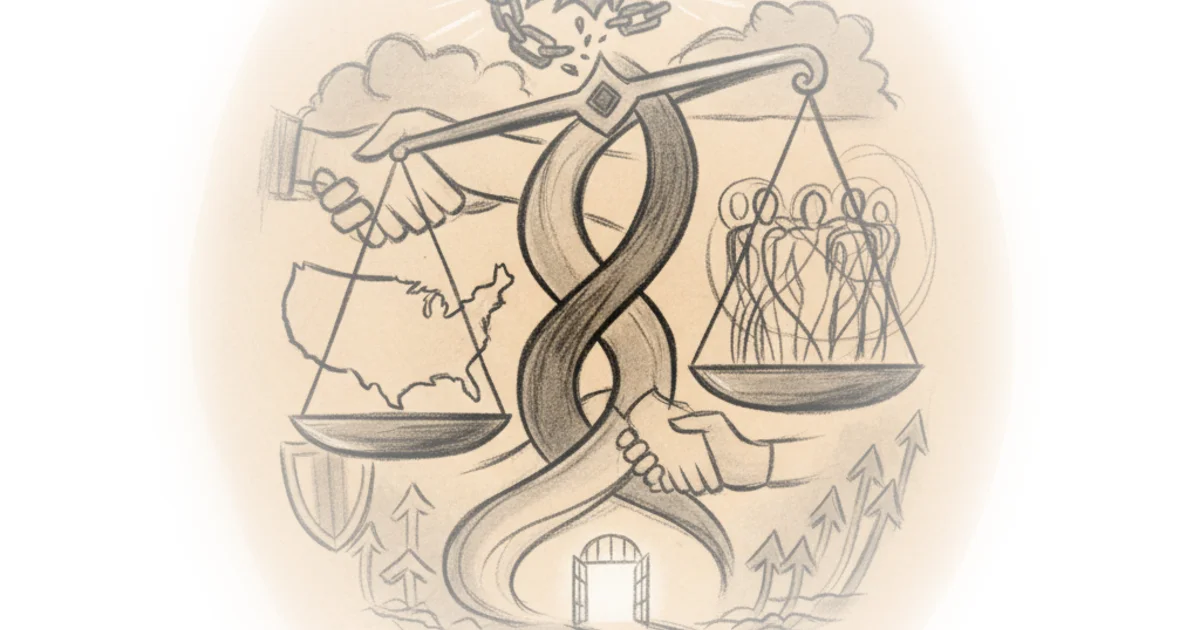
The piece draws a sharp parallel to historical enforcement challenges. Just as the Civil Rights Act of 1964 failed to instantly eradicate anti-Black bias, Smith points out that "having a law against racial discrimination doesn't automatically get rid of it." He cites a 2017 meta-analysis showing that decades after the Griggs v. Duke Power Co. ruling, employers were still significantly more likely to contact White-seeming applicants than Black-seeming ones. The core argument here is that the law is a necessary but insufficient tool; without active enforcement, institutional bias fills the vacuum.
The Data on Exclusion
To move beyond anecdote, Smith leans heavily on Jacob Savage's research, which documents a precipitous drop in White male representation in media and academia. Smith quotes Savage directly: "The doors seemed to close everywhere and all at once." The numbers are startling. In television writing, White men fell from 48 percent of lower-level positions in 2011 to just 11.9 percent by 2024. At Harvard, their share of tenure-track humanities positions plummeted from 39 percent to 18 percent in less than a decade.
Smith highlights the explicit nature of this shift, noting that institutions were not just passively drifting but actively excluding. He writes, "It was a given that we weren't gonna hire the best person... It was jarring how we would talk about excluding white guys." This direct admission from hiring editors at major outlets like Condé Nast and ProPublica serves as the piece's smoking gun. The argument is effective because it relies on the admissions of the institutions themselves rather than external accusations.
"An America where every job has racial preferences, and you have to look around for the jobs that favor your race instead of relying on individual merit and trusting the system, would clearly be a dystopia."
The Aggregate Fallacy
A significant portion of the commentary addresses the counterargument that White men are still doing well as a group. Smith acknowledges data from Matt Bruenig showing that aggregate earnings and employment rates for White men have not collapsed. However, Smith dismantles the idea that group-level success negates individual injustice. He argues, "The real reason that Bruenig's analysis shouldn't mollify us, however, is that we shouldn't treat aggregate group outcomes as the end-all and be-all of economic fairness."
The author uses a powerful hypothetical to illustrate this: even if he personally earned more money after being forced out of a traditional job, the resentment of being discriminated against would remain valid. "People don't succeed as racial blocs; they succeed as individuals," Smith writes. This distinction is vital. It suggests that a society can have high aggregate GDP while simultaneously eroding the social contract through unfair hiring practices. Critics might note that focusing on individual fairness risks ignoring the historical context of why these preferences were implemented in the first place, but Smith's point remains that the current mechanism is legally and morally distinct from the past.
The Erosion of Trust
The piece culminates in a warning about the societal cost of perceived unfairness. Smith connects the rise in discrimination to a decline in public trust, particularly regarding scientific institutions. He observes, "One reason the second Trump administration is attacking academic science much more than the first Trump administration did is that Republicans' trust in scientific institutions fell after 2020." While the source text references political actors, the underlying dynamic Smith identifies is institutional: when people believe the system is rigged against them, they withdraw their consent and trust.
Smith argues that the solution is not to ignore the problem or rely on vague promises of equity, but to enforce the law aggressively. "The best solution, I think, is to have lots of high-profile legal victories that make it clear to all Americans that racial and gender discrimination are prohibited," he writes. This is a call for the executive branch and the Department of Justice to treat discrimination against White men with the same vigor as discrimination against any other group, restoring the Civil Rights Act as a universal shield rather than a selective tool.
Bottom Line
Smith's strongest contribution is reframing the debate from "who is winning" to "is the game fair," exposing how aggregate economic data can mask deep individual injustices that threaten institutional legitimacy. The argument's vulnerability lies in the difficulty of proving specific instances of discrimination in court, a hurdle Smith admits is high but insists must be overcome to preserve social cohesion. Readers should watch for whether the Department of Justice begins to bring high-profile cases that test these boundaries, as that will be the true litmus test for the health of the American meritocracy.