Ryan Grim and Jeremy Scahill deliver a harrowing dispatch that strips away the diplomatic veneer to reveal a terrifying reality: the United States is not posturing, but actively preparing for a massive, potentially regime-ending war with Iran. Their reporting moves beyond the standard geopolitical chess game to expose a specific, high-stakes timeline where the clock is ticking toward a catastrophic military escalation during the holy month of Ramadan. This is not a story about posturing; it is a warning that the machinery of war is already humming at full capacity.
The Illusion of Diplomacy
The authors immediately dismantle the comforting narrative that recent talks in Geneva are a genuine path to peace. They present a stark contrast between the cautious optimism of negotiators and the aggressive posturing of the highest levels of the executive branch. Grim and Scahill write, "In some ways it went well. They agreed to meet afterward," quoting Vice President JD Vance, before immediately undercutting that sentiment with the administration's own admission: "the president reserves the ability to say when he thinks that diplomacy has reached its natural end." This framing is crucial because it reveals the talks not as a peace process, but as a stalling tactic to buy time for military deployment.
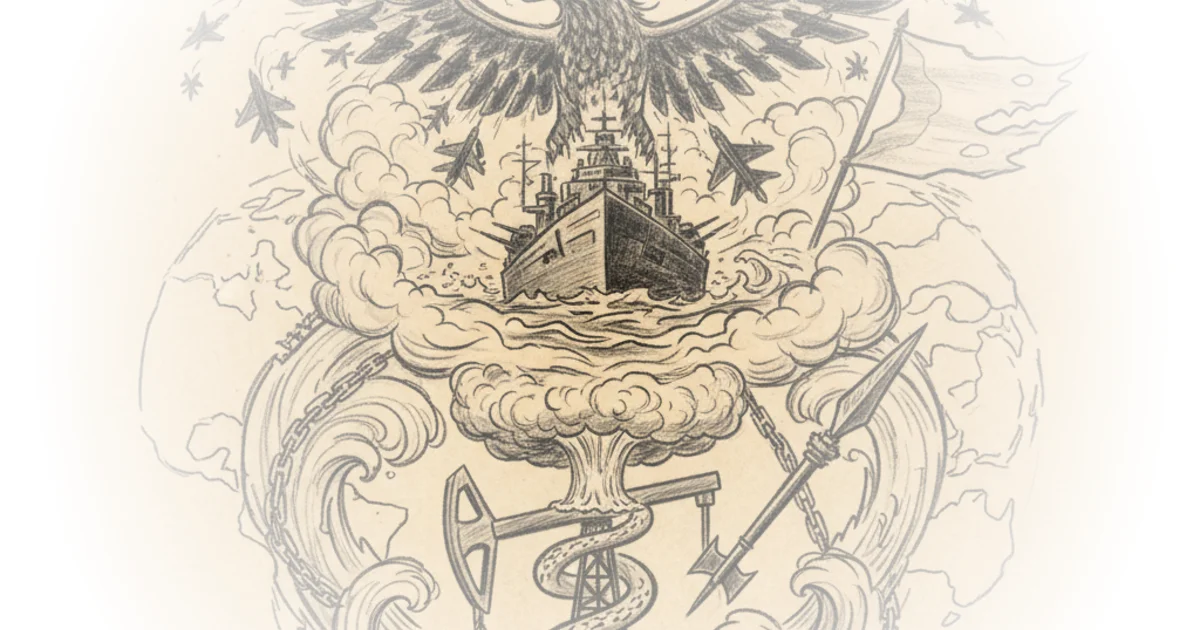
The piece argues that the sheer scale of the current buildup defies the logic of mere deterrence. Grim and Scahill note that this is the largest concentration of firepower in the region since the administration authorized a devastating bombing campaign last June, an operation that killed over 1,000 people. The authors lean heavily on the testimony of retired Lt. Col. Daniel Davis, who draws a chilling parallel to the prelude of the 2003 Iraq war. "You don't assemble this kind of power to send a message," Davis states. "In my view, this is what you do when you're preparing to use it." This assessment lands with heavy weight because it comes from a seasoned military expert who sees the logistical footprint for what it is: an invasion force, not a show of force.
"This is not a dress rehearsal. This is it. This is not the negotiations of last year or the year before or the year before that. They're backed into a corner. There's no off ramp."
Former Pentagon official Jasmine El-Gamal's assertion that there is "no off ramp" suggests a point of no return has been crossed. The authors detail the deployment of two carrier strike groups, including the USS Gerald R. Ford, which was diverted from Venezuela specifically for this theater. Grim and Scahill point out that the Ford was used in previous campaigns against Venezuela and is now being stretched to its operational limit, a detail that underscores the urgency and the lack of contingency planning for anything other than immediate conflict.
The Human Cost of "Decapitation"
The commentary shifts to the grim specifics of the proposed military strategy, where the human cost is no longer a theoretical risk but an anticipated outcome. The authors do not shy away from the brutal reality of the administration's stated goals. They reference the June strikes, which the administration claimed "obliterated" Iran's nuclear capacity, yet the authors note that satellite imagery suggests reconstruction is already underway. This disconnect between official claims of victory and the on-the-ground reality of rebuilding highlights the potential futility of further violence.
Grim and Scahill present a disturbing picture of the intended targets, citing Davis's analysis that the U.S. plans to strike political leaders simultaneously with military assets. "They may even go with them concurrently with trying to take out the air defense so that they don't get a chance to go to bunkers," Davis explains. The authors frame this as a "decapitation" strategy designed to spark domestic uprisings, a theory that has historically failed and often resulted in greater civilian suffering. The piece notes that the previous June campaign killed at least 400 civilians alongside military targets, a statistic that demands to be centered rather than buried in the footnotes of strategic analysis.
Critics might note that the administration's narrative of "precision" and "necessity" relies on the assumption that Iran's leadership is irrational and that military force will yield a stable outcome. However, the authors counter this by highlighting the defiant stance of Supreme Leader Ayatollah Ali Khamenei, who warned that a warship is dangerous, but "more dangerous than that warship is the weapon that can send that warship to the bottom of the sea." This exchange underscores the mutual understanding that a miscalculation could lead to a regional conflagration far beyond the scope of the initial strikes.
The Diplomatic Trap
The authors argue that the current diplomatic efforts are merely a cover for the military buildup, a theme reinforced by the timing of the deployment during Ramadan, a period of heightened religious and cultural significance. Grim and Scahill write that the "extraordinary and expensive U.S. military buildup would be sufficient for a large-scale campaign against Tehran that goes far beyond the limited strikes that have taken place in the past." This suggests that the administration is not looking for a negotiated settlement but is instead creating a fait accompli where the only option left is submission or total war.
The piece also touches on the internal dynamics within the U.S. government, noting that even some within the administration feel "powerless" to stop the march toward war. Davis mentions that "sane foreign policy minds" are sidelined, unable to offer alternatives to the prevailing hawkish consensus. This internal paralysis adds a layer of tragedy to the situation, suggesting that the path to conflict is being driven by a specific faction within the executive branch rather than a broad, considered national strategy.
Bottom Line
Grim and Scahill's reporting is a vital, sobering check on the official narrative, exposing a military machine that is already primed for a catastrophic engagement. Their strongest argument lies in the logistical evidence: the scale of the deployment simply does not align with the rhetoric of diplomacy. The piece's greatest vulnerability is its reliance on anonymous intelligence officials and the inherent difficulty of predicting the exact timing of a strike, but the weight of the evidence—the diversion of the Ford, the deployment of stealth fighters to Jordan, and the explicit warnings from military experts—makes the threat undeniably real. The reader must watch for the moment the administration declares diplomacy has "reached its natural end," for that will likely be the signal that the first bombs are already in the air.