Tom van der Linden argues that the new Planet of the Apes trilogy succeeds not by recycling nostalgia, but by fundamentally reimagining the nature of intelligence itself. While most modern reboots rely on shallow callbacks to exploit our sentimental attachment to the past, van der Linden posits that these films offer a rare speculative mirror: a collision between two equally intelligent species where neither side is the clear protagonist. This is not a story about animal rights or a simple role reversal; it is a profound inquiry into what makes humanity unique when that uniqueness is no longer guaranteed.
Beyond the Uncanny Valley
Van der Linden begins by dismantling the skepticism that usually greets franchise revivals. He acknowledges the fatigue surrounding "lackluster IP revivals" that offer "pill imitation with a few callbacks here and there to exploit your Nostalgia." However, he argues that Rise of the Planet of the Apes broke this cycle by contextualizing iconic lines rather than just repeating them. The film avoids the "uncanny valley" of the 2001 Tim Burton reboot by utilizing motion capture and CGI to create creatures that "fully look, sound and move like real Apes do." This technical choice is not merely aesthetic; it is thematic. By refusing to make the apes look like humans in makeup, the films force the audience to confront them as a distinct biological entity.
The author notes that while the original 1968 film and its sequels were often "unhinged" and served as a "compelling Time Capsule of the 1970s culture," the new trilogy achieves a different kind of immersion. Van der Linden praises director Matt Reeves for creating a world that feels "tactile and lived in," where the ape society is "distinctively different from ours with its own way of life in every sense of the word." This distinction is crucial. The apes do not need "power, lights, heat" in the way humans do, and their society is not a carbon copy of our own with a different coat of paint.
"The apes are brought to life using motion capture and CGI which I think was the absolute right choice here... by opting for CGI the filmmakers of the new movies were able to create actual Apes in the sense that they fully look, sound and move like real Apes do."
The Speculative Mirror
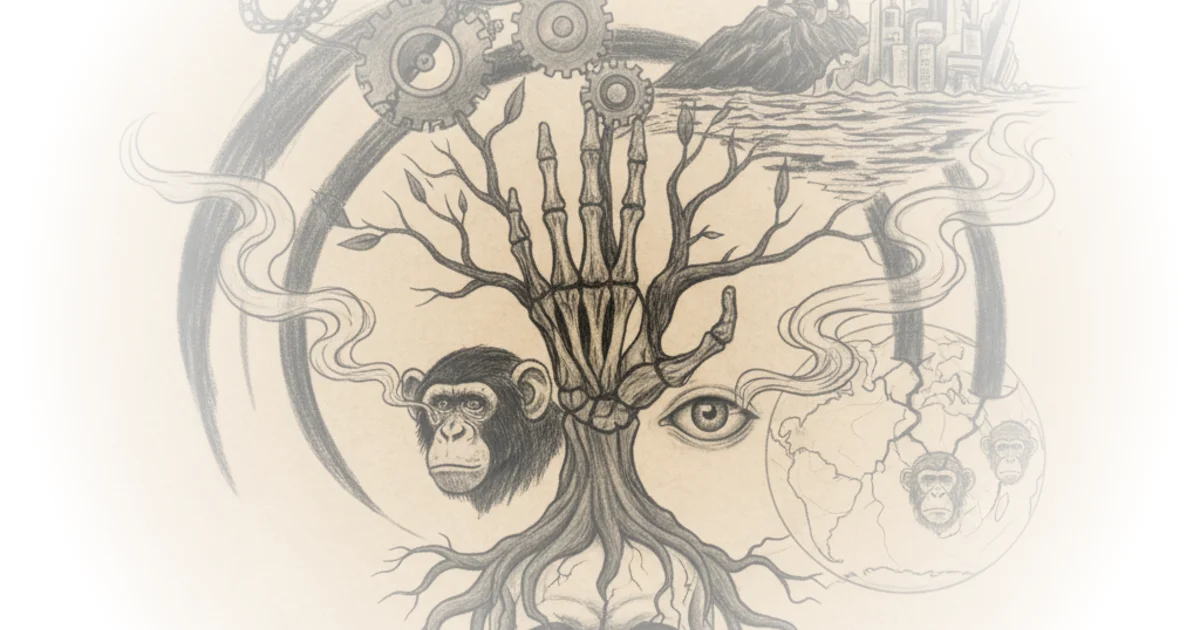
The core of van der Linden's argument lies in the question: "Why Apes?" He rejects the idea that the films are a simple allegory for race, class, or the Vietnam War, as the original sequels were. Instead, he frames the trilogy as a thought experiment about the emergence of a second intelligent species. "Human lies no to me that is the mirror that the new Planet of the Apes trilogy holds up to its audience," he writes. The tension arises not from one side being superior, but from the impossibility of harmonious coexistence between two species that are "similar enough to be considered equal by all meaningful measurements but that is also distinct enough to have its own vision of what life is."
This framing shifts the narrative from a standard "man versus nature" conflict to a complex exploration of human nature. Van der Linden draws on the work of primatologist Frans de Waal to challenge the human-centric view that morality and complex time perception are unique to our species. He suggests that the films force us to reckon with the idea that "a lot of the qualities we thought to be unique in humans can actually be observed throughout the animal kingdom." The horror of the story, therefore, is not that the apes are becoming human, but that they are revealing that our claim to uniqueness was always an illusion.
"The real question that arises out of this premise then out of this collision between two equally intelligent species is what does it reveal about the nature of such a species what are the traits and characteristics that set them apart from other animals and why is it that their relation to the world around them and for that matter to each other seems so complicated so challenging and so destructive."
Critics might argue that this philosophical depth is sometimes undermined by the franchise's reliance on familiar action beats and the inevitable destruction of human civilization. While van der Linden acknowledges the "destructive" nature of the conflict, he maintains that the films succeed because they refuse to offer easy answers or a simple moral hierarchy. The tragedy is structural, not just personal.
A New Definition of Humanity
Van der Linden concludes that the trilogy's greatest achievement is its refusal to let the audience off the hook with a simple "us versus them" dynamic. The films do not ask us to root for the apes to replace humans; they ask us to understand why the two cannot share the planet. The narrative arc moves from the "spirit of exploration" found in the original 1968 film to a grim realization that "human beings who have been the only species of its kind ever since we got rid of the Neanderthals suddenly have to reckon with the emergence of another species."
The author's analysis of the original sequels highlights their chaotic nature, noting how they "resort to time travel to keep the story going" after the original planet was destroyed. In contrast, the new trilogy offers a coherent, grounded exploration of societal collapse and rebirth. It is a story about the fragility of human dominance when faced with an equal. As van der Linden puts it, the films are about "true speculation," imagining a world where the "goalpost" of human uniqueness is moved back, revealing that our traits are not as special as we assumed.
"What it does is it basically puts all animal research in service of confirming that bias which also lessens every new discovery as its implications are not truly considered in their own right but rather relegated to the mere Act of moving back the goalpost to a new place from which we can reassert our superiority."
Bottom Line
Van der Linden's commentary is a compelling defense of the Planet of the Apes reboot as a serious work of speculative fiction that transcends its genre. The strongest part of his argument is the shift from viewing the apes as allegorical stand-ins for marginalized human groups to seeing them as a genuine, independent intelligence that forces a re-evaluation of human exceptionalism. The biggest vulnerability in the analysis is the brief dismissal of the films' potential as an animal rights allegory, which some viewers may find too central to ignore. Ultimately, the piece successfully argues that these films are essential viewing for anyone interested in the future of human identity in a crowded, multi-species world.