Devin Stone doesn't just recount a courtroom drama; he exposes a systemic rot where the government treats court orders as mere suggestions. While the viral clip of ICE lawyer Julie Lee snapping under pressure dominates the headlines, Stone argues the real story is a federal agency operating with impunity, detaining legally present citizens and ignoring judicial mandates with terrifying ease.
The Illusion of Compliance
Stone immediately dismantles the notion that this was an isolated bureaucratic error. He writes, "Detention without lawful authority isn't a technical mistake. It is a constitutional injury that unfairly falls on the heads of those who have done nothing wrong to justify it." This distinction is crucial. By framing the issue as a constitutional injury rather than an administrative glitch, Stone elevates the stakes from a procedural dispute to a fundamental violation of rights. The evidence he presents—five individuals held for days after explicit release orders—supports the grim reality that the system is designed to exhaust, not just enforce.
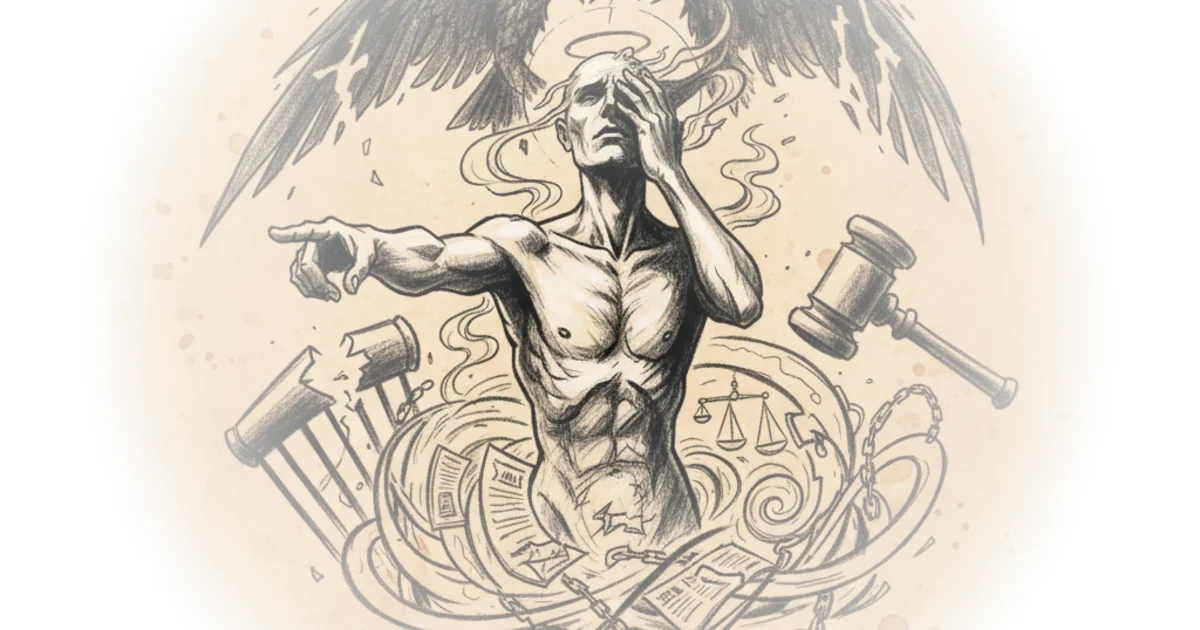
The author highlights the absurdity of the government's position through Judge Jerry Blackwell's sharp rebuke. As Stone notes, the judge emphasized that "A court order is not advisory and it's not conditional. It's not something that any agency can treat as optional while it decides how or whether to comply." This quote cuts through the bureaucratic fog, stripping away any pretense of ambiguity. The government's failure to comply wasn't a misunderstanding; it was a calculated choice to prioritize volume over liberty.
"What you cannot do is detain first and then sort out lawful authority later."
Critics might argue that the sheer volume of cases during a surge operation creates unavoidable logistical bottlenecks. Stone anticipates this, quoting the judge who dismissed volume as a valid excuse: "Volume, that is the volume of cases and matters, is not a justification for diluting constitutional rights, and it never can be." This rebuttal is effective because it shifts the burden back to the agency: if you choose to detain, you must have the infrastructure to release when ordered. The lack of such infrastructure is a policy choice, not an accident.
The Human Cost of "Catch and Hold"
Stone pivots from the legal theory to the visceral reality of the detainees' experiences, particularly focusing on a man named Oscar. The author details how Oscar was held for 13 days despite a court order for release, subjected to "physical danger, watching people screaming in pain with medical neglect, being exposed to COVID." This narrative choice is powerful; it forces the reader to confront the human toll of abstract legal failures. The description of Oscar sleeping on the floor and being lied to by agents who told him to "self-deport" reveals a system that actively discourages legal recourse.
The commentary also addresses the legal precedent that enabled this chaos. Stone connects the current events to Justice Brett Kavanaugh's concurrence, noting that the concept of "catch and release" has devolved into "catch and holds." He writes, "The idea that you can stop someone without probable cause or reasonable suspicion to even ask for their ID is uh I don't know antithetical to democracy." This framing is vital because it challenges the constitutional logic that underpins these enforcement tactics. By labeling the practice as antithetical to democracy, Stone forces a re-evaluation of what constitutes acceptable enforcement.
The Lawyer's Dilemma
Perhaps the most nuanced part of Stone's coverage is his treatment of Julie Lee, the lawyer who became the face of the scandal. Rather than painting her solely as a villain, Stone presents her as a casualty of a broken system. He notes her inexperience, her lack of training, and her struggle with inaccessible email systems. Stone writes, "It's extremely clear that she's not the one responsible for the non-compliance and the policies at issue here." This adds a layer of tragedy to the narrative: a new lawyer, overwhelmed and unsupported, is forced to defend indefensible actions.
Lee's admission that she had to threaten to quit to get her colleagues to comply with court orders is a damning indictment of the agency's culture. Stone highlights her statement: "I have to say that too in front of that in order to get it fixed." This suggests that internal mechanisms for compliance are so broken that only the threat of public shaming works. While some might argue that a lawyer's duty is to represent their client regardless of the client's internal dysfunction, Stone's point stands: the dysfunction itself is the story. The system is so fractured that even those trying to fix it are forced into performative breakdowns.
Bottom Line
Stone's strongest argument lies in his ability to connect a viral courtroom outburst to a broader pattern of constitutional disregard, proving that the "meltdown" was a symptom, not the disease. His biggest vulnerability is the reliance on a single judge's transcript, which, while damning, may not capture the full scope of agency-wide intent. However, the evidence of repeated non-compliance across multiple cases makes the case for systemic failure undeniable. Readers should watch for how this specific incident influences future judicial scrutiny of ICE's detention practices, as the courts may no longer be willing to accept "logistical challenges" as an excuse for unlawful imprisonment.