This piece shatters the comforting Canadian illusion that far-right extremism is an American import, revealing instead a domestic ecosystem where hate has always had roots and is now rapidly evolving into paramilitary structures. The Walrus doesn't just report on a rally; it connects the dots between historical state-sanctioned racism and the modern "fitness clubs" training for conflict, arguing that the infrastructure for white nationalism was built into the country's foundation.
The Myth of the Lunatic Fringe
The article opens by dismantling the "it couldn't happen here" mindset that allows many Canadians to dismiss white nationalism as a fringe anomaly. The Walrus writes, "Canadians tend to think of far-right extremism and white nationalism as a strictly American problem... But these movements are gaining a foothold in mainstream culture, and the structure for that to happen has been in this country since its inception." This framing is crucial because it shifts the blame from a few bad actors to a systemic failure of national identity. By anchoring the current crisis in the 1911 order-in-council that banned Black immigrants and the 1921 formation of the first Canadian Ku Klux Klan chapter, the author provides a historical continuity that is often ignored in favor of focusing solely on recent events. This historical depth is not just background noise; it is the argument itself. The current "Active Clubs" are not a sudden mutation but the latest iteration of a long-standing pattern.
White supremacy arrived in Canada in the fifteenth century, with the first Europeans. Since then, Canada has waged a cultural and literal genocide against Indigenous peoples.
The piece argues that the transition from online trolling to physical mobilization is the defining feature of the current threat. The Walrus details how the "alt-right" has evolved from "irony laden, extremely online" activity to groups meeting in person under the guise of sports clubs. As The Walrus puts it, "They're becoming more militant... They try to get together to recruit, to do fitness, to do propaganda pictures, to train in combat sports." This shift from digital noise to physical readiness is the most alarming development, transforming abstract hatred into a tangible security risk. The comparison to the "Freedom Convoy" of 2022 is particularly potent; the article suggests that the convoy was the "linchpin" that allowed disparate groups—from Q-Anon adherents to anti-vaccine activists—to coalesce into a unified front. Critics might note that grouping all these movements together risks oversimplifying their distinct motivations, but the author's point stands: the convergence of these audiences created a powerful new engine for radicalization.
The "Fitness Club" Playbook
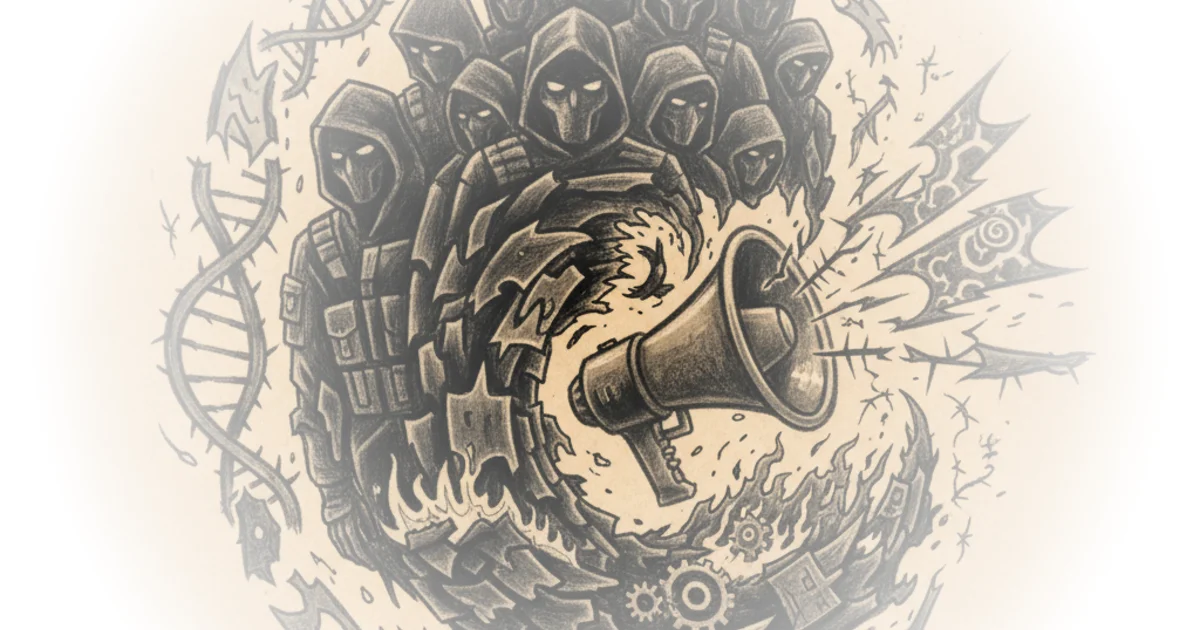
The article's most distinctive contribution is its exposure of the "Active Club" model, a strategy borrowed from American neo-Nazi Robert Rundo and now led in Canada by Jeremy MacKenzie. The Walrus highlights how these groups use the cover of "men's clubs" or "fitness clubs" to organize military-style drills while evading legal scrutiny. Evan Balgord, executive director of the Canadian Anti-Hate Network, is quoted explaining the danger: "Some of them have moved on to what we call white nationalism 3.0 models... They are talking about the inevitability of conflict and violence and speak about preparing for it." This quote captures the essence of the threat: these are not just protesters; they are self-styled soldiers preparing for a war they believe is inevitable. The Walrus effectively uses the example of "Second Sons Canada" to show how this model has scaled, creating a network with strict membership policies and internal rules that mirror paramilitary organizations.
The phrase 'Merciless war is coming' doesn't leave much room for interpretation.
The coverage also tackles the difficulty of tracking these groups due to their decentralized nature and the use of coded language. The Walrus notes that while some claim thousands of members, the true number is impossible to verify, yet the threat remains real because of the "network of content creators and their audiences." This observation is vital for busy readers who might assume that without a clear hierarchy, the movement is weak. The article argues the opposite: the lack of hierarchy makes it more resilient and harder to dismantle. The connection to the broader political landscape is also drawn sharply, with the piece noting how rhetoric once confined to online spaces is now echoing in mainstream political discourse, such as Premier Danielle Smith's push for anti-trans legislation. This normalization is the ultimate goal of the movement, and the article makes a compelling case that it is already happening.
The Role of Media and Moderation
A critical component of the Walrus's analysis is the role of social media platforms in accelerating radicalization. The piece argues that the degeneration of content moderation has turned platforms like X into "hot beds" for recruitment. Brad Galloway, an expert in de-radicalization, is quoted saying, "It kind of pushes people down this river... to different pockets of the internet where they find actual groups doing recruitment." This metaphor of a river is powerful, illustrating how algorithmic drift can lead a casual observer to a committed extremist. The Walrus points out that groups are learning to game the system, using "jokes" to bypass filters while still spreading their ideology. This is a sophisticated analysis of how technology enables extremism, moving beyond simple calls for censorship to a deeper understanding of the mechanisms of radicalization.
Gradually, political speech is aligning closer to goals of the far right.
The article also touches on the Christian nationalist movement, noting that while they may not use overtly violent language, their reach is wider and their political impact is profound. The Walrus writes that these groups are training people to be "political operatives" in a "generational project" to gain power. This distinction is important: not all extremism looks like a black-clad militia; some looks like a school board meeting or a legislative session. The author argues that both forms are dangerous and interconnected, working toward the same end of reshaping society along exclusionary lines. The piece acknowledges the complexity of the RCMP's stance on not investigating ideologies alone, suggesting that while this protects against overreach, it also leaves a gap in addressing the root causes of violence.
Bottom Line
The strongest part of this argument is its unflinching connection between Canada's historical legacy of state-sponsored racism and the modern rise of paramilitary white nationalism, proving that the threat is homegrown, not imported. Its biggest vulnerability lies in the difficulty of quantifying the actual size of these networks, which relies heavily on the estimates of researchers rather than hard data. Readers should watch for how mainstream political parties respond to this rhetoric, as the article suggests the line between extremist fringe and political mainstream is rapidly dissolving.