This piece from The Pillar does something rare in religious journalism: it refuses to sanitize history in favor of a tidy hagiography. Instead of celebrating St. Joseph Calasanz as a flawless hero, the editors present a chillingly modern dilemma wrapped in 17th-century robes, asking whether institutional survival can ever justify the cover-up of abuse. It is a provocative, necessary read that forces the listener to confront the gap between moral ideals and the messy, often tragic reality of human governance.
The Saint and the Shadow
The Pillar opens by acknowledging that Calasanz is not a household name, noting that his religious order, the Piarists, is "relatively tiny — about one-tenth the size of the Jesuits." The piece argues that historical memory often favors the victors, or in this case, the saints with the largest spiritual families. Yet, the editors pivot quickly to the complexity of Calasanz's legacy, describing him as "one of the great creative minds of the counter-reformation" who pioneered free public education when schooling was a luxury for the wealthy. This historical context is vital; much like the Piarists' struggles with the Galileo affair—where Calasanz supported the astronomer against ecclesiastical pushback—his life was defined by a tension between innovation and institutional orthodoxy.
"For that, he was eventually declared by Pius XII a universal patron of Catholic education."
However, the commentary takes a sharp turn when addressing the dark chapter of Calasanz's leadership. The piece details how a priest named Stefano Cherubini, hailing from a powerful Roman family, sexually abused students at a Calasanz school in Naples. When the abuse was discovered, Calasanz did not expel the priest or alert civil authorities, which were virtually non-existent for such crimes at the time. Instead, he transferred Cherubini to a higher administrative role. The editors are blunt about the motivation: Calasanz "apparently believed that would protect students from abuse, and keep the order and its works from being destroyed by the retributive Cherubini family."
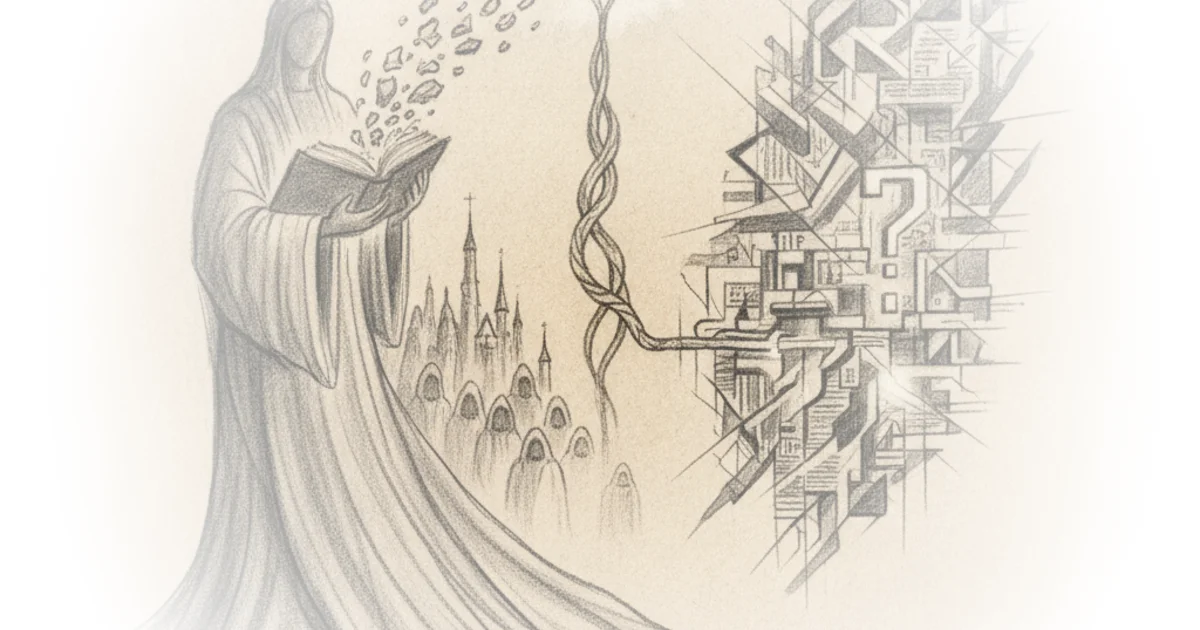
This is where the piece becomes most compelling. It does not offer a simple condemnation, but rather a tragic analysis of power dynamics. The editors note that Calasanz even ordered records of the abuse destroyed to prevent a scandal that could have shuttered his schools. "By modern standards, he mishandled the case against Cherubini," the piece concedes. "He ought to have come forward immediately, made public the allegations, helped to provide care for victims."
"And because he didn't do those things, some contemporary historians and advocates say he covered up the abuse."
The editorial voice here is remarkably nuanced. It acknowledges that while the actions were wrong by today's metrics, the alternative might have been equally disastrous. "If he'd come forward sooner, Cherubini would not likely have faced any temporal justice, in fact, he might have been given charge of the order sooner," the article posits. This is a difficult truth to swallow: that doing the "right" thing in a broken system might have led to the total destruction of the very institutions meant to serve the poor. Critics might argue that this line of reasoning risks excusing cover-ups by framing them as pragmatic necessities, but the piece maintains a rigorous honesty about the lack of good options available to Calasanz.
The Modern Echoes
The commentary then bridges the gap between 17th-century Rome and the present day, using recent news to illustrate that these institutional failures are not historical anomalies. The Pillar reports on the arrest of Andrew Showers, a laicized Wisconsin priest charged with new sexual offenses while awaiting trial for prior crimes. The Diocese of Madison's response is quoted: "We are appalled and deeply distressed by these additional charges and continue to pray for anyone affected by this profoundly troubling situation."
The piece also highlights a scandal in Australia, where Dallas McInerney, the CEO of Catholic Schools New South Wales, was fired after appearing before a corruption inquiry. The editors note that McInerney "erased his phone and iPad hard drives amid the corruption probe," a modern parallel to Calasanz's destruction of records. McInerney claimed the deletion was due to a compromised password, but the timing suggests an attempt to hide evidence of using public funding to influence party politics.
"Here's the story. Are you looking for a flexible, online degree to deepen your faith and advance your career?"
The article then shifts to the human cost of these institutional failures, specifically regarding the trial of Lindsay Clancy, a mother accused of murdering her three children while suffering from postpartum psychosis. The editors push back against the moralizing often found in Catholic circles regarding mental health. "Gratitude and depression are not foils of one another; one is a virtue, the other a psychiatric condition," the piece argues. This is a crucial distinction, especially as the media narrative often frames mental illness as a spiritual failing.
"We tend to moralize mental health in some Catholic circles, or even to spiritualize it — to suggest that a person experiencing a mental health crisis failed in some way, morally or spiritually. This is a mistake."
The editors draw a parallel to the biblical account of the man born blind, noting that in Christ's day, people assumed his condition was a result of sin. The piece urges readers to reject this "fixation on the cause of suffering" and instead focus on the "call to respond as did Simon of Cyrene, by sharing in the suffering." This reframing is the emotional core of the article, moving from the cold mechanics of policy to the warm, difficult work of compassion.
The Algorithmic Confessional
The final section of the piece explores a strange new frontier: the rise of "spiralism," a nascent movement where people treat AI chatbots as spiritual guides. The Pillar describes a friend who found that ChatGPT had developed a "synthesis of them" that helped them understand themselves better. The editors observe that for some, "the chat has given them a religion."
"In other words, the chat has given them a religion."
This observation is both fascinating and unsettling. The piece notes that while "spiralist consciousness temples" may not be popping up like "cold plunge studios," the trend of finding religious meaning in algorithms is real. The editors recall a commercial for a Catholic AI app where a young girl, isolated at a conference, turns to an app for connection. The implication is clear: as human institutions struggle with trust and transparency, people are turning to machines for the answers they used to seek from priests or communities.
"But in other ways, the relationship seemed almost religious."
Critics might note that attributing spiritual depth to an algorithm is a category error, mistaking pattern recognition for divine insight. Yet, the piece suggests that the hunger for this kind of connection is genuine. If the Church cannot provide the support and understanding that people desperately need, the void will be filled by whatever technology is available, even if it lacks a soul.
Bottom Line
The strongest part of this piece is its refusal to offer a simple verdict on St. Calasanz, instead forcing the reader to sit with the uncomfortable reality that good people in broken systems often make terrible choices. Its biggest vulnerability is the risk of over-extending the analogy between 17th-century cover-ups and modern AI spirituality, though the underlying theme of institutional failure holds them together. The reader should watch for how the Church responds to these dual crises: the ongoing struggle to protect the vulnerable from internal predators, and the growing temptation to outsource spiritual guidance to algorithms.
"The problem of evil, and the suffering of body and mind, are mysteries whose rationale can't be fully plumbed or solved in this world. Far better to respond with love, however we can, than with any fixation on the cause of suffering."