Then & Now challenges the comfortable myth that the 20th century was a straightforward march from tyranny to freedom, arguing instead that we are currently living through a haunting echo of its most dangerous undercurrents. By stripping away the Hollywood version of history, the author reveals that the political instability and authoritarian allure of the early 1900s were not anomalies, but the dominant reality of their time. This perspective is vital now, as modern democracies face rising populism and the same intellectual vacuums that once allowed fascism to take root.
The Illusion of Inevitable Progress
The piece begins by inviting a thought experiment: a time traveler moving from 1900 to 2000 would initially see a world of triumph. The collapse of empires, the spread of suffrage, and the rise of the welfare state suggest a clear narrative of victory. However, Then & Now quickly pivots to the unsettling realization that "history not repeating exactly, but certainly rhyming." The author points out that both centuries began with a unipolar world order challenged by rising multipolarity, tariffs, and nationalism. This framing is effective because it refuses to let the reader rest on the laurels of the post-1945 era.
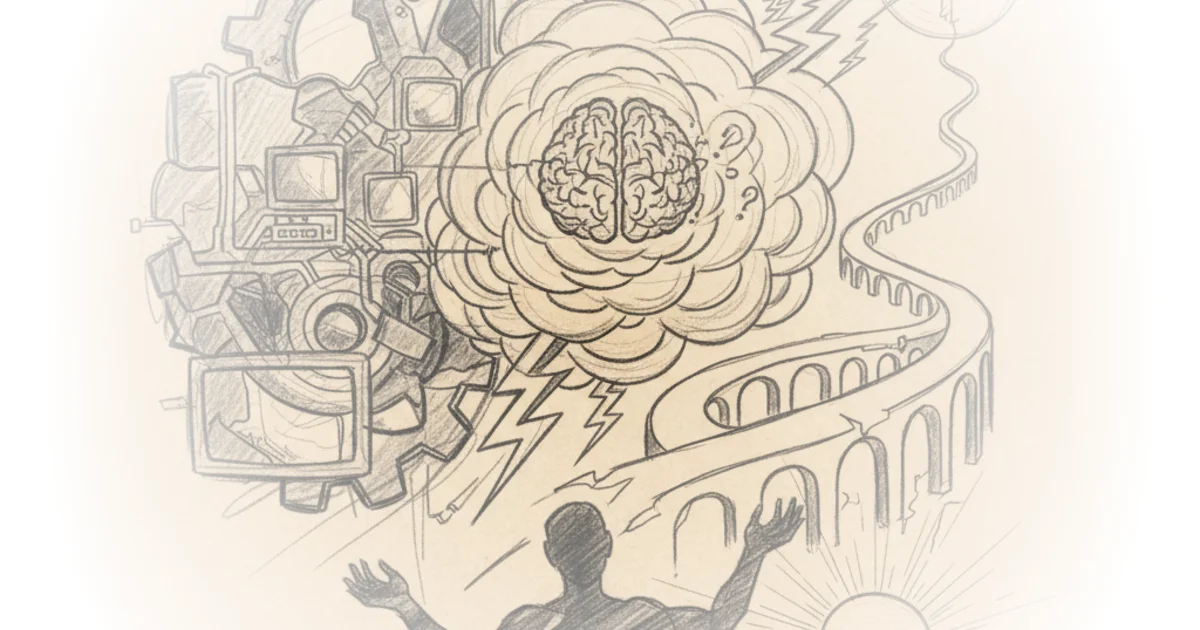
The core of the argument rests on the idea that our current political malaise is not a new phenomenon but a return to a familiar pattern. "Both centuries start with a unipolar world," the author notes, drawing a direct line from the British Empire's decline to the current challenges facing American hegemony. This comparison forces a reckoning with the fragility of the current order. Critics might note that equating the geopolitical tensions of the early 20th century with today's risks oversimplifying the unique nuclear and economic realities of the modern age, yet the structural parallels in political sentiment are undeniable.
The 20th century was not as simple as we sometimes assume from our comfortable armchairs today.
The Failure of the Democratic Experiment
Perhaps the most striking contribution of the text is its dismantling of the idea that democracy was the natural, destined winner of the 20th century. Then & Now cites historian Mark Mazower to illustrate that democracy was viewed by many at the time as "weak, as squabbling, as pathetic." The author provides damning evidence of this perception, noting that in the interwar period, cabinet governments in Europe were incredibly short-lived. "In Germany and Austria, the average was 8 months," the text states, highlighting a systemic inefficacy that made authoritarian alternatives appear attractive.
This historical context is crucial for understanding why figures like Mussolini were once admired even in the West. The author quotes diplomat George Kennan, who argued that "benevolent despotism has greater possibilities for good than democracy." This admission shatters the modern assumption that the victory of democracy was self-evident to everyone at the time. The argument lands hard because it connects historical instability to the current frustration with gridlock and "empty words." It suggests that the appeal of authoritarianism is not a new invention but a recurring response to the perceived failure of democratic governance.
The Ghosts of Esoteric Fascism
The commentary takes a darker turn by exploring the intellectual roots of fascism, moving beyond the standard "good versus evil" narrative. Then & Now argues that our popular understanding has been "woeful but convenient," serving Hollywood better than historical accuracy. The author points out that historians still struggle to define the movement, quoting Stanley Payne: "The absence of an empirical definition of what is meant by fascism has been an obstacle to conceptual clarification." This lack of definition allows modern extremists to weaponize history without clear boundaries.
The text reveals that the 20th century was deeply infused with "strange esoteric, magical, idealist, mystical and occult movements." These were not marginal fringe elements but central to the era's political imagination. The author warns that when we fail to understand these complexities, we leave our defenses undefended. "We see the ghosts of fascism begin to haunt us," the author writes, citing modern figures who openly admire Hitler or advocate for "CEO democracy." This section is particularly potent because it links the abstract philosophies of the past to the concrete, dangerous rhetoric of today's influencers.
Triumphalism about history is dangerous. It makes winning look inevitable and it leaves the turrets undefended against those who really understand the history and want to mobilize and weaponize that history for their own ends.
The Necessity of Deep Dives
Finally, the author addresses the difficulty of conveying this complexity in an era of short-form content and algorithmic distraction. Then & Now argues that "the average history documentary has done us a huge disservice by assuming that everything has to be simplified and dumbed down." The piece serves as a defense of long-form, nuanced analysis, suggesting that only by grappling with the full depth of the past can we hope to understand the present. The author quotes Hannah Arendt to emphasize that we cannot simply discard the bad parts of history as a "dead load," but must confront them. This plea for intellectual rigor is a direct challenge to the current media landscape's tendency toward simplification.
Bottom Line
Then & Now delivers a powerful corrective to the triumphalist narrative of the 20th century, successfully arguing that democracy was a fragile experiment rather than a guaranteed outcome. The piece's greatest strength lies in its use of historical instability to explain modern political fragility, though it occasionally risks conflating distinct eras of authoritarianism. The reader should watch for the author's upcoming deep dive into fascism, which promises to test whether a nuanced understanding of history can actually inoculate society against the return of its darkest chapters.