Noah Smith cuts through the usual free-trade orthodoxy with a startling proposition: Europe must raise trade barriers not to protect jobs, but to survive a potential war. In an era where economic efficiency is often worshipped above all else, Smith argues that relying on a geopolitical rival for the very components needed to build drones and defend borders is a fatal strategic error.
The Myth of Comparative Advantage
Smith begins by dismantling a comfortable narrative held by many European policymakers: the idea that Europe should abandon manufacturing to focus solely on services while China produces every physical good. He identifies this as a fundamental misunderstanding of economic theory. "The theory of comparative advantage is about traded goods; it's about which traded goods can be produced relatively more cheaply by which countries," Smith writes, noting that industrial policy is a production input, not a tradable commodity itself.
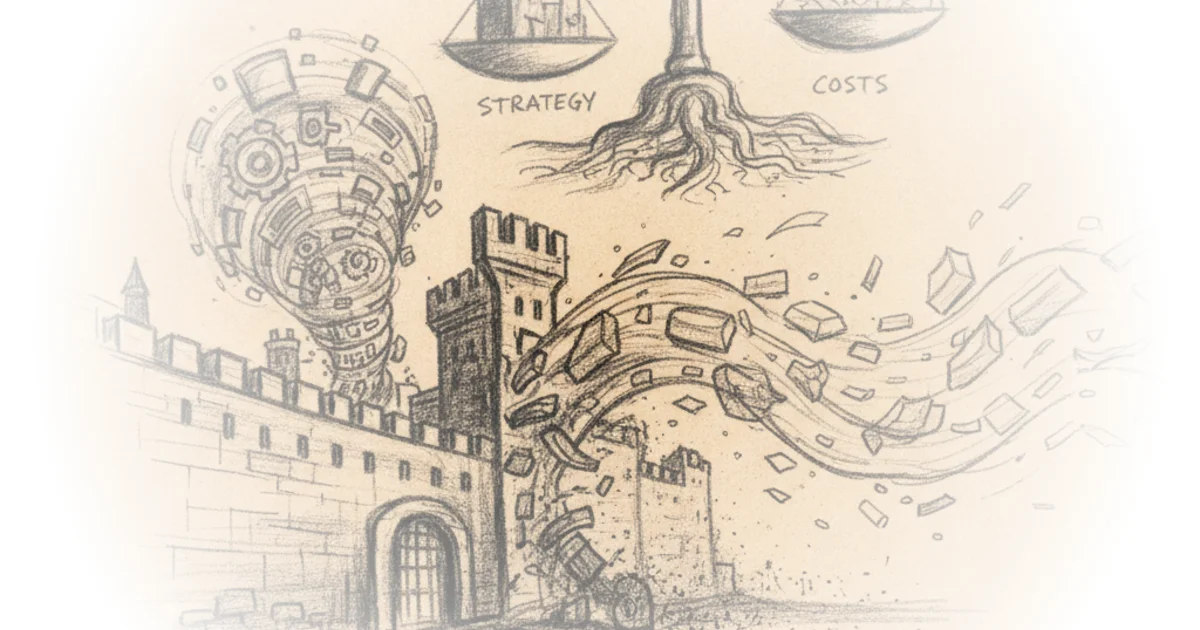
This distinction is crucial. The author argues that China is not merely competing on price but has shifted to an "industrial policy of everything," aiming to dominate every layer of production from raw materials to finished services. As the Rhodium Group notes in research Smith cites, Beijing's strategy extends beyond specific sectors to include mature industries and frontier technologies alike. The result is a system where China seeks to trade goods for debt rather than goods for goods.
Critics might argue that retreating from manufacturing allows Europe to specialize in high-value innovation, but Smith counters that this ignores the reality of supply chain fragility. "If I'm better at making TVs than cars... then I'll make TVs and you'll make cars and then we'll trade," he explains, before pointing out that China's massive trade surplus proves they are not trading in a balanced way. This unbalanced dynamic means Europe is effectively funding its own potential disarmament.
The Drone Dilemma and National Survival
The stakes of this economic debate shift dramatically when Smith turns to the security implications of the war in Ukraine. He highlights a grim reality: modern warfare has become dependent on drones, yet Europe cannot manufacture them without Chinese components like lithium-ion batteries, navigation cameras, and radio modules. "When NATO conducts war games against drone-equipped Ukrainian units, the Ukrainians easily triumph," he notes, emphasizing that armies without these assets are obsolete.
This is where the argument transcends economics and enters the realm of existential risk. Smith draws a terrifying parallel to historical precedents of industrial mobilization, reminding readers that during crises like the economic struggles of Nazi Germany or the rapid rearmament before World War II, control over production was the difference between sovereignty and subjugation. He warns that if Russia were to invade Europe, China could simply halt exports of critical parts. "Unless Europe could assemble upstream industries for drone components from scratch... the war would quickly be lost for lack of weapons," Smith asserts.
The human cost here is not abstract; it is the potential loss of European sovereignty and the safety of millions of citizens. By allowing a hostile power to control the supply chain for defense, Europe risks becoming a vassal state before a single shot is fired. "When invading armies are burning your country to the ground, you should worry less about deadweight loss than about being dead," Smith writes with stark clarity.
When invading armies are burning your country to the ground, you should worry less about deadweight loss than about being dead.
A Toxic Political Economy for China Too
Perhaps the most surprising element of Smith's commentary is his suggestion that trade barriers might actually benefit the Chinese people. He argues that China's current model of subsidizing endless exports has created a "toxic political economy" where workers and consumers see no benefits from national industrial dominance. The real estate boom that once drove domestic demand has collapsed, replaced by an export surge that fails to translate into higher living standards.
Smith points out that this strategy is self-defeating even for Beijing. "China's efforts to cool its automotive price war are faltering as BYD Co. and rivals expand discounts," he observes, noting that the solar industry is similarly plagued by overcapacity and bankruptcies. The subsidies drive companies to compete their profits to zero, leaving Chinese savers and entrepreneurs on a "treadmill" with no escape.
By blocking these exports, Europe could force a recalibration in Beijing. Smith suggests that if China cannot offload its overproduction abroad, the administration may be forced to shift focus back to domestic consumption and living standards, echoing the policies of previous eras under Deng Xiaoping and his successors. "Providing growing living standards for Chinese people might once again become the central goal of policy," he posits.
Critics might worry that such protectionism could trigger a full-scale trade war or retaliation against European interests in China. However, Smith argues that the current trajectory is already unsustainable for both sides and that the alternative—dependence on an adversary—is far worse.
Bottom Line
Smith's most compelling argument is his reframing of trade barriers as a vital national security imperative rather than an economic inefficiency; he correctly identifies that sovereignty cannot be outsourced to a rival power. The piece's greatest vulnerability lies in its assumption that European bureaucracy can move fast enough to rebuild these critical supply chains before a crisis hits, but the urgency of the warning is undeniable.