Most introductions to philosophy promise a tour of established wisdom; Yale University's opening lecture for Philosophy 176 promises something far more disruptive: a systematic dismantling of the very beliefs most listeners hold dear about death. Rather than offering comfort or a survey of religious traditions, the course sets out to prove that the common intuition—that we possess immortal souls and that death is an unmitigated evil—is likely "pretty much mistaken from beginning to end." For the busy professional seeking to sharpen their reasoning rather than find solace, this is a rare invitation to confront mortality with cold logic instead of warm hope.
The Secular Framework
Yale University immediately establishes a rigorous boundary for the inquiry, stripping away the safety nets of faith and psychology to focus purely on rational argumentation. The lecturer, Shelley Kagan, clarifies that while the class concerns death, it will not address the "psychological and sociological questions" that dominate popular discourse. "We're not going to talk about the process of grieving or bereavement," Kagan states, nor will they discuss the "five stages of dying" popularized by Elizabeth Kubler Ross. This exclusion is deliberate; the course aims to isolate the metaphysical and ethical core of the problem, ignoring the emotional processing that usually accompanies the topic.
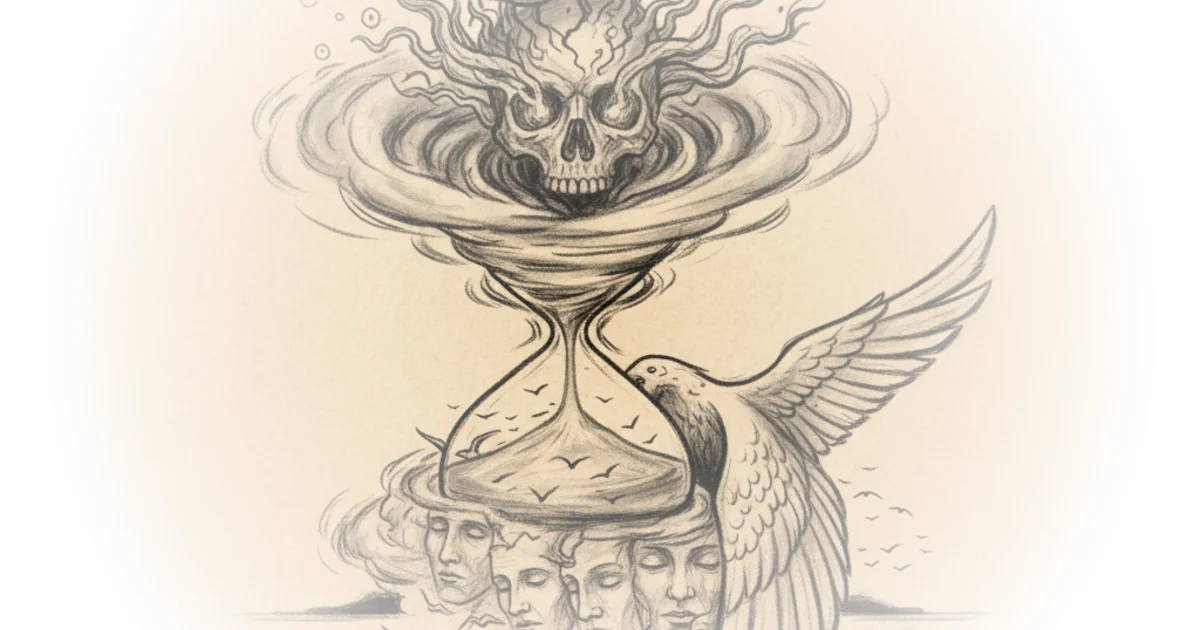
The curriculum is split into two distinct halves: metaphysics and value theory. The first half tackles the nature of personal identity, asking whether a person is merely a physical body or if they possess an "immaterial" soul that could survive bodily destruction. Yale University notes that to understand death, one must first define the entity that dies. "What is it for me to survive tonight?" Kagan asks, challenging students to consider the continuity of self. This approach forces a confrontation with the physicalist view of humanity, suggesting that without a soul, death is simply the cessation of existence.
Critics might argue that excluding the psychological and religious dimensions renders the discussion sterile, as it ignores how human beings actually experience and cope with mortality. However, the course's strength lies in its refusal to conflate the feeling of death with the fact of death, a distinction often blurred in public discourse.
"What conclusions would we come to about the nature of death if we had to think about it from a secular perspective? Making use of only our own reasoning as opposed to whatever answers we might be given by divine revealed authority."
Challenging the Common Picture
The most striking aspect of the lecture is Kagan's explicit rejection of the "common set of views" that most students bring to the classroom. Yale University outlines this prevailing worldview: that humans have souls, that immortality is desirable, that death is a terrible evil, and that suicide is always irrational. Kagan does not merely present these as options; he declares his intent to refute them. "I'm going to try to convince you that, you know, there is no soul. Immortality would not be a good thing. Fear of death isn't actually an appropriate response to death," he asserts.
This is a bold pedagogical choice. Instead of remaining neutral, the instructor commits to a specific philosophical stance, arguing that the fear of death is often based on a misunderstanding of what death actually is. The course posits that if death is the end of existence, it cannot be bad for the person who has died, because "how could anything be bad for something that doesn't exist?" This paradox forces students to re-evaluate the value of life and the logic of fearing non-existence.
The argument extends to the desirability of immortality. While most assume living forever would be wonderful, Kagan suggests the opposite might be true. "Immortality would not be a good thing," he argues, turning the standard hope for eternal life on its head. This counter-intuitive claim serves as a hook for the value theory portion of the semester, challenging the assumption that more life is inherently better.
"The crucial point isn't for you to agree with me. The crucial point is for you to think for yourself."
The Rationality of Suicide
Perhaps the most provocative element of the introduction is the treatment of suicide. The common view holds that suicide is always immoral and irrational because it wastes a precious life. Yale University, through Kagan's voice, suggests that this view is too rigid. The course will examine whether "suicide under certain circumstances might be rationally morally justified." By framing suicide as a potential rational choice rather than a moral failing, the course opens a space for discussing the quality of life versus the mere fact of being alive.
This section of the lecture is particularly relevant for a modern audience grappling with burnout and existential crisis. It moves the conversation from a moral prohibition to a philosophical calculation. However, this stance requires careful navigation; without the context of the full semester's arguments, the claim that suicide can be rational might seem reckless. Yet, within the framework of a philosophy class dedicated to rigorous logic, it serves as a necessary stress test for the value of life itself.
Bottom Line
Yale University's approach is a masterclass in intellectual honesty, refusing to offer easy answers or comforting illusions about the afterlife. The strongest part of this argument is its commitment to secular reasoning, forcing a clear-eyed assessment of mortality that many avoid. Its biggest vulnerability lies in its potential to alienate those who find meaning in religious or psychological frameworks, but for those willing to engage with the logic, the payoff is a profound re-evaluation of how one should live. The course doesn't just teach philosophy; it demands a transformation in how the listener faces the inevitable.