In an era where food is often reduced to a barcode and a price tag, this piece from Natural Selections delivers a jarring, necessary reminder: the act of eating is an intimate, violent, and sacred transaction with the living world. It refuses the comfortable illusion that nourishment appears without cost, forcing the reader to confront the biological reality that sustains us.
The Weight of the Decision
The piece opens not with a manifesto, but with a quiet observation of a farm in autumn. Natural Selections reports, "In the autumn it is time to harvest our animals. They are fat and slick from a spring and summer of feasting on sweet grasses and forages." This sets a tone of abundance that quickly pivots to the heavy responsibility of the farmer. The narrative follows Tara Couture as she walks among her herd, acting as the "Chief Evaluator," a role that requires her to decide "who lives another year and who dies."
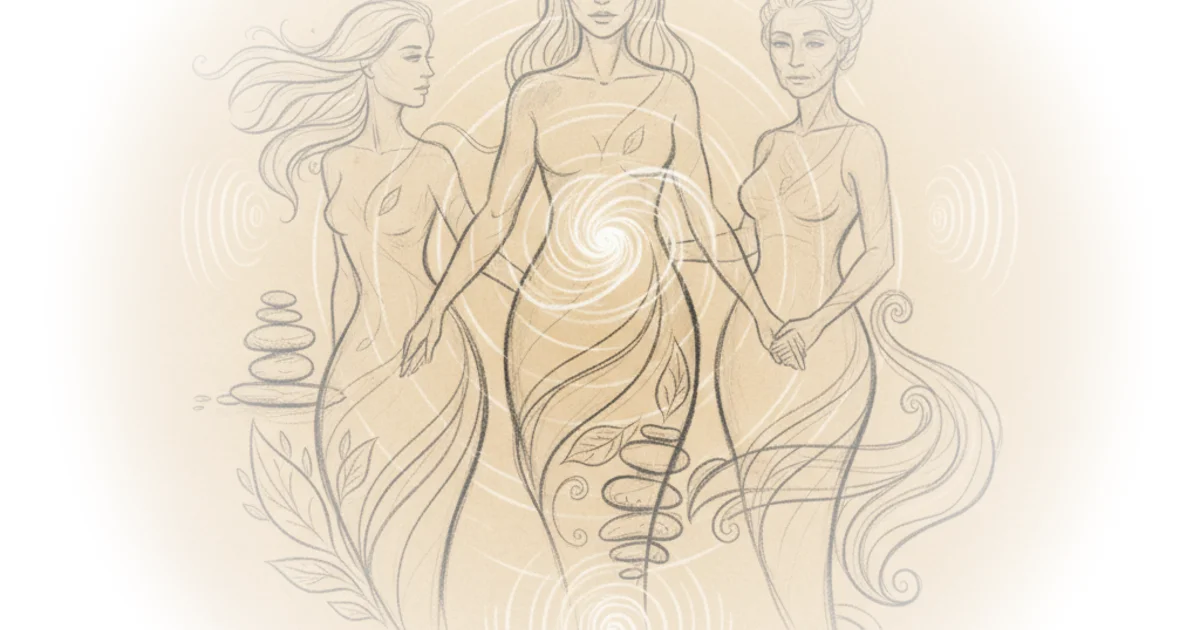
The commentary here is striking because it refuses to sanitize the emotional toll of this decision. The piece argues that this responsibility is not a burden to be shrugged off, but a weight to be carried with reverence. Couture reflects on her mentor, Richard, noting that he taught her that "there is an art to being a cattleman as much as there is the skill and knowledge." This framing elevates farming from a mere industry to a craft requiring deep, intuitive understanding. However, the piece does not shy away from the grief inherent in this art. Couture admits, "Harvest day is a dreaded day in my heart. It's heavy with responsibility and sadness." This honesty creates a bridge between the reader's abstract knowledge of food and the visceral reality of its production.
"In a moment meant to be a sacred act, a great responsibility between eaters and that which nourishes them, it's an abomination."
The Wedge of Convenience
The most potent critique in the text targets the modern separation between consumer and source. Natural Selections reports that "In our world of wedges—great buffers to keep us comfortable—we have created all manner of devices to keep us from the grit of life." The piece identifies the commercial abattoir not just as a place of processing, but as a site of profound disconnection where the worker is forced to bear the emotional burden that the rest of society refuses to carry. The description of the worker firing a "captive bolt stun gun" and jumping back before blood fills their boots is a stark counter-narrative to the sterile packaging found in grocery stores.
The editors note that this separation is a "separation disguised as an efficiency, but in truth, it's a robbing of our relationship with nature." This is a compelling argument: that efficiency comes at the cost of our humanity and our connection to the natural cycle. Critics might note that for the vast majority of the population, the logistical and economic realities of industrial agriculture make this level of personal involvement impossible, rendering the critique somewhat idealistic. Yet, the piece insists that the psychological distance remains a problem regardless of practical constraints. Couture challenges the common advice to not name animals, asking, "Why would I not name an animal? ... Every single person I know is going to die, but I don't limit myself in my relationships with them."
The Alchemy of Blood and Butterflies
The narrative culminates in a scene of raw, unfiltered nature that challenges the reader's preconceptions of beauty. After the harvest, the piece describes a "mystical transformation" where the physical becomes ethereal. The most arresting image is not the death itself, but the life that immediately follows it. Natural Selections reports, "The blood pooled on the grass around us attracts a lone yellow swallowtail butterfly. She comes and floats her delicate legs on the congealed blood, feeding on it." This moment serves as the piece's central metaphor for the interconnectedness of all life.
Couture uses this image to dismantle the idea that death is an end. She writes, "Not something ending. Something expanding beyond the borders of life." The presence of the butterfly, an insect typically associated with flowers, feeding on blood, illustrates the "wisdom of a butterfly, weighing her actions not against the opinions of her butterfly clan but with the knowledge built right into her." This section suggests that the "fairy tales" of modern culture—where death is hidden and sanitized—are a lie that prevents us from understanding our place in the ecosystem. The piece argues that by accepting the "wildness and rawness" of death, we reclaim a part of ourselves that culture has tried to suppress.
"We cannot divide ourselves without dividing everything."
Bottom Line
The strongest element of this piece is its unflinching refusal to look away from the blood required to sustain life, reframing the slaughter not as a tragedy but as a sacred, albeit painful, covenant. Its biggest vulnerability lies in its assumption that this level of direct engagement is a universal moral imperative, potentially alienating readers who lack the agency or resources to participate in such a system. Ultimately, the piece succeeds not by offering a solution to industrial food systems, but by shattering the illusion that we can exist outside of the natural cycle of life and death.
The Uncomfortable Truth
The piece concludes with a challenge to the reader's lifestyle, asking, "How do the swallowtails drink if too many people buy meat from grocery stores?" It suggests that our "wedges" of convenience create a "chink in the chain" that ripples through the entire ecosystem. The editors assert that "The real business of life... is the business" of consumption and materialism, but that this pursuit is a "gerbil on a wheel staring out of their plexiglass cages." This final indictment is a call to recognize that the "untouchable realm" of nature is, in fact, the only realm that truly matters. The piece leaves the reader with the understanding that to eat is to participate in a cycle that demands both gratitude and the courage to face the reality of death.