In an era where education policy often fixates on standardized metrics and rigid curricula, Adrian Neibauer offers a startlingly different metric for success: the power of a name to transform a classroom into a sanctuary. This piece is not merely a nostalgic memoir of an after-school club; it is a sophisticated argument that the most effective pedagogical tool is often the creation of a shared, mystical identity that defies the gendered and racialized expectations of public schooling. Neibauer challenges the reader to consider that the "magic" of learning is not an abstract concept, but a deliberate architectural and cultural choice.
The Architecture of Belonging
Neibauer begins by dismantling the assumption that boys are naturally disinterested in literature, tracing his own journey from a child socialized to view writing as "effeminate and weak" to a teacher who founded a secret society for young male writers. He writes, "Most boys I encountered hated writing. Like me, they were socialized to believe that writing one's feelings, or describing something with sensory detail, was effeminate and weak." This admission is crucial; it reframes the "writing gender gap" not as an inherent biological deficit, but as a cultural construct that schools often reinforce rather than challenge.
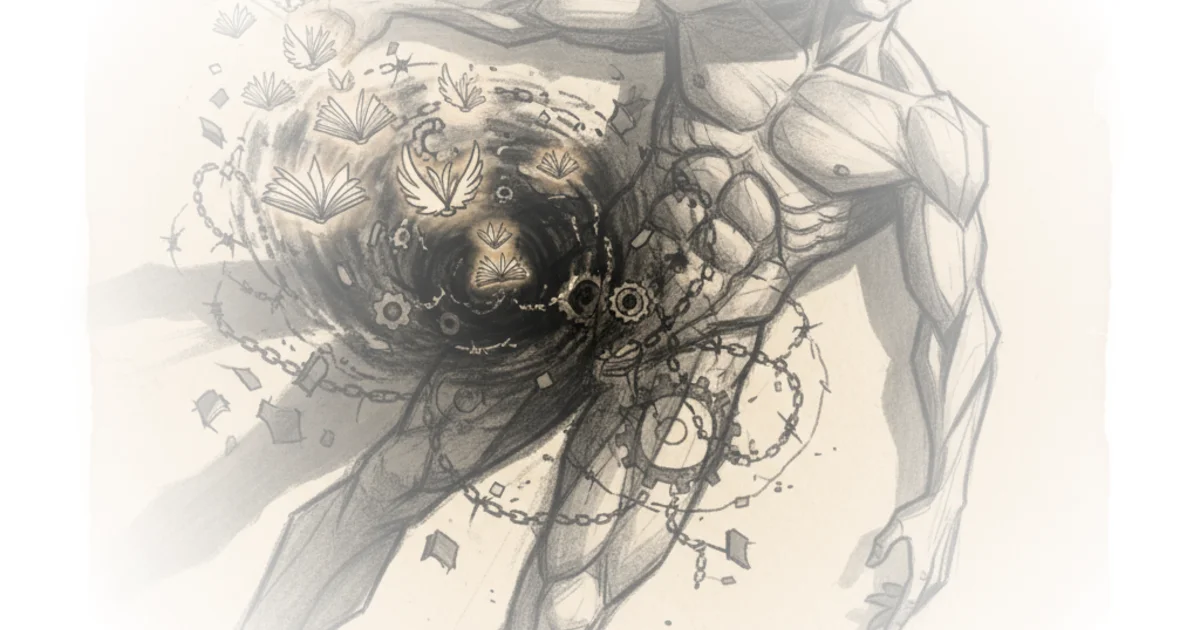
The author's strategy was radical in its simplicity: he created a space where boys could be vulnerable without fear of judgment. He describes the club, "The Shadows of Fergus," as a "secret society of male writers; a place where they could be male and write; no girls allowed." While the exclusion of girls might raise eyebrows in a modern equity context, Neibauer's intent was to provide a specific, temporary refuge for boys who had been shamed out of creativity. He notes, "I wanted to create a rite of passage for male students so that they felt valued, loved, and seen for things other than sports." This approach mirrors the narrative arc of A Wrinkle in Time, where the protagonists must navigate distinct, often dangerous realms to reclaim their identities, suggesting that the classroom itself must be a landscape to be explored, not just a room to be occupied.
"The gender binary is strong in public education. Boys play sports. Girls read. The only writing boys do is in Math and Science class, and by compulsion, during Writing class."
Neibauer's use of W.B. Yeats' poem "Who Goes With Fergus?" as a ritual anchor is a masterstroke of pedagogical framing. By invoking the Celtic myth of Fergus mac Róich—a poet-king who wandered the woods and stars—Neibauer elevates the act of writing from a school assignment to a mythic quest. He explains, "Yeats wrote this poem as a call to Ireland to follow Fergus' path... Yeats uses the woods, the sea, and the wandering stars as symbols of a mystical realm." This connection to deep history and mythology provides a counter-narrative to the sterile, test-driven environment of modern education. It suggests that learning is an act of wandering and discovery, much like the ancient traditions of naming places that Neibauer later explores, such as the Neolithic farmstead The Knap of Howar or the mead hall Heorot in Beowulf. These historical touchstones remind us that names have always been vessels for identity and community, not just labels.
The Evolution from Secret Society to Sacred Space
As the narrative progresses, Neibauer reveals a profound evolution in his thinking. What began as a targeted intervention for boys expanded into a universal philosophy for his entire classroom. He admits, "I've realized, however, that in my two decades of working with students, I don't need a special club for boys to hold space for all of my students." This pivot is the intellectual core of the piece. It argues that the safety and vulnerability required for deep learning are not gender-specific but human necessities.
He reflects on the harmful impact of negative self-labeling, particularly for students of color. "Many boys, especially my boys of color, had been shamed into believing that they were not writers. They named themselves non-writers," Neibauer writes. This is a devastatingly accurate observation of how systemic bias operates in the classroom: students internalize the low expectations of the institution. By sharing his own shame story, Neibauer created a "collective empathetic learning experience that helped us all heal together." This approach challenges the traditional hierarchy of the classroom, positioning the teacher not as an authority figure dispensing knowledge, but as a fellow traveler in the process of unlearning harmful stereotypes.
Critics might argue that relying on "mystique" and "secret societies" is an unsustainable model for public education, which demands transparency and accountability. However, Neibauer counters this by grounding his approach in the tangible outcomes of his seven-year club: published literary magazines, improved writing skills, and, more importantly, a shift in identity. He notes, "We were going to create this experience together. This club was going to be different." The success of the club lay not in the secrecy itself, but in the deliberate construction of a community where the rules of engagement were different from the rest of the school.
"I believe my Mike chose Who Goes With Fergus? because he knew that I was trying something different. I was turning away from how everyone else teaches writing, and pursued a more creative, mystical experience."
The decision to christen his mobile classroom "The Shadows of Fergus" in 2024 marks the culmination of this journey. It is no longer an after-school club but the very identity of his learning environment. He outlines a new framework for his students: "The stars represent knowledge; the deep woods represent wisdom; and the water represents perspective." This triad transforms abstract academic goals into a cohesive worldview, echoing the way ancient cultures used environmental features to define their relationship with the divine and the natural world. By integrating these metaphors, Neibauer ensures that the classroom is not just a place for instruction, but a place for becoming.
Bottom Line
Adrian Neibauer's most compelling argument is that the most effective educational interventions are often those that prioritize identity and belonging over content delivery. His evolution from a targeted boys' club to a universal classroom ethos demonstrates that the "magic" of learning is accessible to all students when the environment is intentionally designed to counteract shame and exclusion. The piece's greatest strength is its refusal to separate academic rigor from emotional safety, proving that the two are inextricably linked. However, the challenge for other educators lies in replicating this level of personal investment and cultural depth without the luxury of a seven-year runway or a specific mythological framework. The takeaway is clear: if we want students to write, we must first give them a reason to believe they are writers.
"By sharing my own shame story, we excavated a lot of hurt during our time together after school... By being vulnerable myself, we developed a collective empathetic learning experience that helped us all heal together."