This episode of Big Biology does something rare in pandemic coverage: it refuses to treat the last few years as a closed chapter, instead treating the crisis as an unfinished lesson for future generations. By convening a diverse coalition of scientists, historians, and philosophers at the University of South Florida, the piece argues that our failure to prepare for the next outbreak stems not from a lack of data, but from a failure of imagination and institutional memory.
Beyond the Virus
The core of the argument rests on the idea that the pandemic was a systemic stress test that exposed deep fractures in how society values public health. Big Biology reports, "The event brought together scientists, public health experts, medical doctors, historians, students, philosophers, and community leaders—for one big, open conversation about COVID-19." This interdisciplinary approach is the piece's greatest strength, moving the conversation away from virology alone and toward the sociology of disease. The editors note that true preparedness requires understanding not just how a virus spreads, but how fear, misinformation, and policy interact.
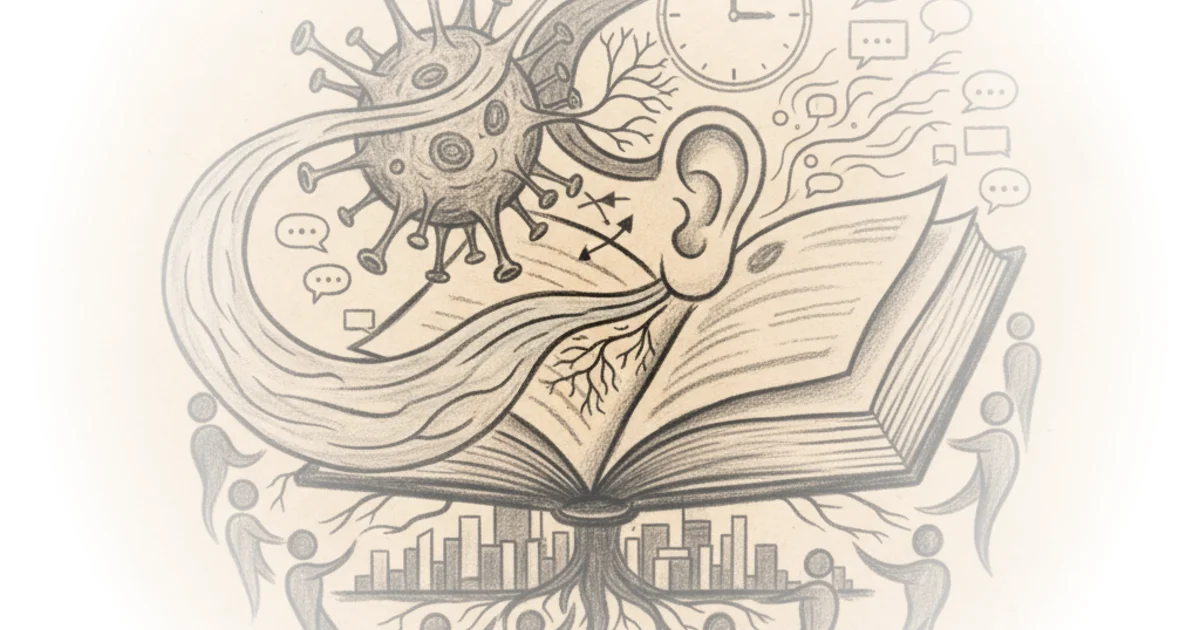
The coverage suggests that the executive branch and public institutions often operate in silos that prevent effective crisis response. "The episode shares the different perspectives these speakers had on the virus, the pandemic response, and our future preparedness to disease," the piece argues. This framing is crucial because it shifts the blame from individual choices to structural design. Critics might note that without specific policy prescriptions, this broad philosophical approach risks sounding like a critique without a solution. However, the inclusion of community leaders and historians grounds the abstract in the lived reality of those who bore the brunt of the crisis.
We are not just preparing for the next virus; we are preparing for the next moment when our institutions fail to listen.
The Human Cost of Silence
The editors highlight that the most dangerous aspect of the pandemic was not the pathogen itself, but the breakdown of trust between the public and the agencies tasked with protecting them. The piece implies that the administration's handling of communication often prioritized political optics over scientific clarity, a dynamic that left communities vulnerable. By weaving in the perspectives of philosophers, the coverage asks a difficult question: what is the ethical obligation of a government when science is uncertain? The argument holds weight because it acknowledges that uncertainty is inevitable, but the response to it defines a society's resilience.
The hosts, Caroline Merriman and Kailey McCain, guide the conversation with a focus on equity, noting that the pandemic's impact was never evenly distributed. "This episode shares the different perspectives these speakers had on the virus, the pandemic response, and our future preparedness to disease," the editors reiterate, emphasizing that preparedness must include the most marginalized. This is a necessary corrective to the technocratic view that often dominates public health discourse. A counterargument worth considering is whether such a broad, multi-voiced approach can ever lead to decisive action, or if it merely highlights the complexity of the problem without solving it.
Bottom Line
The strongest part of this coverage is its refusal to let the pandemic fade into history without extracting the hard lessons it offers; it treats the event as a mirror for our current institutional failures. Its biggest vulnerability is the lack of a concrete roadmap for how to bridge the gap between philosophical insight and policy action. Readers should watch for how future public health initiatives attempt to integrate the humanistic perspectives championed here, rather than relying solely on data models.